|
April 11, 2026 Our first 50 years—the rest of the story
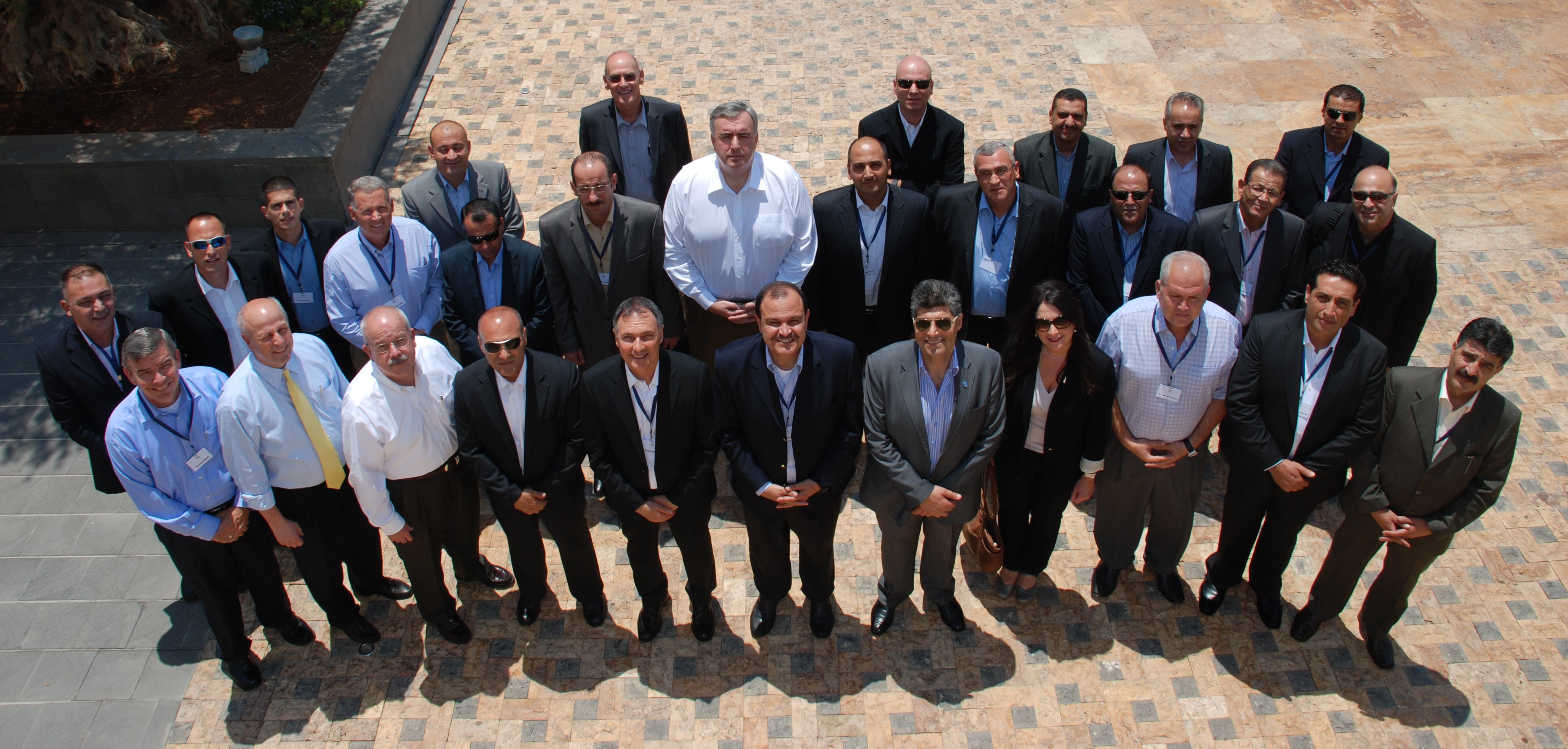
PERF members, A few weeks ago, I wrote about PERF’s founding 50 years ago—the vision of our 10 founding members, the leadership of past executive directors Gary Hayes and Darrel Stephens, and the ideas and energy of those police chiefs and sheriffs who saw the potential of this new organization and became both advocates and enthusiastic contributors. I am forever grateful to all our members over the years. Thanks to you, PERF has set the standard for police leadership, research, and innovation. Today, in anticipation of our annual meeting next week in Los Angeles, I wanted to tell the story of PERF’s more recent decades. Leading this organization has been the honor of a lifetime. I have had the opportunity to work alongside some of the most creative, hard-working, and dedicated people in any profession. Throughout, I have tried to remain true to the ideals of those who came before me: promoting leadership in policing, challenging conventional thinking, and developing the next generation of police leaders. I think what PERF has always been good at is seeing what is on the horizon, anticipating emerging issues, and having the capacity to respond quickly. This is what makes PERF different from any other major police organization. Here are just a few examples. Helping communities tackle tough problems In the early 1990s, violent crime was so high in Minneapolis that it was called “Murderapolis.” PERF went into the field to better understand both the factors contributing to the violence and the resources needed to address the problem. The result was Minnesota HEALS (Health, Education, and Law and Safety), a comprehensive crime control strategy rooted in public-private cooperation. It became a national model that then–Attorney General Janet Reno would implement across the country. When Terry Hillard became police superintendent in Chicago in 1998, he faced a challenge: how to address longstanding issues of race and community distrust. He asked PERF to moderate a series of forums that brought the toughest police critics and Chicago Police Department command staff to the table. That type of direct community engagement became the way of doing business in Chicago. At around the same time, Kansas City, Missouri, Chief Rick Easley wanted to address the third rail of policing: racial issues within his department. PERF helped to create the Kansas City Together initiative that fostered honest discussions and sensible approaches to the problem. These PERF-led initiatives in Minneapolis, Chicago, and Kansas City were way ahead of their time. Our field work has not been limited to the United States, either. In the early 2000s, PERF, in cooperation with the U.S. Agency for International Development, worked to bring the principles of American community policing and police-community partnerships to Jamaica. We built a model police station in Grants Pen, one of the toughest sections of Kingston; it would become a model for rebuilding trust and reducing violent crime. In Northern Ireland, PERF played a key role in organizing a 2007 conference on Policing the Future, which brought together various political factions to discuss policing strategies in that country’s once-divided communities. In 2012 and 2013, PERF brought a group of U.S. police leaders to the Middle East to facilitate a series of discussions among top officials of the Israel Police and the Palestinian Civil Police Force, with the cooperation of the country of Jordan. Our purpose was to strengthen the rule of law in the region and enhance cooperation among police agencies.
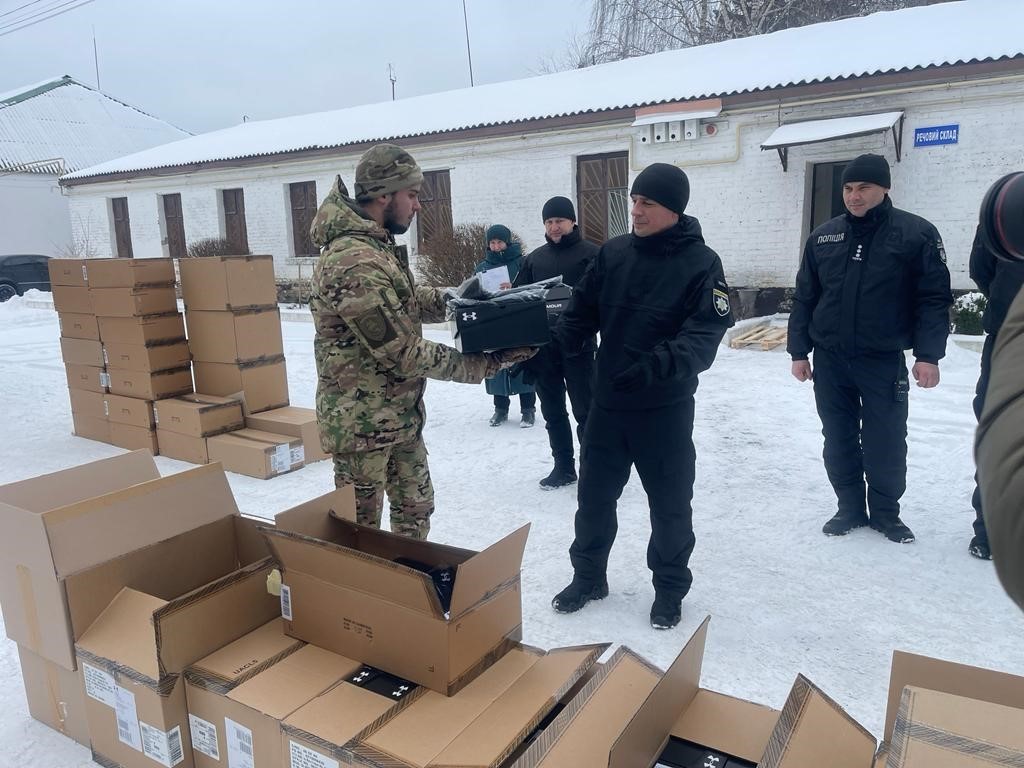
American, Israeli, Jordanian, and Palestinian police officials meet in Jordan in 2012. And, as I’ve written about before, PERF members and staff have joined me on several trips to Ukraine since Russia’s invasion in 2022. Our purpose has been to learn about policing in a battle zone and, with the support of Howard Buffett and his foundation, to provide much-needed clothing and footwear to officers there. Buffett has made Ukraine a top philanthropic priority.
Ukrainian police receive a donation of Under Armour boots and ColdGear facilitated by PERF in 2023. Using innovative approaches to help communities—even countries—address their most pressing public safety challenges has become part of PERF’s DNA. Tackling controversial issues One of PERF’s defining characteristics has always been our willingness to tackle head-on controversial issues that others may shy away from. One of those issues is race and policing. In February 1999, Amadou Diallo, an unarmed 23-year-old student from Guinea, was shot and killed by four police officers outside his residence in the Bronx. The incident became a national story, with some members of the public questioning whether the police engaged in racial profiling. In response, PERF asked police chiefs from across the country to come to a meeting and to bring one community member with them. Together, they explored the question, “Do police racially profile?” The difficult but unavoidable answer was, “Yes, some police do profile.” Our 2001 report offered agencies guidance on detecting and eradicating racially biased policing. The lead author, then–PERF Research Director Lorie Fridell, would go on to become one of the foremost authorities on biased policing. PERF has long advocated for common-sense approaches to policing in immigrant communities. In 2010, Arizona passed one of the strictest immigration laws in U.S. history. Among other provisions, SB 1070 required police to check the immigration status of people they stopped if they suspected those people were in the country illegally and made it a state-level offense not to carry immigration documents. Recognizing that the law could undermine both public safety and police-community relations, a group of PERF members traveled to Washington, D.C., expressing their concerns to then–Attorney General Eric Holder. In July 2010, the U.S. Department of Justice took the rare step of filing a lawsuit against the state, saying that immigration regulation and enforcement were exclusively the responsibility of the federal government. Over the years, PERF has continued to focus on the issue, publishing several reports—many of them with support from the Carnegie Foundation—on effective policing in immigrant and refugee communities. And, of course, PERF has led the way on use-of-force reforms. When Tasers were introduced in 2006, there were no guidelines on their use, and people were dying or being severely injured as a result. PERF brought together experts from across multiple disciplines to develop the first national guidelines on Taser use. We updated those guidelines in 2011. After the shooting death of Michael Brown in Ferguson, Missouri, in 2014, PERF’s work on use-of-force issues kicked into high gear. Our 2015 report on re-engineering use-of-force training exposed serious deficiencies and challenged many training conventions, including the “21-foot rule,” which held officers were justified in shooting someone armed with a knife if they were within 21 feet. Later that year, PERF brought two dozen of its members and other police leaders to Scotland to see first-hand how officers train in use of force; this perspective was especially revealing because most officers there are unarmed. That visit, along with additional field research in Northern Ireland and with the NYPD Emergency Service Unit, were the foundation for PERF’s 30 Guiding Principles on Use of Force. While many of the principles were widely embraced, some of our more far-reaching proposals were criticized by other police groups. But as we have always done, PERF held firm to our beliefs and values, and I think history has proven us right. The “PERF 30,” in turn, led to the development of our ICAT (Integrating Communications, Assessment, and Tactics) training program, which more than 150 agencies throughout the United States are now using. Independent evaluations of ICAT in the Louisville and Indianapolis police departments show that the training is associated with reductions in use of force and injuries to both subjects and officers. This result was significant. Early on, some had argued that PERF’s ideas on use of force would get officers injured or killed. But the research found just the opposite—fewer injuries to officers and citizens. Outside-the-box thinking Some of PERF’s work has definitely been outside the box. In the early 2000s, I was struck by management guru Jim Collins’s book, Good to Great. I didn’t know Collins from a hole in the wall, but I managed to track him down and, before I knew it, then–Milliken, Colorado, Police Chief Jim Burack and I were discussing Collins’s work with him in a Colorado deli. Collins was intrigued with how his management principles might apply to policing, and in 2004 he spoke at PERF’s annual meeting via telecast. Working with the COPS Office, PERF convened an executive session to explore the issues more fully, culminating with a 2007 PERF publication, Good to Great Policing. I still give every new PERF staff member a copy of Collins’s book. One thing PERF has always done well is recognize the emerging issues confronting police leaders and publish research and guidance to help them manage change. That was the genesis of our Critical Issues in Policing series. It started more than 25 years ago, when Motorola approached PERF about helping the Chicago Police Department (CPD), which was dealing with a serious violent crime problem. Motorola was interested in how police agencies could use modern business practices, such as re-engineering, to improve their operations. With Motorola’s support, PERF developed a process mapping tool to help the CPD better understand the violence problem and develop new strategies to deal with it. That project led to a long-term relationship between PERF and the Motorola Solutions Foundation which has resulted in 56 reports on a range of topics—violent crime and criminal investigations, managing demonstrations, technological innovations, officer suicide and wellness, recruit training, the opioid epidemic, and many more. One Critical Issues effort that I’m particularly proud of was PERF’s response to the COVID-19 pandemic. It’s almost hard to fathom that six years ago, all of us were just beginning to confront a new, mysterious, and deadly global health emergency. And the police, as usual, were in the thick of things. While many other professions could isolate and work remotely, cops still had crime to respond to (and we now know crime was increasing), calls for service to answer, and emergencies to address (many of them COVID-related). How could agencies continue serving the public without unnecessarily endangering their own personnel? To help answer those questions, PERF began publishing daily reports on the police response to COVID. Our first edition, published on March 17, 2020, featured an interview with Cherie Harris, then police chief in Kirkland, Washington, where a COVID outbreak in a nursing home had already claimed more than two dozen lives. Every day, PERF staff scoured for relevant information; interviewed experts and practitioners; and over the course of the next year, published approximately 250 daily reports covering topics such as officer staffing, scheduling, and wellness; community relations; hate crimes against Asian Americans; communicating with immigrant populations; and many more. These daily reports and other research were then summarized in a comprehensive report in 2021. I have always felt that our efforts with COVID were among the most meaningful work PERF has done. Craig Fischer, who was PERF’s editor, came up with this idea, and we did what no other organization was doing—providing beneficial, practical information on a daily basis during one of America’s most significant public health emergencies. I will always be grateful to Greg Brown of Motorola and to Howard Buffett for immediately recognizing this national crisis and supporting our work. The next generation of leaders One critical need our founding members recognized was developing the next generation of police leaders. Police agencies often viewed leadership as something that naturally flows from experience and rank. But to be successful, leaders also need exposure to new ideas and concepts and to other leaders who have been successful. PERF’s Senior Management Institute of Police has helped to meet this critical need. What began as a humble training class in 1980 has grown into a robust, three-week curriculum that trains more than 400 up-and-coming police professionals each summer at Boston University. What I think makes SMIP so unique is its diversity of instructors and course material. We have university professors teaching organizational change, negotiations, budgeting, and other management skills. We have experienced police chiefs—titans of the industry—sharing their experiences and wisdom. And we have other subject matter experts covering topics such as leadership communications, media relations, and career planning. More than 8,000 students have completed SMIP, and I look forward to welcoming our next four sessions this summer in Boston. To help police leaders fulfill their potential and find new opportunities to grow and lead, PERF has developed a sophisticated executive search program, completing approximately 200 searches since 1993. Our executive search team has led the searches in a range of cities—Los Angeles, Chicago, Houston, Dallas, Seattle, San Francisco, Boston, Charleston, and Savannah—and for the United States Capitol Police. And PERF has published several reports to help police leaders along their career paths, including Command Performance, The First Six Months, and Chapter 2. It has been fulfilling to watch this unfold: Yesterday’s up-and-comers become today’s chiefs, who in turn become the mentors of tomorrow’s leaders. Our secret weapons PERF’s secret weapon has always been our members. You have steadfastly supported the organization, especially when we have been “out there.” You have trusted us to conduct research on ourselves and to call it as we see it, even when that may produce some uncomfortable results or recommendations. With your support, PERF has transitioned over the years to be regarded as an independent think tank that has earned the respect of many. Our other secret weapon is our staff, who have lived and breathed PERF for the past 50 years. They are the backbone of the organization. And finally, to all those who have served on our Board of Directors over the years: You have granted me the independence and freedom to take on some of the most challenging issues in policing. That might not happen in other organizations. As we gather in Los Angeles next week, I look forward to reminiscing with many of you about PERF’s first 50 years and to hearing your ideas for what this incredible organization will do over the next 50. Best, Chuck |