|
March 14, 2026 Looking back at PERF’s founding 50 years ago
PERF members, With PERF celebrating its 50th anniversary this year, I thought it would be enlightening to look back at the organization’s founding and its early days and to reflect on how PERF has striven to stay true to its original ideals over the years. The formation of PERF was announced in a press release published on July 29, 1976. “Ten police chiefs from larger communities across the country today announced they have formed a national police leadership organization dedicated to the comprehensive improvement of policing through research, open debate, and the professionalization of police leadership. “‘In a time of growing public cynicism about institutions of government, of justified citizen concern about the scandal of crime, of tighter municipal budgets, we refuse to accept archaic styles of leadership, to rely on untested traditional police methods, and to tolerate the unwillingness of many police leaders to speak out openly on the complexity of crime and on other police issues,’ the ten chiefs said in a statement. ‘American citizens deserve more enlightened and productive crime control and other police services than they now receive. Our goal is to assure each citizen effective policing worthy of a free society.’” The new organization would draw its membership from the ranks of police executives who commanded the nation’s larger departments, which employ most of the country’s police officers and must deal with most of its crime problems. The founding chiefs identified six key objectives:
Those 10 founding police executives were among the titans of the profession at the time: Peoria (IL) Superintendent Allen Andrews; Portland (OR) Chief Bruce Baker; Boston (MA) Commissioner Robert di Grazia; Hartford (CT) Chief Hugo Masini; Arlington County (VA) Chief Roy McLaren; Kansas City (MO) Chief Joseph McNamara; Birmingham (AL) Chief James Parsons; Berkeley (CA) Chief Wesley Pomeroy; Detroit (MI) Chief Philip Tannian; and Newark (NJ) Police Director Hubert Williams. Robert Wasserman, who worked for Commissioner di Grazia, drafted the proposal to create PERF with support from the Police Foundation (now the National Policing Institute). 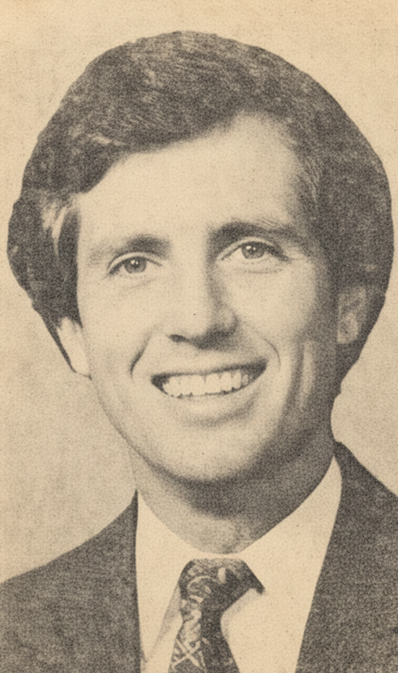
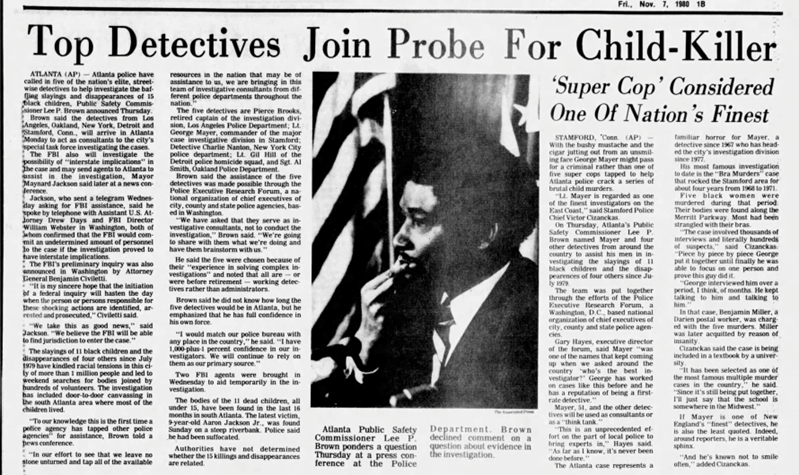
The founding police chiefs selected Gary Hayes, an assistant to Boston Police Commissioner Robert di Grazia, to serve as the organization’s first executive director. Hayes was a graduate of Penn State, where he played basketball, before earning his master’s in police administration from Washington State University and a law degree from the University of Wisconsin. During the Carter Administration, he served on the Statistical Advisory Board of the U.S. Department of Justice. Prior to his time at PERF, Hayes was Assistant for Police Affairs under Boston Mayor Kevin White. At PERF, Hayes was supported by research director John Eck, and he led the organization for nine years until he tragically died of cancer in 1985 at the age of 40. “He was a determined and a deep believer in justice for all people and a person who understood the complexities of urban life and the constraints of administering justice, but someone who could really make it happen,” former Boston deputy mayor Robert Kiley told the Boston Globe for Hayes’s obituary. Even after his death, Hayes’s ability to bring together leaders from all sides of the political spectrum was still apparent. PERF’s 1986 presentation of the first Gary P. Hayes Memorial Award featured both Democratic U.S. Representative Barney Frank of Massachusetts and Republican U.S. Attorney General Edwin Meese III, members of their respective parties’ most liberal and conservative branches at the time. I was fortunate enough to work with Gary when I was an intern with the Boston Police Department. He was an iconoclastic leader who could still connect with the old-school Boston cops. I remember watching him walk into a room with a cigar in his hand and win the respect of senior commanders. That took confidence I haven’t forgotten. Gary was a gifted person in many ways, and PERF continues his legacy with the annual award for up-and-coming leaders named in his honor. Sir Denis O’Connor, former UK Chief Inspector of Constabulary, met Hayes in 1982, when the then-commissioner of the Metropolitan Police was looking to establish a think tank to inform new policies in that organization. Sir Denis recalls his first meeting with Hayes and Eck, saying he knew then he had hit “the motherlode.” “In the Met, there was this whole bit about solvability. The eternal problem of the police is infinite demand and not enough cops, or that's certainly been a problem for a lot of British police forces. But here were people with answers and they were practical. They had a little manual, a scoring system,” says Sir Denis. “It may seem obvious now, but it wasn’t obvious then. And they trialed these practices in places, and there was a whole stream of these practical ideas.” In 1980, under Hayes’s leadership, PERF assembled a group of expert detectives from different cities to help investigate a series of homicides that came to be known as the Atlanta child murders. “The slayings of 11 Black children and the disappearances of four others since July 1979 have kindled racial tensions in this city of more than 1 million people and led to weekend searches for bodies joined by hundreds of volunteers,” the Associated Press reported in November 1980. “ ‘To our knowledge this is the first time a police agency has tapped other police agencies’ for assistance, [Public Safety Commissioner Lee P.] Brown told a news conference.” The five detectives were led by Pierce Brooks, a retired captain with the LAPD’s investigation division. Bringing in outside experts established a model for future PERF work—from our anti-crime work in Jamaica; to our review of the 2009 arrest of Harvard Professor Henry Louis Gates by police in Cambridge, Massachusetts; to our evaluation of various cities’ homicide investigation practices in the 2010s; to our upcoming review of the police response to the December 2025 shooting at Brown University.
PERF’s early leaders advocated for more rigorous disciplinary processes. “In a major shift in police attitudes, top law enforcement officers in 60 American communities including Detroit have proposed what they call ‘sweeping new measures to control police misconduct,’” the Detroit Free Press reported in 1981. “‘Citizens have to know that police officers are responsible for their actions and are not above the law,’ said Sheriff John Duffy of San Diego County, president of the Police Executive Research Forum, which issued the model police disciplinary policy.” That tradition continues today with PERF’s ongoing work on use of force reforms and improved training for supervisors. PERF pushed for police chiefs to be accountable to their communities. In 1983, then–Madison (WI) Police Chief David Couper wrote How to Rate Your Local Police, which PERF published. To evaluate their local police agencies, the book recommends communities go beyond traditional metrics—like crime stats and clearance rates—to look at a department’s policies, procedures, training, community engagement, and openness to innovation. PERF continues to focus on these metrics in our management services work, helping agencies update and professionalize their operations. And PERF supported stricter gun control laws. “The Police Executive Research Forum, the national organization of law enforcement executives, of which I am a member, and the National Organization of Black Law Enforcement Executives, of which I am vice president, opposed the provisions of the McClure bill,” Atlanta Public Safety Commissioner George Napper wrote in a 1985 Atlanta Journal-Constitution op-ed. The bill, which President Ronald Reagan signed into law in 1986, loosened some of the restrictions in the Gun Control Act of 1968. “In fact, despite the sponsor’s claims that the bill is pro-law enforcement, every major police organization in the nation opposed the bill,” Napper continued. “Our reasons were simple. As police chiefs and police officers, we know how criminals get handguns. We recognized immediately that this bill was a step backward: legislation that would assure easier access to handguns by those who use them to commit violent crimes.” Over the years, PERF has published numerous research reports on gun violence and strategies for combating it. In the 1980s, executive director Darrel Stephens and research director John Eck led PERF to the forefront of problem-oriented policing. The initial research in 1984 focused on the Newport News (VA) Police Department and was funded by a $1.2 million grant from the National Institute of Justice. The Tampa Tribune wrote at the time: “During the two-year study, a task force of 12 Newport News police officials began tackling about 20 problems, and they solved five or six of them, Eck said. The department is still using the technique to work on other problems, he said.” PERF continued to study and promote problem-oriented policing for years and hosted an annual conference on the topic in San Diego for a number of years. Those are a few of the issues that animated PERF’s members in our early days. Fifty years later, PERF continues to seek out new strategies for addressing them. Join us at our Annual Meeting next month in Los Angeles to hear more about PERF’s first 50 years and help us make plans for our next 50. Best, Chuck |