|
August 22, 2026 Hawai’i Chief Reed Mahuna discusses his agency’s response to Hurricane Lala
PERF members, Hurricane Lala passed just south of the Hawaiian Islands last weekend as a Category 1 storm. The island of Hawai’i, or the “Big Island,” was hit the hardest, with one town reporting 42 inches of rain and wind gusts of at least 55–85 miles per hour reported across the island. About 100 homes were damaged or destroyed, tens of thousands lost power, and two deaths have been connected to the storm. Reed Mahuna was named Interim Chief of the Hawai’i Police Department (HPD) last September and was sworn in as the agency’s permanent Chief in February. He grew up on the Big Island and has spent his entire 28-year career with HPD. I spoke with Chief Mahuna on Wednesday about the recent storm and what it’s like to police the island of Hawai’i.
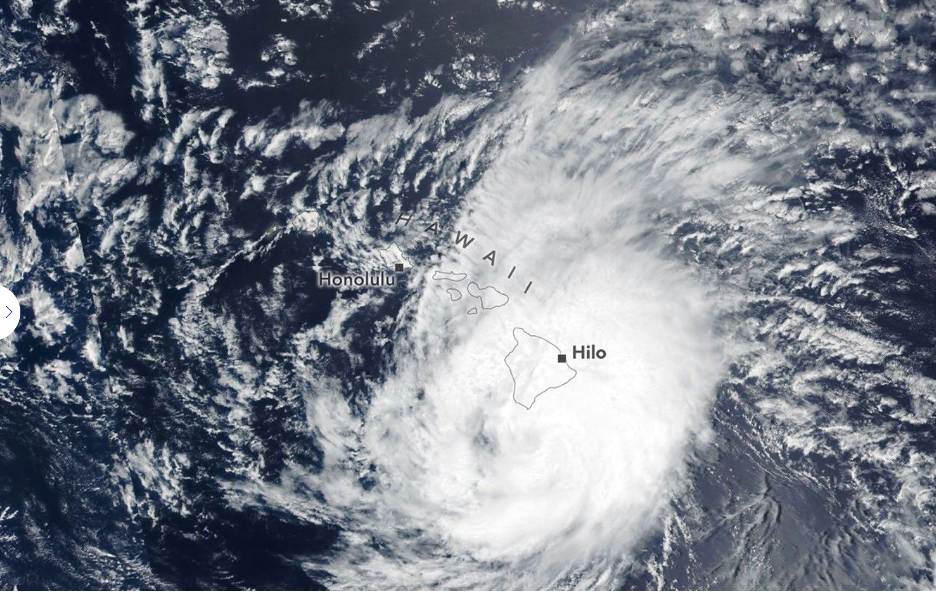
NASA images of Hurricane Lala passing the Big Island. Source: NASA Earth Observatory images by Lauren Dauphin. Chuck Wexler: Tell us about the island of Hawai’i and your department. Chief Reed Mahuna: In the state of Hawai’i, there’s a police chief for each of the four counties. There’s Hawai’i County, Maui County, the city and county of Honolulu, and Kaua’i. On the Big Island, we have a little over 200,000 residents and substantially more visitors. My island is larger than all the other main Hawaiian Islands combined. It’s a little over 4,000 square miles. I’m a little short on manpower, as usual, but I have about 500 sworn positions for my department. Large areas of the island are unpopulated. My officers work in very large districts and cover very large areas, but a lot of the island is not populated. Wexler: How do you prepare the island for something like Hurricane Lala? Chief Mahuna: A hurricane approaching the Big Island—or the Hawaiian Islands in general—is not uncommon. We have maybe one or two every year. It was just a matter of how powerful it was going to be when it got here. But no hurricane has made landfall on Hawai’i island since the 1800s. For me, preparedness means making sure that all my stations have everything they need. We made sure we tested and fueled up our backup generators. Then we moved to a 12-hour shift pattern. Essentially I made sure that we had more than double the manpower we would normally have out there to ride out the storm. I also need to make sure that my people are able to go home and button up their residences—do what they have to do for their families. Because they’re not going to be there when this happens.
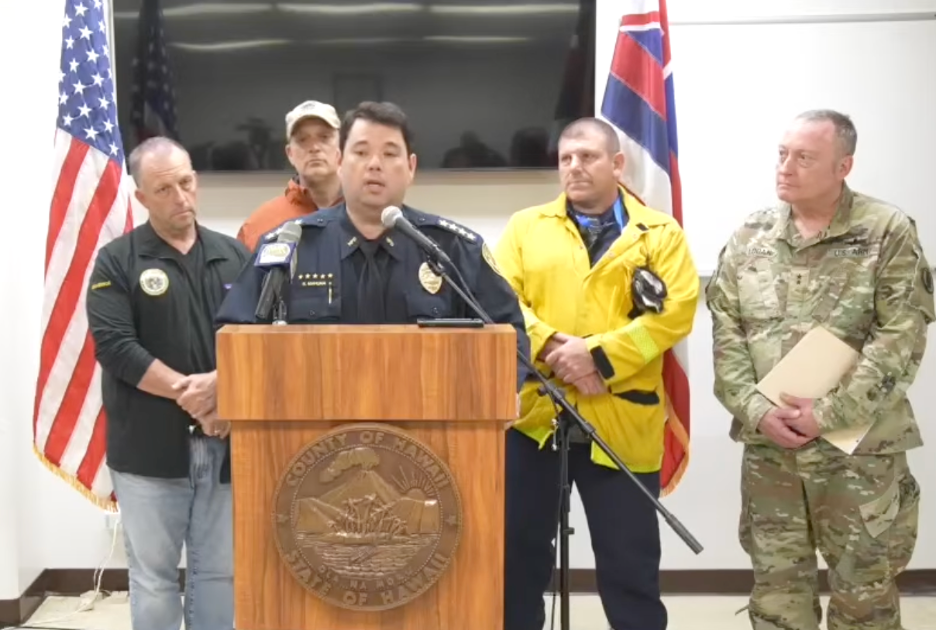
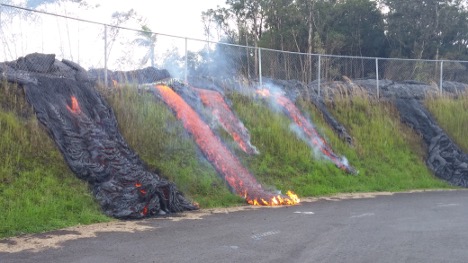
Chief Mahuna (center) speaks at a press conference, joined by state and local leaders, to update the public on the storm. Source: County of Hawai’i. Wexler: How did you handle routine calls for service during the storm? Chief Mahuna: We will respond to calls until we can’t. We never stopped responding to life-and-death calls for service. At a certain point, we stopped responding to calls of trees down or power lines down, because no one else was there—the utilities weren’t responding anymore. But as far as life-and-death calls, we continued to respond throughout the evening. Wexler: What’s the division of labor between you and the other emergency response agencies? Chief Mahuna: It’s really a whole-of-government approach. We’re all in the emergency operations center. The fire department and the police department share a lot of responsibilities. The Department of Public Works played a huge role in this hurricane. Their people are just as willing to risk themselves and do what needs to be done as the police and fire. We also had National Guard assistance. A Coast Guard aircraft assisted us on the night of the storm, because only the Coast Guard aircraft could fly in the weather we had at the time. So it’s really a whole-of-government approach. Wexler: How does this compare to previous natural disasters? Chief Mahuna: Hurricane Iselle [in 2014] was a very powerful storm—at one point a Category 4. As it approached the Big Island, it weakened to a tropical storm, but it actually made landfall in Ka’u. I was a lieutenant in Puna at the time, and what that hurricane did was absolutely devastating. However, it was different in that most of the damage was from wind. In this case, most of our damage was from flooding. I was also in Puna as a commander when we had two different lava flows. The most recent lava flow was also devastating. It took out an entire community. So it would be hard to put this hurricane above the lava flows and eruptions we’ve had, but it’s certainly up there. Wexler: What does a lava flow situation look like? Chief Mahuna: We have Hawai’i Volcanoes National Park, which currently has an active eruption. It’s within the park and within the caldera. We may have some ash and different things fall, but it will stay within the park. Then there is a rift zone from that volcano—Kilauea Volcano—that goes into a district, Lower Puna. We’ve experienced two different types of flows. The first flow originated in a vent that was maybe 10 or 15 miles away from Pāhoa. That flow marched its way down over a period of months. It took out one home and come very close to Pāhoa town. So that’s what people traditionally think of as lava flow. You have a volcano, it’s a few miles away, it erupts, the lava comes down, and it enters your community.
Lava flowing through a fence into a transfer station. Source: County of Hawai’i. However, we also had a rift zone flow, which was more devastating. In that case, underground magma moves into an area and creates fissures, then lava erupts in the community. So we’re talking about a crack opening up in your back yard and lava coming out of it. We had fissures or vents that opened up in subdivisions in the community, and lava came out and destroyed the community. Those are the two different types of flows that we face. Wexler: And what’s the role of police in those situations? Chief Mahuna: In a rift zone lava flow, where the lava is basically coming out of fissures in a back yard or wherever, a lot of times we know that it’s going to happen. The national park has sensors and they know that magma is entering this zone. So for a month or more we have an idea that it was going to happen. And when it happens, it happens slowly. It’s not an explosion of lava in a back yard. There’s a crack, then there’s steam, and then there’s lava. And the lava goes where it wants; there’s no diverting it. There’s nothing to do other than to get out of the way. So we evacuate people and then provide security for the area. People want to look at the lava, and [also] there could be looting. So we maintain security for a subdivision after it’s evacuated. Wexler: How many times per year does that happen? Chief Mahuna: Hopefully zero. For the rift zone lava flow that I’m talking about, hopefully it’s once a decade or once in a career. Wexler: That’s fascinating. Shifting back to Hurricane Lala, what was the extent of the damages and what is the situation today? Chief Mahuna: We had winds in excess of 90 miles per hour in different places throughout the island, some in the northern part of our island. Because of the topography of our island, with two extremely large mountains, wind can accelerate on the other side of the island as the storm approaches and cause high winds in places that are not as close to the storm. But the wind damage was moderate. The severe damage in Ka’u, the southern district of our island, came from flash flooding. The constant rain in the mountains and that district saturated the ground and caused unbelievable flooding in that area. It isolated communities. That’s what we’re dealing with now—the destruction of infrastructure, like roads and bridges, that needs to be repaired so people can access their homes. And a lot of people are without power. A lot of transmission lines are still down, and our utility company is working around the clock to get that repaired. Wexler: And you lost power at your house, right? Do you have it back? Chief Mahuna: I’m still without power, but my home is undamaged. I have a lot to be thankful for. Several large trees came down and took out power lines on the road to my home, and they have been unable to repair them. But I have a lot to be thankful for as far as my home. Wexler: How do you look after your employees’ well-being during an incident like this, particularly when many of their families are affected by the storm? Chief Mahuna: In a situation like this, you’re going to have to leave your family, and you know they are going to need you at home. So it’s important to give your people the opportunity to prepare. Say, “It’s okay if you have to go home a little early today—or a lot early today—and go to Home Depot to make sure your family is prepared.” It’s important that they know that they’ve done the best they can to prepare their families. And when you’re dealing with your employees, check on them. See how they’re doing. And not only “How are you doing at work?” They expect that. But also, “How is your home? How is your family?” I think that means a lot to them. And then, during the recovery phase, we’re going to have to see if any issues pop up. We have officers who were isolated, meaning there was flooding in areas where we didn’t necessarily expect it, and they were not able to get out of a certain area for 24 or 36 hours. As usual, they never complained. They stayed there the whole time, responded to calls, slept in their cars when they could, and found food where they could. No complaints. They cared about the community. But we’re going to have to see if there are any issues moving forward. Even for me, it was difficult. I knew my wife was going to be there by herself with my son and my daughter. But I have a generator, battery backup, water, and whatever else I could figure out that they would need, so I felt good about them being okay. So those preparations were important. Wexler: How does the island’s geographic isolation affect your planning? Chief Mahuna: Reinforcements and equipment are pre-positioned on the island. For example, our utilities bring in extra trucks and employees. The National Guard brings in extra people. It can never be enough, so then we rely on the military as soon as the storm passes—they have a large aircraft to fly in whatever we need. But there’s no one coming during the storm. We are on our own in a case like this. We can ask other islands for help, and they will absolutely come, but a hurricane could blast all the islands, in which case we’re going to have to make do with what we have. Wexler: How do you communicate with the community when the power goes out? Chief Mahuna: Sometimes we can’t. Sometimes we’re going door to door for an evacuation. We have cell service as a backup, but that service was down as well. A lot of our radio communications went down that evening. So we had to do the best we could manually. Communicating with the community and with each other was very challenging. Wexler: What are some of your takeaways from this experience? Chief Mahuna: I think a lot of times we rely on technology that maybe doesn’t work anymore, or maybe there’s better technology out there. For example, we have satellite phones for emergency communication. But they don’t work indoors—the only way they’re going to work is to stand out in the hurricane. So now Starlink is a better option for us. Alan Hamilton, a Deputy Chief with the LAPD, reached out and [told us] Starlink really saved them during the fires they had. I’m going to make sure we implement that before the next storm.
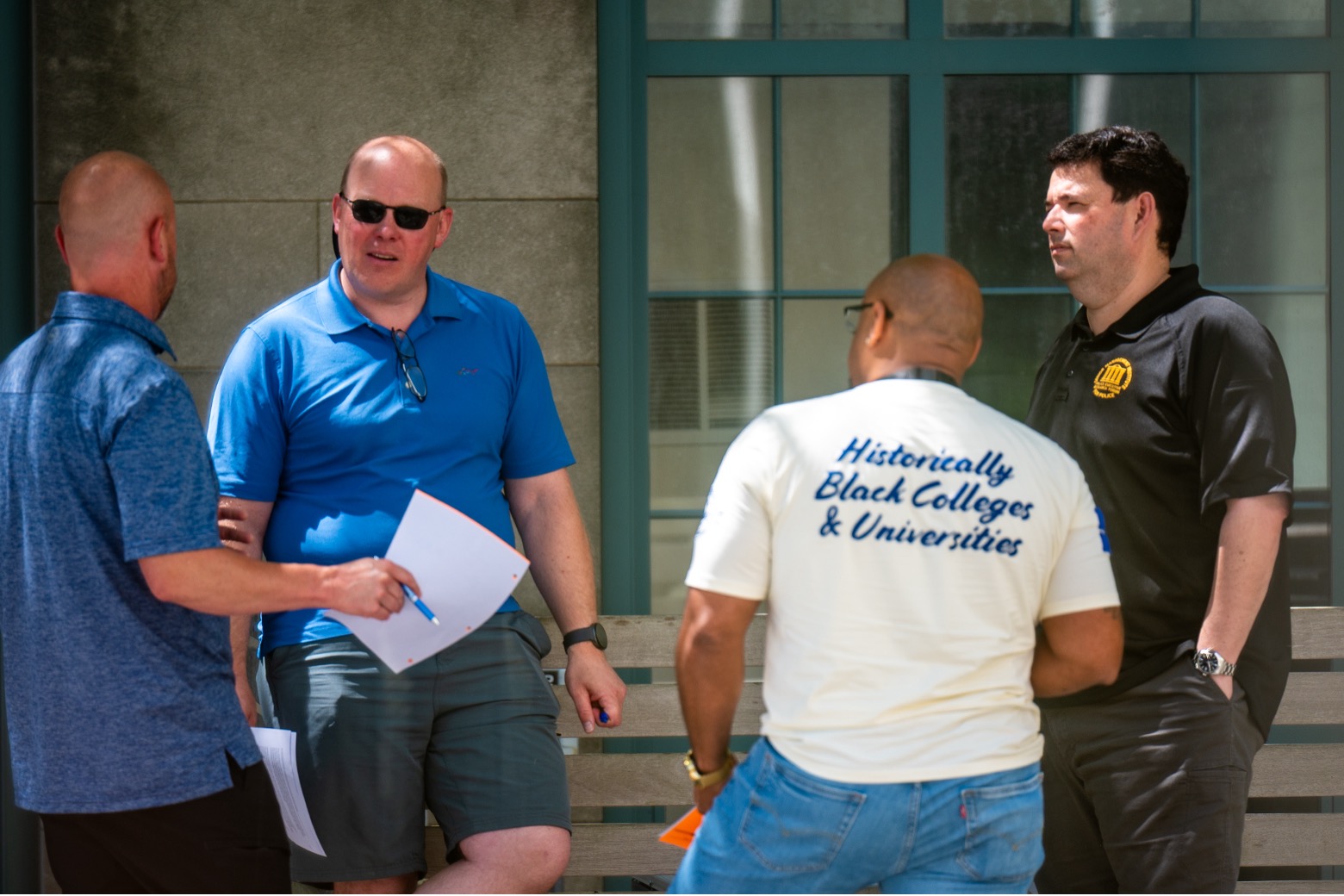
Chief Mahuna (right) participates in a group exercise as part of SMIP’s 100th session. Wexler: You met Deputy Chief Hamilton at the 100th session of PERF’s Senior Management Institute for Police (SMIP) this summer. Did that experience help you during this situation? Chief Mahuna: There are a couple parts to that. First, SMIP is kind of like when you go to college. All the classes you take broaden your viewpoint, and I think SMIP is helpful in that regard. Learning a bunch of different things from different people helps your thinking when you are responding to something like this. The second part is the people. I sat next to Alan Hamilton, and what a great experience for me to be able to sit next to somebody from such a large department and converse with him for three weeks. I took full advantage of it and continue to take full advantage of it. Then the third part is the classes that specifically helped me, like the class from Laura McElroy on communicating with the media. We had several press conferences, one with the governor, and I’ve never experienced that before. Some of the things I learned in that class helped me. And Ben Shields gave a class on communication. One part of the class is about giving a five-minute presentation. I didn’t need [to give] a five-minute presentation, but I prepared my remarks. If you have the opportunity to prepare remarks and practice, your communication is so much more effective. So I think SMIP was very helpful in facing this challenge. Thanks to Chief Mahuna for taking time out of a very busy week to share this information with our members! As I heard during my recent conversation with Nantucket Chief Jody Kasper, island communities face unique challenges. Agencies must be prepared to maintain public safety without the resources and partnerships available on the mainland. Good luck to Chief Mahuna and the people of Hawai’i as they continue to recover from the storm. Best, Chuck |