|
July 18, 2026 Chief Jody Kasper shares what it’s like to police the island of Nantucket
PERF members, Chief Jody Kasper leads the Nantucket Police Department, which serves an island about 30 miles off the southeastern Massachusetts coast. The U.S. Census estimates 15,000 live on the island full time (though Chief Kasper says that figure is debated locally), but the population swells to 80,000 at times over the summer. Chief Kasper grew up in Massachusetts and joined the Northampton, Massachusetts, Police Department in 1998. She served as that agency’s police chief from 2015 through 2024, when she left to lead the Nantucket Police Department. I spoke with her on Tuesday about some of the unusual challenges and opportunities that come with policing an island community. Chuck Wexler: I think being police chief of Nantucket must be one of the best jobs in the country. Can you briefly describe Nantucket? Chief Jody Kasper: Nantucket is an island off the coast of Massachusetts, off the coast of Cape Cod, just about 30 miles out to sea. It is an incredibly unique place because we are our own town and our own county. So there’s no one else out here. It varies from Martha’s Vineyard in that way. Many people group Martha’s Vineyard and Nantucket because we’re both islands off the coast of Massachusetts, but Martha’s Vineyard has six different communities on it. Nantucket does not. When you’re here, you’re in Nantucket, you’re in our community. It’s actually one of the first questions we ask people who apply for a job here—“Do you know where we are and that we are an island?” And there are candidates who do not know that when they apply.
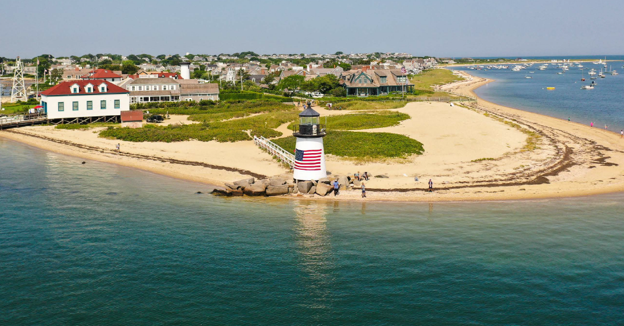
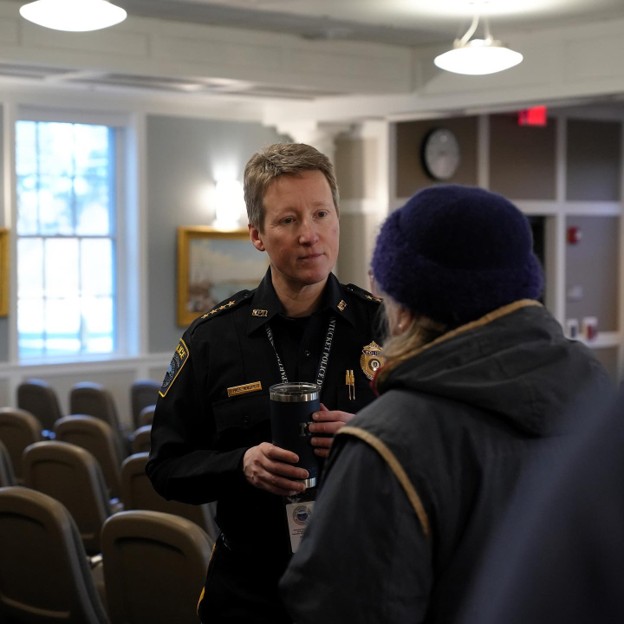
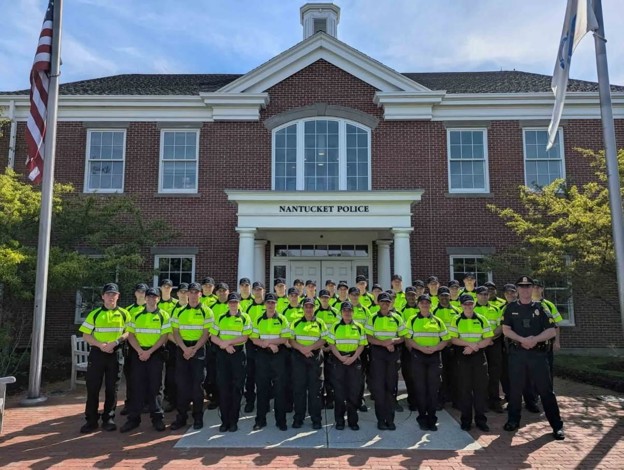
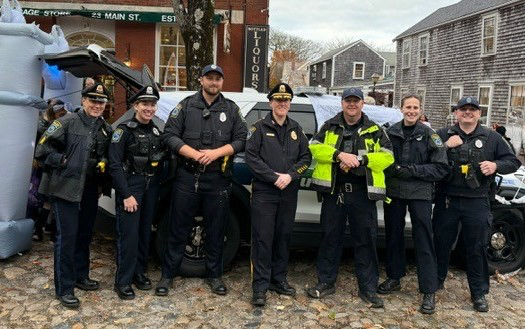
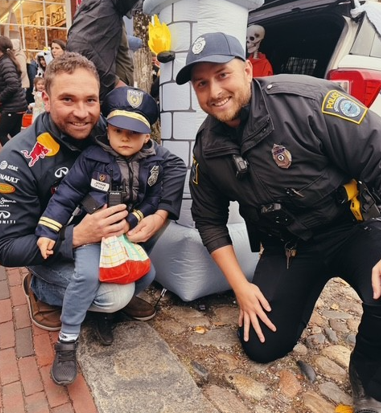
Brant Point on Nantucket. Source: Town of Nantucket. Wexler: What’s the year-round population and the population during the summer? Chief Kasper: The population is a hotly debated topic on island, and most are pretty hesitant to give numbers. If you look at our U.S. Census numbers, that’s one thing. But if you ask the regular population how many people we really think are on the island, even in the off-season, it ranges between 20,000 and 25,000 people. In the regular season, which really picks up right around May and goes through September, it’s anywhere between 60,000 and 80,000 people. Wexler: You spent most of your career with the Northampton Police Department. What’s it been like transitioning from where you were to Nantucket over the past two years? Chief Kasper: It’s two completely different cultures. There’s my personal life, which is very different living on an island coastal community and adjusting to a seasonal community. It’s been, frankly, fun and really interesting and stimulating—new people, new hobbies (including shellfishing), and new places to explore. Then there’s the workplace transition, which has been dramatic. The two biggest things that stood out to me when I started working for the Nantucket PD were, one, every single member of our department lives in the community that we serve. Our department is the true definition of community policing. You can’t live off island if you’re working for us. That has made it kind of fascinating. A lot of our officers and nonsworn personnel are coaches and volunteers. They have other jobs in the community. Their families are in the community and in the schools. So we’re all very tightly woven together, which is great. And I think it improves the quality of our service, because we’re serving our neighbors daily. But it also sometimes can be challenging and a little bit like a fishbowl. Chief Kasper speaks with a community member at a January 2024 “Meet and Greet” event held shortly after she was sworn in as police chief. Source: Nantucket Police Department/Instagram. The other notable difference is the complete lack of rapid regional resources that I had grown accustomed to where I was before. I worked for a small city in western Massachusetts, and we had really strong regional networks. Whether we were dealing with drug trafficking, sex trafficking, or cyber crimes, or needed SWAT teams, we had resources readily available. And we just don’t have that here. That means we have to have good training for internal specialists and be a little more patient on cases when we’re going to be waiting for specialists to come onto the island. That has been a major difference. Wexler: Was it hard for you to adjust and be accepted as an outsider on the island? Chief Kasper: They call people like me “wash-ashores.” You’re not a Nantucketer, really, unless you were born here. There are people who have lived here for 50 years who still don’t really get to call themselves a Nantucketer. And that’s kind of a joke around the island. You’re never really a Nantucketer unless you were born on this island. So without a doubt, there’s caution from people who live in the community about having outsiders come in and make policy decisions and lead departments when they’re not accustomed to the Nantucket community and the way of the island. So I came in very humbly and wanted to take my time to learn about the island and develop a respect for its culture, its history, how things operate here, and what makes it different and unique. And people have been incredibly welcoming. Wexler: Is housing a challenge? How do officers afford to live on Nantucket? Chief Kasper: Housing is our biggest challenge, without a doubt. I think it’s a threat to our succession planning, because it’s easy for us to attract new candidates to come here and join our department. We have a great culture, a beautiful island, and a good reputation as a department. But after a few years, people want to buy a home. They want to get a dog, or have a garden, or whatever they want to do. And you can’t do that in most of the housing opportunities they have here on the island. Home ownership for a new officer is almost impossible. The average home price is 3.83 million dollars. That’s not attainable for any town workers, whether it’s the fire department, teachers, or police officers. So how do we get people to stay for a career when they’re never going to be able to own a home here? We have a very proactive housing department for the town that works to help house people and explores different housing opportunities. But the reality is that the great majority of my staff are renters and a lot of them live in communal living. So, for instance, the town housing department may have a new three-bedroom apartment that comes up for rental, and they’ll offer it to three of our police officers to live together. That’s okay for a little while. It might even be fun when you’re in your 20s. But over time, you may want something different. And, of course, that housing is very expensive as well. So even though the housing department has opportunities, it’s still very expensive housing. Wexler: Do you mostly recruit from Nantucket, or do most of your recruits come from off the island? Chief Kasper: We talk a lot about recruiting more officers from Nantucket, but it’s proven to be very hard. A lot of people who grow up here want to go off and see the rest of the world for a little while. Sometimes they come back, but it’s hard to find the folks who went through the high school and want to come right into our department, or went off to college and then want to come back. We have a few success stories who are Nantucket High School graduates, but the great majority of our officers and staff come from other places. Over the past three years, 53 percent of our new officers come directly from our summer seasonal program. We have 43 full-time sworn officers year-round, and we hire 40 non-sworn community service officers in the summertime. They’re nonsworn. They are mostly college students on their summer breaks. They also can work outside details, so they work 40 hours a week for the department and may do additional outside details. They live together in an old Coast Guard barracks—a dorm lifestyle—that’s right on the beach. I think it’s a pretty fun summer and they get some great experience. They’re fantastic young people who we get to meet and work with, and they provide invaluable support services. Then we recruit from that group. I think they develop a comfort with working here. They know everybody, they know the building, they know the community. So it’s a little bit easier for us to recruit because we have people who have a familiarity with us already. The Nantucket Police Department’s Summer 2026 Community Service Officers. Source: Nantucket Police Department/Facebook Wexler: I know your violent crime rate is low. What are the primary crime issues you deal with? Chief Kasper: We have a lot of alcohol on this island. A lot of folks use alcohol. In the summertime, I think a lot of people come here on vacation and they feel like they’re in some other place and do whatever they want, so they toss rules and laws to the wind. So alcohol drives a lot of our calls for service year-round, and certainly in the summertime. Drunk driving and impaired operation is a big deal for us here on the island. We are routinely dealing with that and making arrests for it. Rowdy people at the bars or other establishments in our downtown community is a common call in the summertime. And there’s domestic violence, which is tied into both the alcohol use and the housing issue I talked about. Our housing is so stressed here that you may be living with your partner and decide you want a divorce, but there’s no other housing option for you. So we may have people staying together longer than they both want to or just living together when really they’re separated, and that can contribute to domestic violence calls. We have some drug activity out here on the island. That’s been an area of focus over the past few years. We’ve invested a lot of time into training our detectives. They’ve had some really significant drug trafficking arrests. So those are the crime issues we deal with most. And then we deal with a lot of quality-of-life issues—noise complaints, traffic, a lot of accidents. We have significant traffic problems in the summertime. My building is about two miles from downtown, but it can take me 45 minutes to get there. Wexler: Are most of your officers in cars? Do you have many on bicycles or walking? Chief Kasper: Most of the police officers are in cars. We have one on foot patrol in the downtown area, then most of our community service officers are on foot throughout the downtown area. We have a few officers on ATVs on the beaches, and a few on bikes on our bike paths. Officers gathered at a community Halloween celebration. Source: Nantucket Police Department. Wexler: Is immigration enforcement an issue on the island? Chief Kasper: People might think Nantucket isn’t diverse because they’re thinking about the summer community, but we have a lot of different immigrant communities on the island. There are a lot of languages spoken in the schools. Language is one of our challenges, as far as how we communicate with people on calls. We know that we have an undocumented immigrant community on the island. We have had ICE on the island, most recently in May of 2025. They came and took 12 folks off the island at that time. In general, I think our community is very concerned about future Immigrations and Customs Enforcement activity. If there’s any sense of new people here on the island in groups of dark colored SUVs, people will adjust their behavior—not go to school or not go to job sites. We saw that quite a bit in 2025 after that May enforcement action by ICE. Wexler: How do you handle mutual aid and training? Chief Kasper: For mutual aid, we have a Massachusetts State Police barracks here on the island. There are two troopers assigned year-round, and in the summer, they maybe bring two more. So we have a small amount of additional police resources here on the island in the summertime. If we need more significant mutual aid, hopefully it’s a pre-planned event. We have a couple of really big events here on the island that draw in thousands and thousands of people. We pre-plan for those by having additional officers come from the mainland to provide support services. We just had July 4th and requested more troopers from the Massachusetts State Police for that day. If it’s a rapidly evolving event, there are only a few ways to get to the island—by boat, helicopter, or plane. So we know that help is on the way, but it’s going to be delayed. That is definitely different. We have to be very prepared for events. Over the last few years, I’ve focused on that by making sure we’re doing annual active attack training and making sure we have equipment, trainers, and practices that we need to prepare for those sorts of events. So mutual aid is tough. People are certainly willing to help, but it just takes time. For training, our in-service training is offered online. I wish the training was a little more engaging and that people could walk away from it with a little more information retained. I think it’s hard to make training engaging, but it’s certainly possible. And our training is in really big doses. I know your recent column recommended “microdosing” in-service training. I think that’s a great idea. The way it is now, you may have a six-hour online class on legal updates that you’re expected to just sit and watch. It’s tough for many folks to learn a lot that way. Small bites would be much more palatable, I think. We certainly send people off-island for other training opportunities, and it’s expensive. If we’re going to send someone to a week-long class, we have to cover the boat fees, a car, gas, and hotels. Wexler: Do your officers receive any specialized water rescue training? Chief Kasper: When I came to the island, I learned that the harbormaster’s office falls under the police department. So in addition to my summer seasonal community services officers, I have a harbormaster and four other full-time staff there. They’re joined by 60 lifeguards and about 20 dock staff in the summertime. That’s all under the police department. The harbormaster’s office has a fleet of about nine different vessels that all have different functions. We have been working on having our staff develop basic certification to be a crew member, so that if they have to jump on a boat, they’ll have some comfort with how things work. They’re not going to operate it, but they need to know where safety devices are, what the capabilities of different vessels are, how to tie a line—just the basics. I thought that was important because the harbormaster staff may want us to go out. We have off-islands off of Nantucket. We had an unattended death on an island that’s part of Nantucket last summer or the year before, so our officers had to jump onto a boat and go over to that island. So we’re working on getting our staff trained as crew members so they’re comfortable and know how to be on a boat in a safe way. Wexler: What’s the most fun part of being the police chief of Nantucket? Chief Kasper: It’s a really tight community, and I truly love that part of it. It is a community that supports its law enforcement and all of its public services. So when I or any of the officers are out and about in the community, we feel supported and kind of feel as one. Nantucket officers pose with a young Trick-or-Treater. Source: Nantucket Police Department. There’s a unique mentality out here that’s hard to describe. Sometimes in the winter if the boats aren’t running—our harbor was frozen in last year—you literally can’t leave the island. So there’s a “we’re all in it together” type feeling on the island, because we are, and it’s something that I very much enjoy. It makes me feel very close to my community and my department. Thanks to Chief Kasper for sharing what it’s like to police Nantucket! I hope I have an opportunity to visit her soon! Best, Chuck |