|
June 13, 2026 A Tale of Three Cities—How Kansas City, Atlanta, and Philadelphia are preparing for the World Cup
PERF members, The 2026 FIFA World Cup began on Thursday afternoon in Mexico City and will run through the July 19 final in New Jersey. In addition to being a thrilling sporting event, the World Cup is a continent-wide logistical and public safety challenge. I spoke with Kansas City, Missouri, Chief Stacey Graves, Atlanta Chief Darin Schierbaum, and Philadelphia Commissioner Kevin Bethel earlier this week to learn how local police in the host cities are preparing for this event. Philadelphia’s first match will be Côte d’Ivoire vs. Ecuador tomorrow evening, and the city will host five additional matches through July 4. Atlanta will host eight matches, beginning with Spain vs. Cabo Verde on Monday and concluding with a semifinal match on July 15. The Uzbekistan team is staying in the city and training in nearby Marietta. Kansas City’s first match will be Argentina vs. Algeria on Tuesday, and their hosting duties will conclude with a quarterfinal match on July 11. Three of the favorites—Argentina, England, and the Netherlands—will be staying and training in the metro area for the duration of the tournament. All three cities will host Fan Fest events where people can gather to watch matches. Kansas City, Missouri, Chief Stacey Graves Chuck Wexler: How are you feeling now, a week out from the first match in Kansas City? Chief Graves: I feel like we’re not even a week out. I feel like it’s underway. Our first match is the 16th. We welcomed Argentina in last weekend. This week we have continued with our preparations and have teams moving in and out. We have a practice game on the 10th. We have our first Fan Fest on the 11th. I’m feeling good. We’ve been working so long and preparing so long, and it’s go time. It’s like planning a wedding for a year or two. You’re like, can we just get married already? So, we’re ready to walk down the aisle on this one.
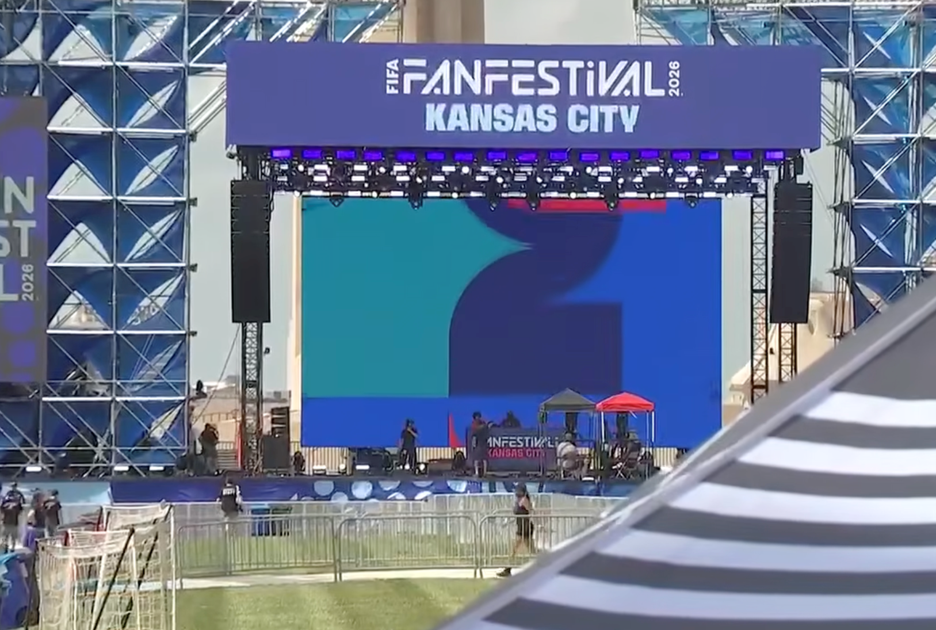
The main stage of Kansas City’s FIFA Fan Fest. Source: KCTV5 Wexler: What does the Fan Fest involve? Chief Graves: Fan Fest is a big festival-type environment. It has an area where you can buy FIFA World Cup 2026 merchandise. They’ll be showing all the matches that are going on throughout the day, including when we have a match here in Kansas City. A lot of the buses going out to the stadium will be right next to Fan Fest, so people can come to the Fan Fest area, show their ticket, get on a bus, and be driven out to the stadium. Wexler: You have several countries staying and training in and around your city. How are you managing that? Chief Graves: We’re sharing a lot of our hotel responsibilities with other agencies. We’re right on the line between Kansas and Missouri. Here on the Missouri side, we have Argentina and the Netherlands staying in Kansas City, and England is practicing here. England’s hotel is just on the other side of the state line. So there are a lot of police escorts back and forth from Kansas City, Missouri, to Riverside and Kansas City, Kansas. And Algeria is in Lawrence, Kansas, where the University of Kansas is. I don’t think we’re escorting anybody out to Lawrence. Wexler: How are you managing your deployment during this event? Chief Graves: We’re keeping Kansas City, Missouri, police officers answering police calls for service. But because we are the smallest-market World Cup city here in the United States, we have had to ask outside resources to come in to assist us. We’re making sure those resources have lodging and transportation to come to their shifts. Out in the field, nothing has changed except everyone is working on match days, and we have cancelled people going out of town. You can’t take any days off. Argentina came in a week earlier than expected, so this has been going on since Sunday, May 31st, and will go through July 11th. July 11th is our last match—it’s a quarterfinal—and will be our last Fan Fest day as well. It’s a long time, but it’s a once-in-a-lifetime event, so we’re ready to do whatever needs to be done to get through it and make sure it’s safe.
Chief Graves, KC2026 CEO Pam Kramer, and City Manager Mario Vasquez talk World Cup preparation with Kansas City PBS. Source: Instagram Wexler: Are you using technology in any innovative ways during this? Chief Graves: We are using the RollKall app for off-duty scheduling. We’re using that app to schedule every one of our shifts at the hotels, for escorts, at Fan Fest, and at the matches. We’re using Peregrine. For those of us host cities that have Peregrine, they’ve created a dashboard just for us. It has a lot of the matches that are being played in different cities, at what time, and team movements. We’ve also been able to geofence specific areas in our city, such as around our Fan Fest. That way, if there’s any kind of incident that occurs in this geographical area, we’ll be alerted to it. So if an officer answers a call for service, they might think it’s nothing. But we’ll see that and decide if we need to pay a little more attention to it. We’re just making sure that we have eyes on all things in and around these sites. Wexler: Do you have a command center specifically for the World Cup, or are you operating from your existing command center? Chief Graves: We have a regional command center here, and that is located a distance away. We’re also going to have our emergency operation centers active. There are some federal emergency command centers that are going to be open as well. But that regional command center is really the hub. It’s going to have all the first responders, transportation, hospitality, and other stakeholders in one room. We are all going to intermingle with each other. If something happens, we can all be alerted. It’s our line to the national picture as well. Wexler: Are you worried about the threat of malicious drones? Chief Graves: I’m really thankful that we, as host cities, were able to access grant funds to purchase counter-UAS equipment. We’re working closely with our federal partners on that equipment and our authorities. Any time you have mass gatherings in public places, you have to make sure you use mitigation in the areas you have control over. Fan Fest has a perimeter around it. When we’ve celebrated for our Super Bowl champions, it was a mass gathering—a parade however many blocks long—with over a million people congregating in one area. And we had that tragedy. (Note: I previously spoke with Chief Graves about the 2024 Super Bowl parade shooting for this column.) So anytime we have these mass gatherings in a nonperimeter area, you have risks. In that situation, it was people who got into an argument with each other and were armed. You could have disagreements that result in gunfire, or you could potentially have lone actors come in, or a drone or IED [improvised explosive device] used in a lone wolf attack. We have to pay attention to all those things, and that’s something that’s top of mind. Atlanta Chief Darin Schierbaum Wexler: Tell me about your planning process in Atlanta. Chief Schierbaum: Everyone is focused on game days, where there are a lot of things going on at the Fan Fest. And it’s not just the formal FIFA Fan Fest; neighborhoods are having events. The city itself has sponsored five neighborhood watch parties. So it’s what FIFA is doing, it’s what the communities are doing, and it’s what’s going to organically occur at every watering hole in the city that’s saying it’s a sports bar, at least for the next six weeks. Our planning started two years ago. We’ve hosted the Super Bowl and the Olympics 30 years ago. There may be six people left on the Atlanta Police Department from when we hosted the Olympics. We also had to understand that, while we may have a Major League Soccer team here in Atlanta United, that’s not the soccer culture we’re going to see here in the city. So two years ago, we started sending our planning team to various places in Europe. The State Department has been wonderful in working with us. We also have a partnership with Georgia State University, which has an existing international leadership exchange between Georgia law enforcement and other democratic law enforcement around the globe. We used that partnership to visit a number of cities, learning what their culture is like, how they keep the event safe, and what their intelligence apparatus looks like. We incorporated a lot of those lessons learned. We quickly expanded our mounted patrol based on what we saw on those visits. We already have a mounted unit, but now we have mounted units from Savannah, Georgia, a sheriff’s department in Georgia, and Memphis, Tennessee, coming here for the games, because we immediately saw we could improve on that capability.
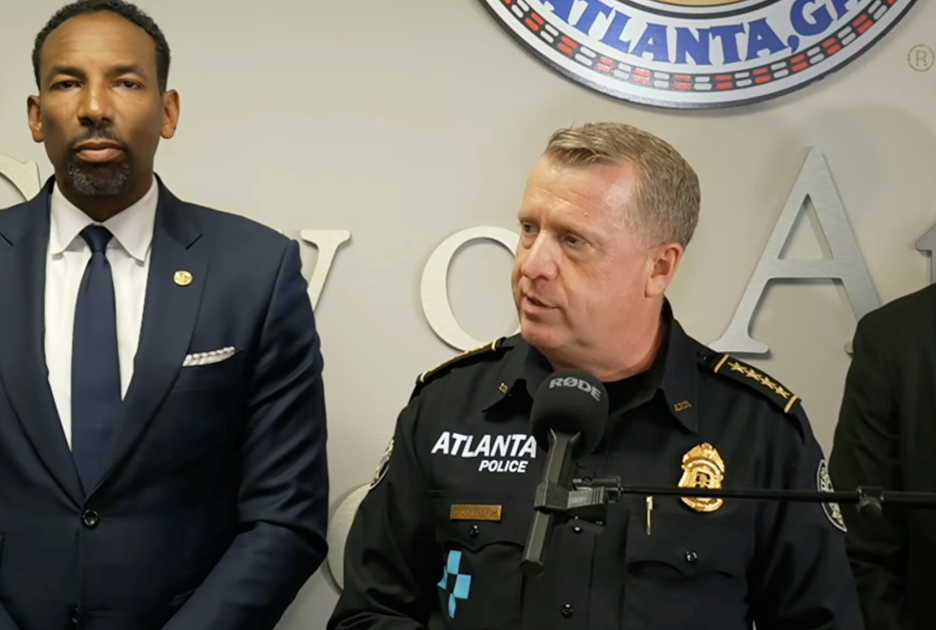
Chief Schierbaum (right) joins Atlanta Mayor Andre Dickens for a press conference detailing the city’s security preparations just ahead of the start of the World Cup matches. Source: YouTube Wexler: How are you managing staffing? Chief Schierbaum: We have to do four things for the next six weeks. We have to support the FIFA plan of action so it’s effective. The actual game and Fan Fest are happening on state property at the Mercedes-Benz stadium, part of the Georgia World Congress Center complex. That’s also where Centennial Olympic Park is. We are protecting everything around that and providing a lot of all-hazards assets to that event. Then we still have to go to every 911 call that’s going to be made for the next six weeks and have nothing to do with the games. And we still have to proactively fight crime and keep the peace in Atlanta, Georgia. So for two years, the plan hasn’t only been about the games, but also how we continue to deliver police services for six weeks. We also have the Peachtree Road Race on July 4th, which is the world’s largest 10K, with 60,000 runners. And we’re doing this at a time when I believe the terrorism threat is very high. So unless you’ve just welcomed a new baby or are carrying a rifle in defense of your country, we expect to see you at work. We have done a lot of work to make sure you still get days off at regular intervals, but there are certain days when everyone has to be at work. We’ve maintained our four 10-hour shift model as closely as we could, but we had to add a number of 12-hour shifts, particularly for the bicycle response team and the civil disturbance unit. We’ve stopped every administrative function that we can. Our academy training section is paused for six weeks. We have 170 recruits in training. They’re all being sent out, depending on what their skill set is at the moment. Some of them will be directing traffic. Some have full arrest powers. Some will be logistics teams. So we’re pausing everything except our core functions. We also have a lot of flexibility built into the plan. If we start getting issues not related to FIFA, such as teen takeovers, street racing, or a gang war breaks out in the city, we have plans to shift to that. And if we get information from the FBI or we see a terror attack in the country, we have plans to use our state and regional partners to shift accordingly and beef up in that area if we have to. There’s been a lot of tabletopping for the last two years. A lot of dry-erase boards and coffee have gone into it.
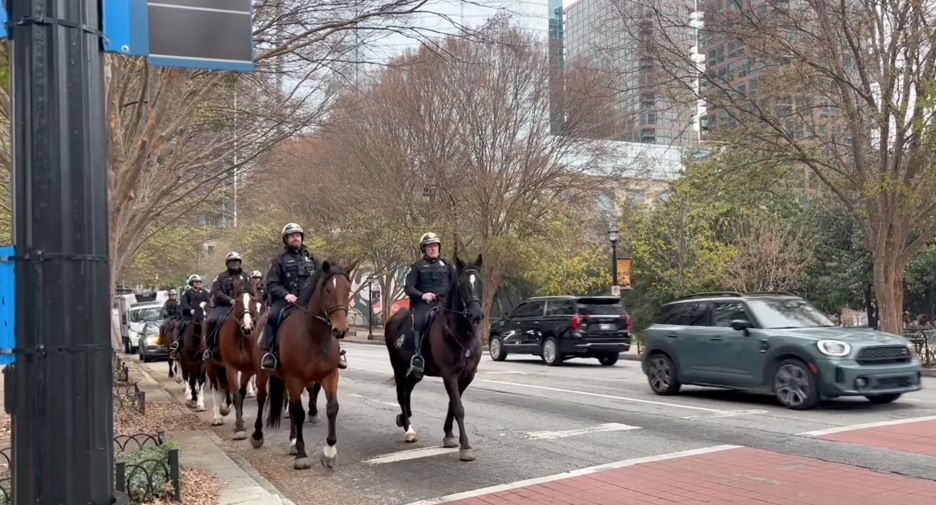
Atlanta Police Department and Cobb County Sheriff’s Office mounted patrols training together in advance of the World Cup. Source: Instagram Wexler: What are your terrorism concerns? Chief Schierbaum: Drones, IEDs introduced in the crowd—like we had here in the 1996 Olympics—vehicle-borne intrusions, and sniper attacks are the things I’m really worried about. I think drones are likely to be where we see an attack attempted. It’s an area where our capabilities and laws are just now catching up on being able to counter drones. We have a very good working relationship with the FBI, HSI, ATF, the Secret Service, and all our federal partners, so they’re bringing in resources, as they are to every other city. We’ve done a number of scenario-based tabletops around a drone threat. How could it materialize? How could we mitigate it? It’s one of the areas I’m worried about, and I’m confident in the team to have created a plan so we can respond if it starts playing out here. Wexler: How are you dealing with language issues? Chief Schierbaum: Our Mayor’s Office of International and Immigrant Affairs took the lead. We know who we’re going to have for the first five games, but we don’t know for the last three. To meet the directives of the Mayor’s Office, we did a survey of all the languages spoken in the Atlanta Police Department. Based on language ability, we have reassigned individuals to the airport command, the downtown space, and the hotel venues. We’ve also added the iSpeak app to every city phone so our officers have immediate access to iSpeak. And we added the translation capability to our Axon body-worn cameras. We have been meeting with the State Department very regularly, as well as the teams that already have a diplomatic presence here. We’ve connected our public defender unit with the State Department and the International and Immigrant Affairs team to make sure that if we happen to arrest you and English is not your primary language, you still have access to due process. And we’re using our message boards downtown to inform [everyone] about the rules and city ordinances around alcohol. Philadelphia Commissioner Kevin Bethel Wexler: In addition to the World Cup, you have July 4th festivities and the MLB All-Star Game on July 14th. How are you managing your staffing over the next six weeks? Commissioner Bethel: As we were going into our contract negotiations, we were able to work out some adjustments in our contract for the summer period. That’s not full relief, but it gives us some relief. We also recognized that we needed a lot more support. We’re a large police department, and oftentimes we can handle these singular events on our own. But on July 4th, for example, we normally have the parade on the 4th, but we were able to move it to the 3rd. But between the FIFA game at 5:00, our Fan Fest area, and our night events on the Parkway, it’s a massive deployment process. So on certain days, the state police will be supporting us. July 4th will be almost at the level we were at for the Super Bowl. We’ll have almost 3,200 folks stationed in different parts. Because we still have a city to run. We appreciate all the things that FIFA brings to the space, but on July 5th, when the last FIFA event is done, we will still have a city to run. So part of our challenge is making sure we do that, because July 4th has historically been one of our most violent weekends. So we have to prepare for all of it. All our federal partners are participating in this. We have MOUs and mutual aid contracts with our bordering counties, so we’ll be getting personnel from them. We have a phenomenal relationship with our state police colleagues. So on July 4th, for example, we may have upwards of 300 state troopers in the city supporting our efforts. We were fortunate to get overtime through the federal funding, so we will be using overtime to extend shifts. Two recent academy classes give us close to 100 officers. They’ll be covering the Fan Fest while it’s open for its 39-day period. We’re using our recruits to help us in the background with some of the work we’re doing. And we’re working with our Office of Emergency Management. It really is an intergovernmental approach to work with all our partners.
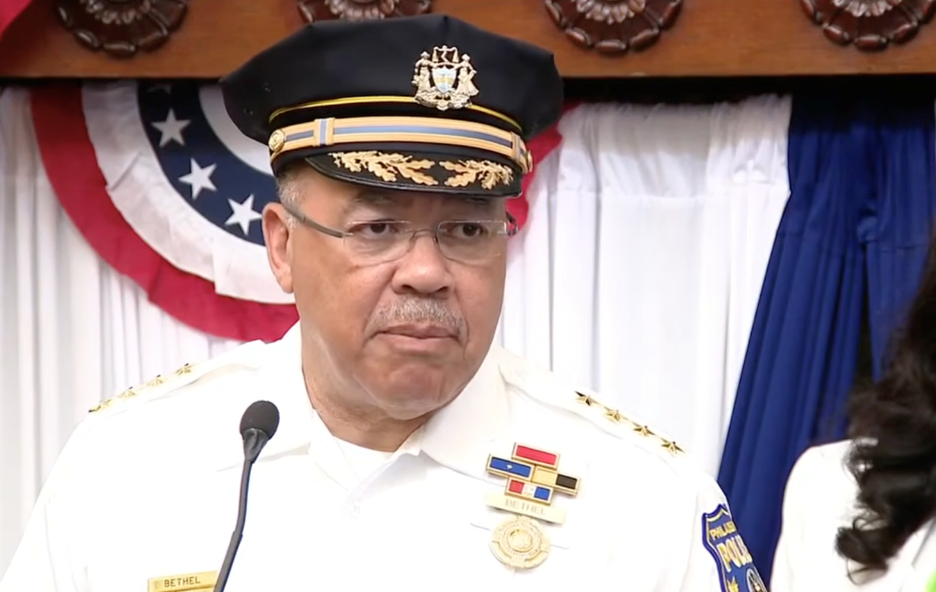
Commissioner Bethel discusses World Cup planning during a public press conference. Source: FOX 29 Wexler: What technology has been helpful to you? Commissioner Bethel: We use a lot of technology. One of the things we have at our disposal that we did not have previously is, we will be using Axon’s translator on our body-worn cameras. There are about 50 languages that the body cameras will translate for us. We’re in the process of getting those activated throughout this week. We have to do some training, and it will be used by all our officers. We anticipate we’re going to have a lot of folks coming to the city whose first language may not be English, or it may not be a language they use at all. About a year and a half ago, we started our drone project. We have drones in five of our patrol districts and have teams that can deploy anywhere in the city to fly our drones. That technology has really given us overwatch. We don’t surveil with our drones, but they give us the ability to see where historically we had not been able to see, unless we were on the ground, had a camera in that position, or were able to get a helicopter over the top. Today I can put a camera wherever I need to see, which is phenomenal. And we’re doing drone mitigation. We have the equipment and have an individual trained to do drone mitigation. The potential of a drone attack at one of these events is a concern. Wexler: Do you expect this to be similar to other sports events and celebrations you’ve managed, or do you see it as a different animal? Commissioner Bethel: I see it as a different animal, based on what we’ve seen and our conversations with colleagues about soccer events. We had some of it last summer when we had FIFA Club World Cup events. The good part is that our stadium is located in our stadium complex area, which is kind of away from the downtown area. It borders some of our community, but we have a huge park next to it. So our goal is to use that space for them to do the marching and reveling. They have a lot of energy, but a little bit of a different focus. They look chaotic, but at least they’re chaotic together. After the Super Bowl, folks are doing whatever the hell they want to do. So I think we have to make sure we have the proper temperament and are mindful that this is what they do at these events. It’s not about harming police; it’s about them celebrating. Even with our celebrations for the NFC Championship and the Super Bowl, folks are trying to come after the police department. But convergent behavior oftentimes becomes very challenging. I think based on the staffing plan we have and the deployment plan we have, we’ll be able to address it. Thanks to Chief Graves, Chief Schierbaum, and Commissioner Bethel for taking time out of their very busy schedules to speak with me! The World Cup presents an unprecedented security challenge due to both the duration of the event and the number of locations where it’s occurring. Police chiefs and sheriffs are used to policing a single event, like the Super Bowl or Boston Marathon, on one day. And they are used to events like March Madness or the World Series that take place in multiple locations across the country over an extended period of time. But the 2026 World Cup involves 48 teams playing 104 matches over 39 days across 16 cities! In addition to the matches, law enforcement will be responsible for protecting Fan Fest events in every host city, athletes at their training venues and hotels, visiting fans from across the world, and local residents. Unfortunately, active shooters, gang violence, and terrorism are all realistic threats, and police departments have trained for these possibilities. The World Cup presents one of the most significant policing challenges that I can recall. Departments have been planning for years and recognize that they must keep their neighborhoods safe while also protecting the many visitors arriving from other countries. PERF will be documenting local law enforcement’s preparations and lessons learned in a report to be published after the tournament. Best, Chuck |