|
August 8, 2026 Real-time crime centers are transforming policing
PERF members, On February 8, 2024, a man murdered a woman in a Manhattan hotel room and fled the state. Later that month, he carjacked and stabbed a woman in Phoenix, Arizona, then, in the nearby city of Surprise, dragged a restaurant employee into a bathroom and stabbed her as well. The perpetrator fled in a stolen vehicle. The neighboring Scottsdale Police Department received a broadcast about the assaults, and its real-time crime center (RTCC) went into action. License plate readers (LPR) tracked the suspect's vehicle as it entered Scottsdale, and RTCC staff redirected traffic cameras to locate it. When the vehicle was found in a mall parking lot, RTCC personnel used the mall's own camera network and a drone to direct officers to the suspect's location, where he was apprehended—and they discovered he was also wanted for the murder in Manhattan. Scottsdale Deputy Chief Rich Slavin told that story ten days ago at a PERF meeting about RTTCs. Sometimes called real-time information centers or real-time intelligence centers, these technology hubs both support officers’ immediate responses to calls for service and improve agencies’ ongoing investigations into crimes. This meeting was part of a COPS Office–funded project to create useful resources about RTCCs for police departments and sheriffs’ offices. About 35 police officials from agencies with established RTCCs joined us to discuss what guidance they thought might help the field.
PERF’s real-time crime centers meeting held July 29, 2026, in Washington, D.C. Chiefs and sheriffs tell me that RTCCs bring together a range of technologies to transform the way their officers respond to crime. Agencies are using drones to provide responding officers with detailed information about a situation before they arrive at the scene. LPRs can locate a vehicle of interest in seconds. And camera networks can narrow the search for a missing person down to a manageable area. Of course, these technologies raise privacy concerns, and we spent part of the day discussing the recent pushback against Flock license plate readers. But mainly, attendees shared some of the ways their RTCCs have helped solve crimes.
The Las Vegas Metropolitan Police Department demonstrates its skyport drone capabilities. Source: LVMPD Attendees shared some of the ways that their RTCCs have helped solve crimes. Among its many RTCC successes, the Sarasota, Florida, Police Department solved a fatal hit-and-run by using LPR data and information about the vehicle’s make and model to identify the specific car used to commit the crime. The Atlanta Police Department provides officers with access to its RTCC’s capabilities through an app on their phones, and an officer was able to use that technology to find a missing 74-year-old with dementia. When a shooting occurs in St. Louis, the police department’s RTCC uses cameras to gather initial information about the scene for responding officers. Once officers at the scene have information about any victims and suspects, the RTCC immediately begins gathering intelligence on those individuals. And the Las Vegas Metropolitan Police Department has used gunshot detection deployed through its RTCC to reduce its response time to shootings from six minutes to two minutes. The goal of our meeting was to answer the following five questions:
Our group came to the following conclusions: What is an RTCC and how does it impact crime?
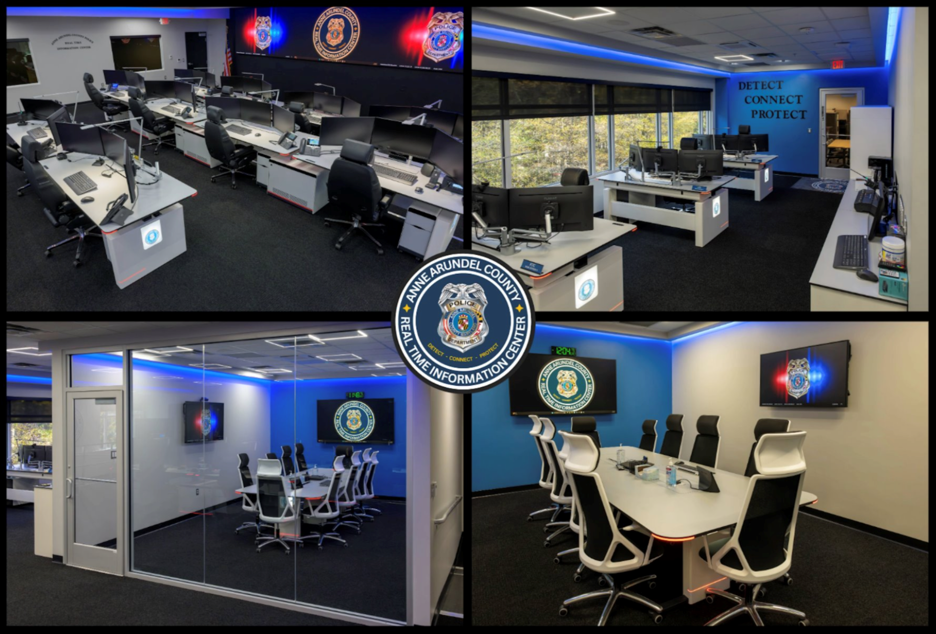
The Anne Arundel County (MD) Police Department Real-Time Information Center. Source: AACoPD What advice would you give a chief or sheriff about building and running an RTCC?
How do you operate an RTCC day to day?
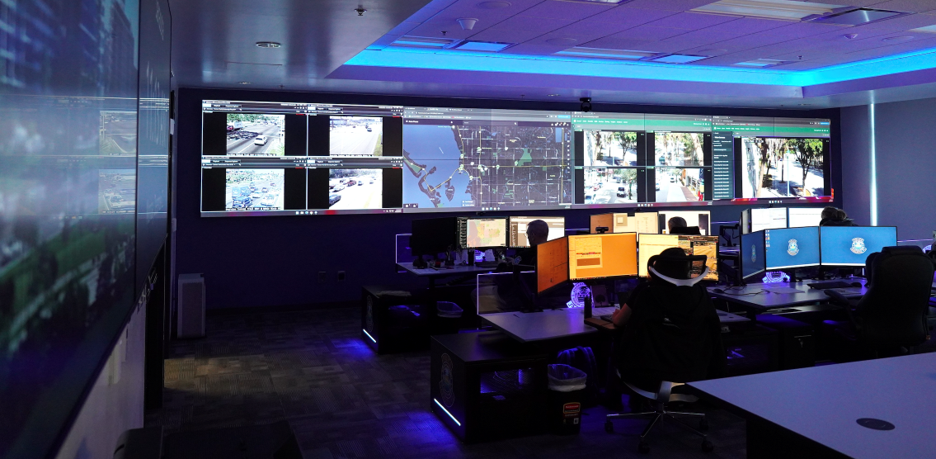
The Sarasota (FL) Police Department Real-Time Operations Center. Source: SPD. What are common community concerns about RTCCs and how do you address them?
What RTCC-related resources would be useful to the field?
I’ll close with one more success story. Last July, the Fairfax County, Virginia, Police Department responded to a report of an attempted abduction of a toddler at a local mall. The suspect let the girl go and fled when confronted by the child’s mother. Police used their camera network and real-time crime center to quickly track the suspect to the hotel where he was staying. He was arrested and charged with abduction of a minor. Thanks to everyone who traveled to Washington for this meeting! I welcome any thoughts and suggestions you may have about this project. Have a great summer weekend! Chuck |