|
November 7, 2026 Introducing the new members of PERF’s board of directors
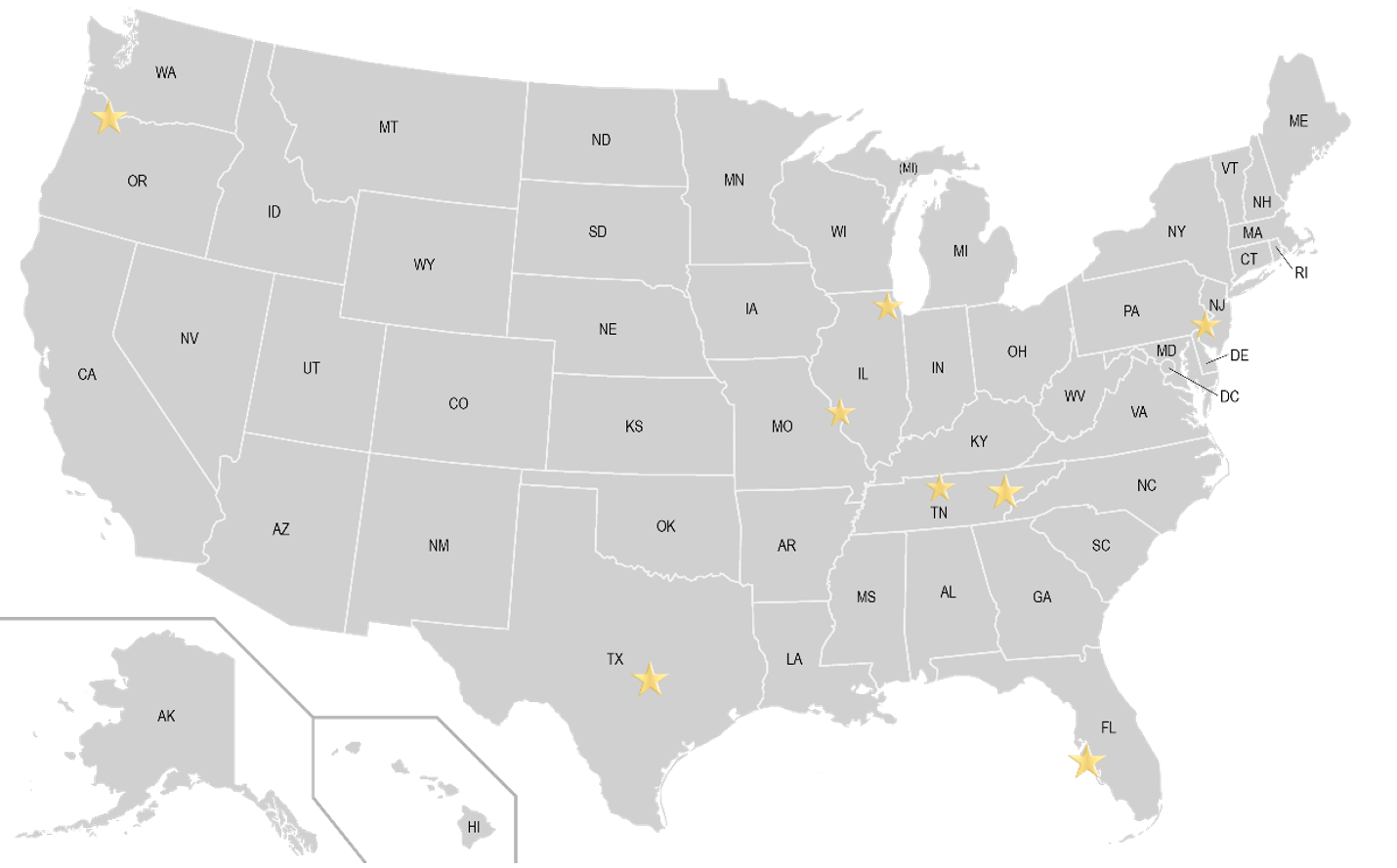
PERF members, PERF recently welcomed four new police executives to our board of directors. Austin (TX) Chief Lisa Davis was elected PERF’s Vice President. She has led the Austin Police Department for the past two years after serving with the Cincinnati (OH) Police Department from 1992 to 2024, retiring as an Assistant Chief. Sarasota (FL) Chief Rex Troche was elected PERF’s Secretary. He began his policing career in 1997 with the Largo (FL) Police Department and has served with the Sarasota Police Department since 2002. He was appointed Police Chief in 2022. Portland (OR) Chief Bob Day was appointed to a Member-at-Large position on the Board. He worked for the Portland Police Bureau from 1990 to 2019, when he retired as a Deputy Chief. In 2023, he came out of retirement to serve as the agency’s Police Chief. University of Tennessee Chief Sean Patterson was appointed to the Ex-Officio position on the Board. He spent the first 21 years of his career with the New York City Police Department, where he was a member of the Emergency Service Unit. He retired from the NYPD in 2020 to become the Assistant Chief of the University of Tennessee Police Department, and he was then selected to be that agency’s Chief in 2023. It’s noteworthy that we have a Board member from a university police department—Chief Patterson may even be the first—so we’re particularly glad to have his perspective.
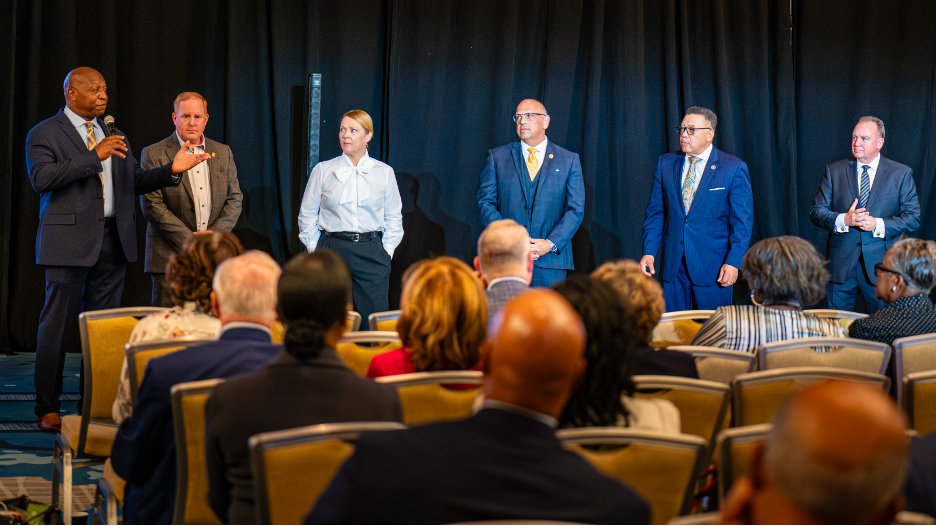
PERF board members at last month’s Town Hall Meeting at the IACP Conference in Orlando. From left to right, Metropolitan Nashville (TN) Chief John Drake, Portland (OR) Chief Bob Day, Austin (TX) Chief Lisa Davis, Sarasota (FL) Chief Rex Troche, Philadelphia (PA) Commissioner Kevin Bethel, and St. Louis (MO) Commissioner Robert Tracy (not pictured: Elgin (IL) Chief Ana Lalley and University of Tennessee Chief Sean Patterson). For today’s Trending column, I asked these four chiefs to introduce themselves, share why they wanted to join PERF’s board of directors, and raise an issue they think deserves more attention from police leaders.
1. Tell PERF’s membership a little about yourself. Chief Lisa Davis, Austin (TX) Police Department I left Cincinnati as an assistant police chief after 32 years there. I came to Austin because retirement was looming, and I felt I still had a lot to give policing and a lot to offer. If you’re looking for a fun fact, maybe it’s my love for karaoke. I’m a big karaoke person. When I started looking for [other] positions, I drew a geographic area where I’d be willing to go. Being a two-hour flight away from my five wonderful grandchildren in Ohio was important. I just finished year two and have a good team around me, so I feel more confident that I can leave for a week, enjoy myself, and know that I have a really good team in place to take care of things. I think that’s extremely important.
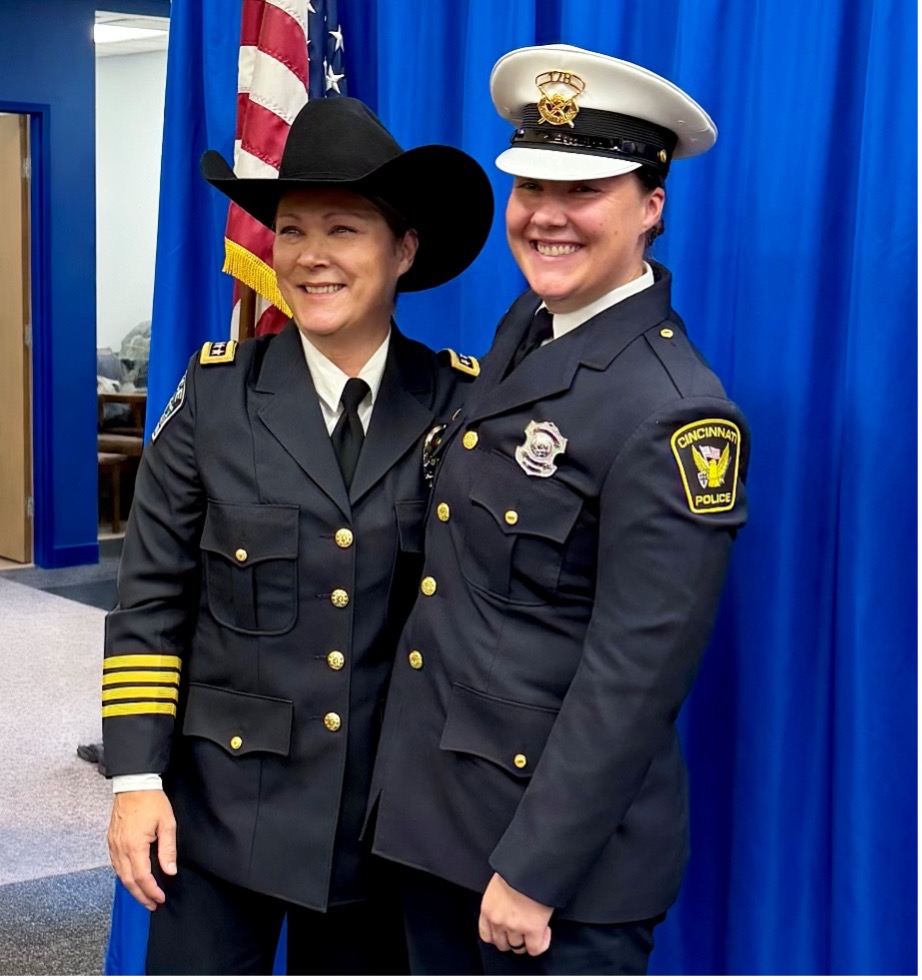
Chief Davis and her daughter Cheyenne Wells at Officer Wells’s swearing-in ceremony with the Cincinnati Police Department this week. Credit: Lisa Davis. Chief Rex Troche, Sarasota (FL) Police Department I was born and raised in Chicago. My father was one of the first seven Puerto Rican police officers hired by the Chicago Police Department, in 1962. And I essentially grew up in that business. My older brother and my sister-in-law are also Chicago police officers. So I had to get into the family business, apparently.
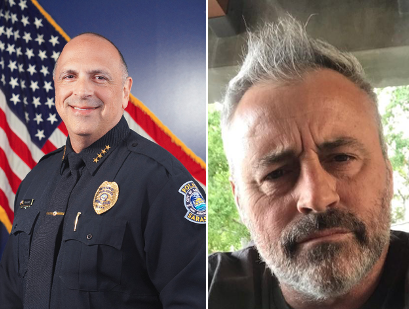
Chief Troche attends a Memorial Day parade. Credit: Rex Troche. I joined the Largo [Florida] Police Department in 1997. I left there in 2002 to come to the Sarasota Police Department, and I worked my way up through the ranks to be chief of police. An interesting fact about me is that I was almost Joey on Friends. I turned down an offer to go to L.A. to be on Married… with Children because my father talked me into finishing my college degree. He said after that, he’d be more than happy to support me. But that role on Married… with Children was supposed to be the role that went on to be on a then-unknown show called Friends, and it was going to be the role of Joey. But here I am in the world of law enforcement, and I don’t regret one day of it.
One of these men looks happier with his career choice than the other. Left: Chief Troche. Credit: Rex Troche. Right: Matt LeBlanc. Credit: @MLEBLANC/INSTAGRAM. Chief Bob Day, Portland (OR) Police Bureau I was born and raised in the Portland area—a native Oregonian. I started my career in 1988 with the State Police. I was with the [Portland] Police Bureau from 1990 to 2019. I took a little break from 2019 to 2023, then came back as chief in 2023. I’ve been married for 30-plus years. Pretty proud of that. We have two kids. Our daughter Natalie and our first grandson live in Southern California. Then our son Sam passed away in 2016 from cancer at age 15. One thing that might be of interest is that I officiated high school and college football for 25 years. I did 15 years at the Division One level—Pac-12, Big Sky—so I’ve spent a lot of Saturdays in the fall getting encouragement from coaches, players, and fans and all the “thanks for the great work” that officials always receive.
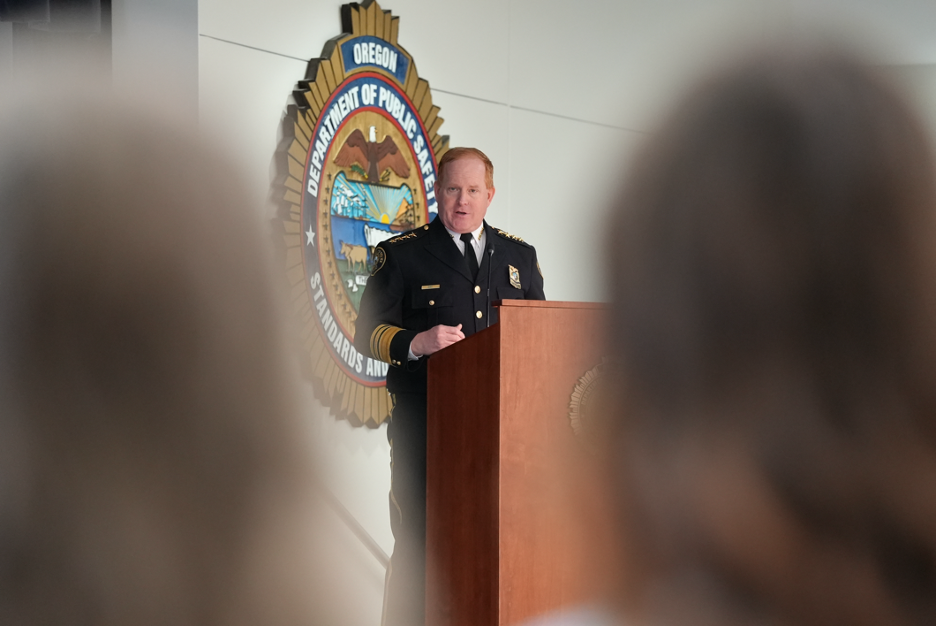
Chief Day addresses the public. Credit: Bob Day. Chief Sean Patterson, University of Tennessee Police Department I spent the majority of my career—22 years—in the NYPD, and just over half of that with the Emergency Service Unit at the rank of sergeant and lieutenant. Then in 2020, I transitioned into higher education policing. So I bring the perspective of one of the largest municipalities in the country—and a very elite unit within that municipality—and also one of the largest campuses, one of the Power 4 conferences, the SEC. I am an uber family guy. I love my kids. I’ve run six New York City marathons and about 15 half marathons. I kind of look like a tight end. But the reason I started running is that one of the guys in the Emergency Service Unit—Luis Fernandez—was dying of a 9/11 illness, and a bunch of us decided to run in his honor. It started me down a path of running. I’ve taken a break in the past year and a half, but I need to get back into it. Luis would want me to, that’s for sure.
Chief Patterson on campus. Credit: Sean Patterson. 2. Why did you want to serve on PERF’s board of directors? Davis I’ve always looked at PERF as the thinking person’s place. It is where ideas are formed. It’s where research is done. It’s where best practices and what’s next in policing are discussed and vetted. I went to SMIP back in, I believe, 2013. Since then, I’ve looked at how I can continue to grow as a professional and a person to get better at this role. In policing, we have to keep abreast of the latest goings on and the latest practices. I think PERF does that, and I wanted to be a part of that. I’m very proud of that. Troche PERF is held in such high regard in our community. It was very clear to me that when PERF does their research, they truly do follow the research. Quite frankly, PERF has made decisions that haven’t necessarily been very popular in law enforcement. But because PERF is always looking five or 10 years down the road, it seems that those decisions really do come to fruition. Another component of PERF for me was meeting Chuck Wexler and his team and seeing their professionalism, care, and respect for the profession. That is what I hold most dear to my heart, because I feel the camaraderie and understanding of what we do in the field. And being a part of PERF really does go a long way in our community. I received so many letters from commissioners and just people in our community thanking me for being part of PERF. So the reverence of PERF does go beyond law enforcement. Day Portland was an original PERF member. PERF has a long history and tradition of being on the leading edge of leadership development and being a trusted voice in our nation around issues of criminal justice and policing. I’ve watched that and participated in a few Town Halls and other meetings over the years. So that appealed to me. And as the chief in Portland, I believe there’s an opportunity for me to share some of my experiences and knowledge, and to continue to learn and grow. It seemed like a really good fit at this time in my career. I’m hoping I can add a little bit of perspective—especially being from the Northwest, where some of our policing challenges are a bit unique—and gain knowledge and learn from the great members of PERF. Patterson My first experience with PERF was when Chuck came to NYPD to study how we dealt with people in emotional crisis. And that was how ICAT was born. Then I was fortunate enough to be “volun-told” to go to SMIP, which was one of the best experiences of my life. I didn’t really know much about it, but when you get a call from the Commissioner’s Office, you’re going to go. That showed me that PERF is a thought-provoking organization that will challenge the status quo and continually reinvent itself to study difficult issues. And it’s uniquely equipped with researchers to bring outside-the-box thinking while still listening to its members to be the North Star, so to speak, and keep everything on track. If you go back to when the 30 Guiding Principles were released and people were ready to burn the house down, to where we are now as a profession, a lot of that comes from asking those difficult questions and having unique and bright researchers around to bring that out.
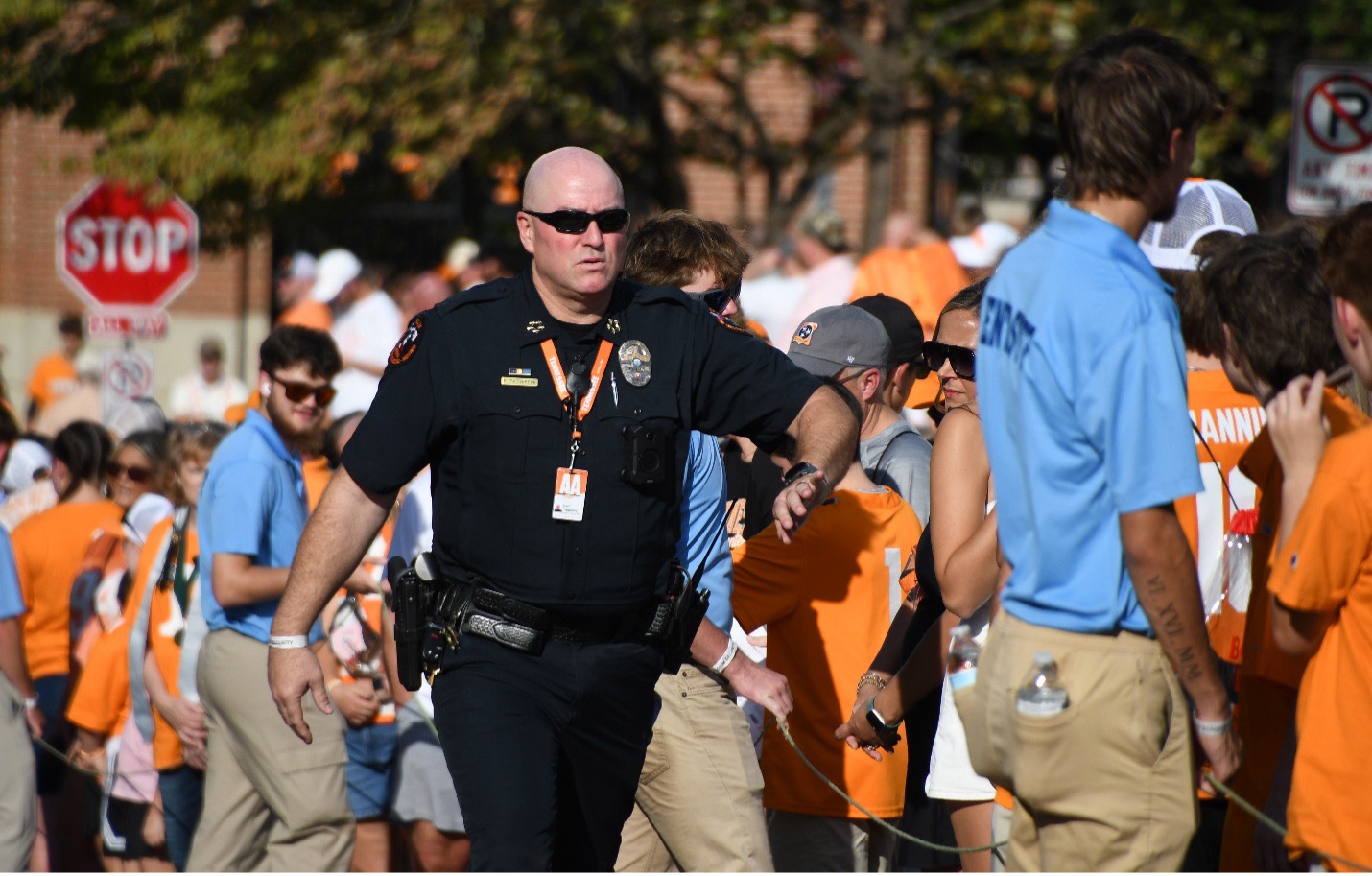
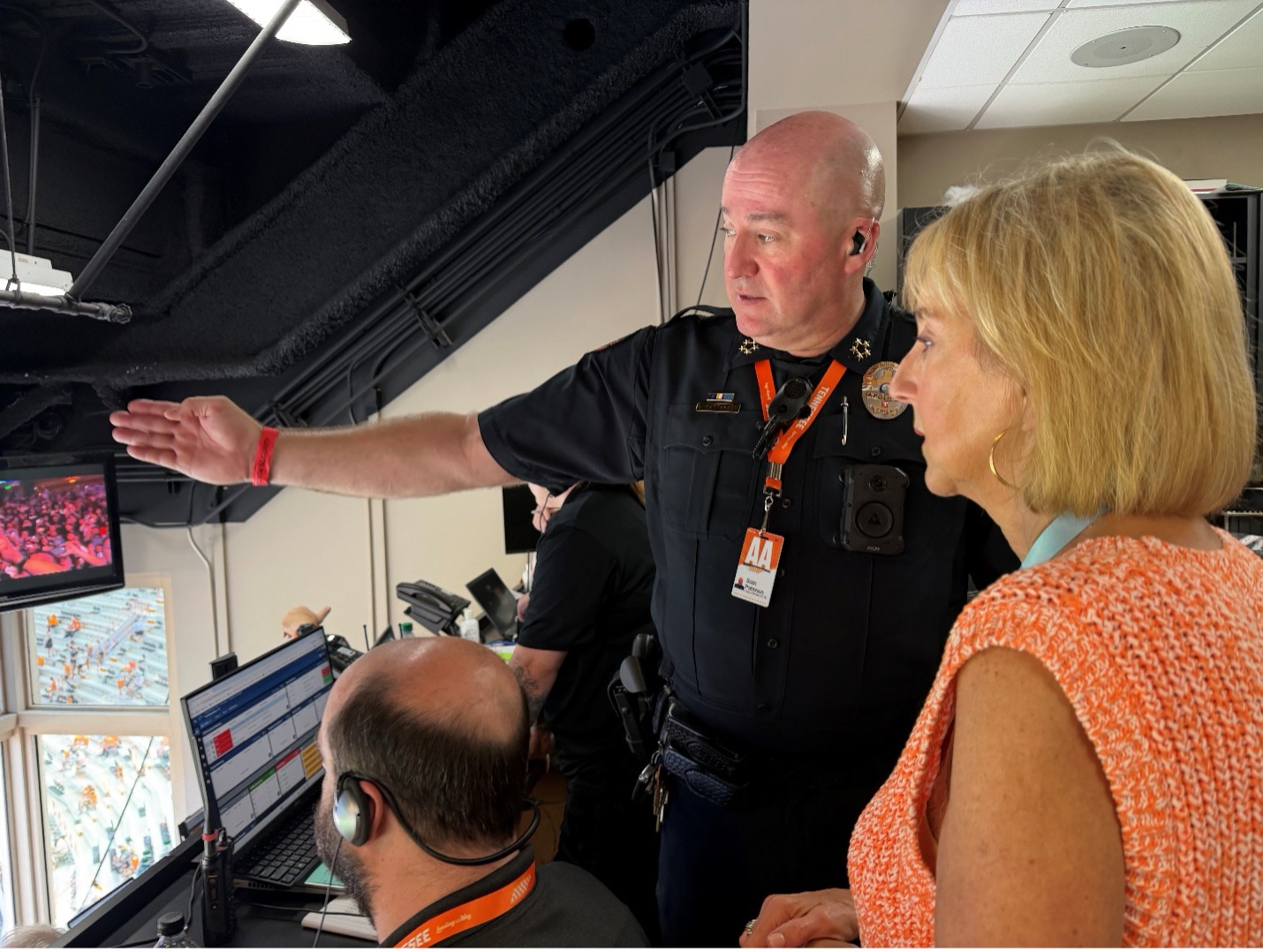
Chief Patterson at the University of Tennessee’s stadium. Credit: Sean Patterson. 3. What do you think police leaders should be paying more attention to? Davis I think it’s the internal audits. Especially in larger agencies. Certainly, as chief, you can’t be in the weeds on everything. But you have to have a really good understanding of what’s going on around you, where your problems lie. Where is the risk? Because we’re all risk mitigators; that’s what our role is. Once you identify risk, focus on that, and deal with that, you’re able to free yourself up for all the other things that you want to do as chief. And that’s going to more roll calls and spending more time in the field. It can be very challenging, because this role is so time consuming. But I think if you have good audits in place and good risk mitigators looking at things, that frees you up. Certainly as a newer police chief coming into an organization, even an organization that you’re homegrown in. Troche We have to do a better job of understanding the technology. We cannot simply hire the best and brightest and say, “Move on and go forward.” We have to understand the tech, because we also have to understand the pitfalls that come with it, and we have to make sure that we’re writing the policy to ensure that we have the guardrails in place. Another thing we need to do a better job of in our field is messaging. Firemen do a great job of it. They have posters with their pictures on it. We do a very poor job of messaging. We don’t get in front of things right away. So we need to do messaging on social media. We need to do podcasts. We need to do short messages on YouTube, TikTok, and Snapchat. We need to do a better job of getting our message out, because if we don’t get the message out, someone’s going to get the message out for us. And we’re not going to like that information, because a lot of times we’re seeing social media being weaponized, and people watching are being misinformed. We need to do a better job not only of messaging on the outside but also of communicating on the inside. At times we do a poor job of talking with our people, especially this generation. This generation doesn’t just want to be told, “Hey, go this way.” They want to know why they should be going this way. Chiefs should remove filters. We bring in a focus group of all the informal leaders of all the shifts and all the specialty units to meet with me every two months. We talk about rumors. We talk about issues. I remove the filters. I remove the sergeants, lieutenants, captains, and deputy chief, so they are talking to me directly. What we find is that a lot of their concerns are really simple ones to take care of. By the end of that meeting, I’ve already handled a lot of their issues by making a few phone calls and getting them what they need. And if I don’t finish it, we have action item to-do lists. By the next meeting, I better have those done, because if I’m asking them to get things done in a timely manner, then I better have it done by the time we have our next meeting. Day Technology is the challenge of the day. AI is in literally everything we do. Agencies need to understand technology and AI to ensure they have guardrails and credibility. A bigger issue I’m interested in exploring is the role of policing in our society as we continue to evolve, and the challenges that we could face as a nation that continues to be tested in many ways. I don’t think that testing is over. I think we’re going to continue to see challenges. And not just political challenges. I think about the water situation in the West, and what if we run out of water or begin to ration and begin to have public disorder. What’s the role of policing in that? How do we prepare our members to deal with food scarcity? How do we deal with insurrections? This isn’t an association with any party in particular. I just think that the world and the nation are changing at such a pace that we need to be preparing our officers for what it means to police and lead in a different environment. I think it’s the trust that the community has in local police that gives them confidence in the rest of the system. If we lose that confidence and trust in the entire system, that can lead to civil war or other types of unrest. It might sound a little hyperbolic, but that’s what keeps me up at night when I shake the hands of new officers, like I’m going to do next week, and think about their careers 30 years from now. Patterson I think we, as leaders, need to continually reinvent ourselves. I’ll have 29 years on the job in July, and I still feel like I’m a rookie. But if we sit in an office and say, “Well, when I came on the job, we did it this way,” this younger generation does not want to hear that. We need to invest in our human capital. We need to take care of our own and make sure they’re equipped to handle all the challenges of the job. Years ago I went to an IACP wellness seminar, and the slogan when you walked in was, “It’s okay to not be okay.” When we were rookies, it wasn’t okay to not be okay. This generation is different. What they expect is different. I worked every overtime opportunity when I was a rookie. These young officers don’t necessarily want to do that. So you have to find out what gets them going. You have to tune into that and constantly evaluate that. We were just at the IACP Conference and walked around a convention center full of technology. But we’re not paying attention to the human capital side of policing.
We’re lucky to have these four impressive, thoughtful chiefs join our board of directors! Best, Chuck |