|
July 4, 2026 The police as guardians of the Constitution and the Bill of Rights
PERF members, Today we celebrate the 250th anniversary of the United States Declaration of Independence, the first defining document in American history. Its most famous passage is this: "We hold these truths to be self-evident, that all men are created equal, that they are endowed by their Creator with certain unalienable Rights, that among these are Life, Liberty and the pursuit of Happiness." The U.S. Constitution, which went into effect in 1789, and the Bill of Rights, ratified in 1791, gave structure and legal force to those founding ideals—life, liberty, and the pursuit of happiness. Several of the Bill of Rights’s 10 amendments speak directly to the responsibilities and limitations of government authority in ways that are central to policing today. And yet, when those amendments came into existence, formal policing as we now know it had not yet developed. In 1791, the only structured law enforcement agency in the United States was the U.S. Marshals Service, and the first municipal law enforcement agencies were not formed until the mid-19th century. So the approximately 18,000 law enforcement agencies that exist today and are charged with enforcing the law and protecting the public didn’t even exist when the Bill of Rights was adopted. Stop and think about that for a minute. Police are, in a very real sense, a living bridge between those founding principles and their practical application in daily life—law enforcement is a modern institution tasked with carrying forward principles articulated long before the profession of policing ever took shape. I won’t walk through each of the first 10 amendments, but nearly every one of them—ratified nearly 250 years ago—has both shaped modern policing and, in turn, been shaped by it. For instance, the First Amendment guarantees freedom of religion, speech, the press, and peaceful assembly. Courts may define the contours of these rights over time, but police officers interpret and apply them in real-world situations. I think about a young cop standing between warring factions in Charlottesville, Virginia, trying to keep people safe while protecting opposite sides’ right to demonstrate while also ensuring that reporters can cover those events. At the same time, law enforcement must constantly navigate the line between true threats and protected speech. These are not abstract questions—they unfold in real time, often in volatile and unpredictable conditions. It’s the police who are called to safeguard individuals’ rights while maintaining public order. In those moments, they are the First Amendment in action.
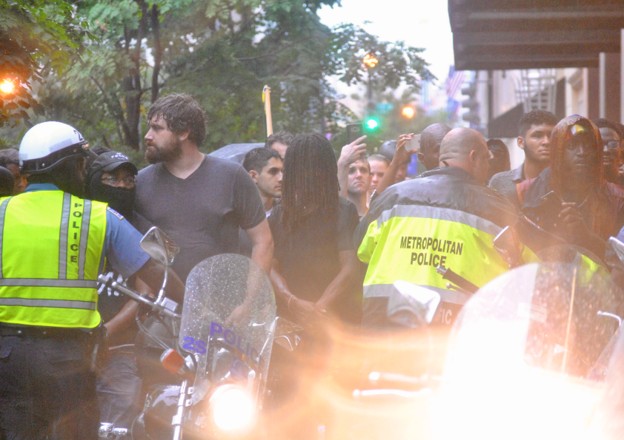
D.C. Metropolitan Police manage crowds of protesters and counterprotesters in 2020. The Second Amendment, as we know, guarantees the right to bear arms. But how that right is exercised in modern society increasingly falls to the police, who, for instance, must navigate and enforce the laws governing “concealed carry” and “open carry.” The judgments police officers are asked to make in these encounters—often with incomplete information and high stakes—underscore how complex and consequential the practical application of this constitutional right has become. These issues are rarely straightforward or tidy, as both the courts and cops are aware. Or consider the Fourth Amendment, which protects people from unreasonable searches and seizures. In 1791, who could have imagined that in 2026 the U.S. Supreme Court would confront the question of whether police conduct a Fourth Amendment “search” when they use a geofence warrant to collect location data from cell phones within a defined area? The Court’s answer, by the way—fresh off the presses—was yes: Police need a search warrant to obtain this information. The Fifth Amendment, thanks to Miranda v. Arizona and the innumerable crime shows and movies that echo its protections, is among the most widely recognized. It provides essential safeguards for individuals accused of crimes, including the right to due process, protection against self-incrimination, and protection against double jeopardy. Today, these protections play out in increasingly complex ways, from the widespread requirement to record custodial interrogations to questions about when voluntary encounters become custodial—requiring officers to navigate shifting legal boundaries in real time. One more. The Sixth Amendment, among other guarantees, conveys the right to confront witnesses. This requires police officers to approach investigations with a clear understanding that their work will ultimately be tested in court. Today, we are grappling with issues such as whether automated enforcement systems, like speed cameras, raise questions about a defendant’s ability to confront the “witness” against them. As we reflect on our country’s 250th anniversary, it is worth remembering that the Constitution does not enforce itself—it depends on the people entrusted to carry it forward. For the police, that responsibility is immediate and constant. Every day, officers make decisions that give meaning to rights enumerated nearly two and a half centuries ago.
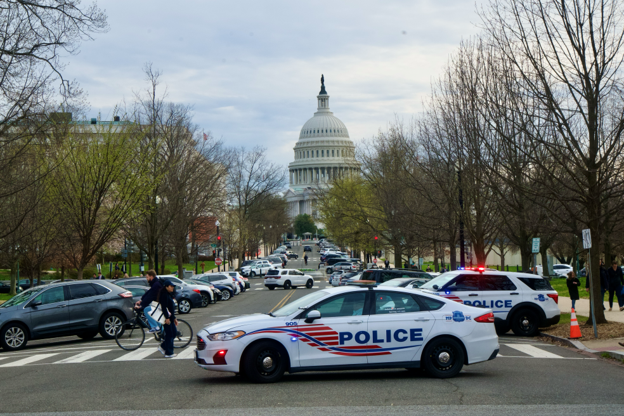
D.C. Metropolitan Police parked in view of the U.S. Capitol building. Thomas Jefferson observed that “laws and institutions must go hand in hand with the progress of the human mind.” Nowhere is that more evident than in modern policing. The role of the police has evolved to meet the demands of democracy, but its purpose remains rooted in those founding principles: to protect not only public safety but the freedoms that define our nation. As you celebrate this wonderful holiday, take a moment to remember that democracy rests upon the everyday work of the good cop. Thanks for all you do, and have a great Fourth of July! Best, Chuck
|