|
October 3, 2026 Violent crime is falling. Intimate Partner Violence is not. What can be done? PERF members, The United States is experiencing a historic decline in violent crime. In many cities, violent offenses, including murder, have fallen to levels not seen in decades. This trend deserves both celebration and careful study. But one notable exception is intimate partner violence (IPV), and that should concern everyone. In a survey of PERF members conducted this year, most respondents reported that IPV-related homicides and assaults were not declining at the same pace as overall violent crime. In some jurisdictions, respondents reported that these offenses appeared to be moving in the opposite direction. On September 18, PERF brought together more than 100 police executives, detectives, victim advocates, prosecutors, and researchers in Washington, D.C., to explore some fundamental questions. Are current strategies reducing IPV? And if not, what would it take for many cities to achieve the same progress in reducing IPV that they have made in reducing other violent crime?
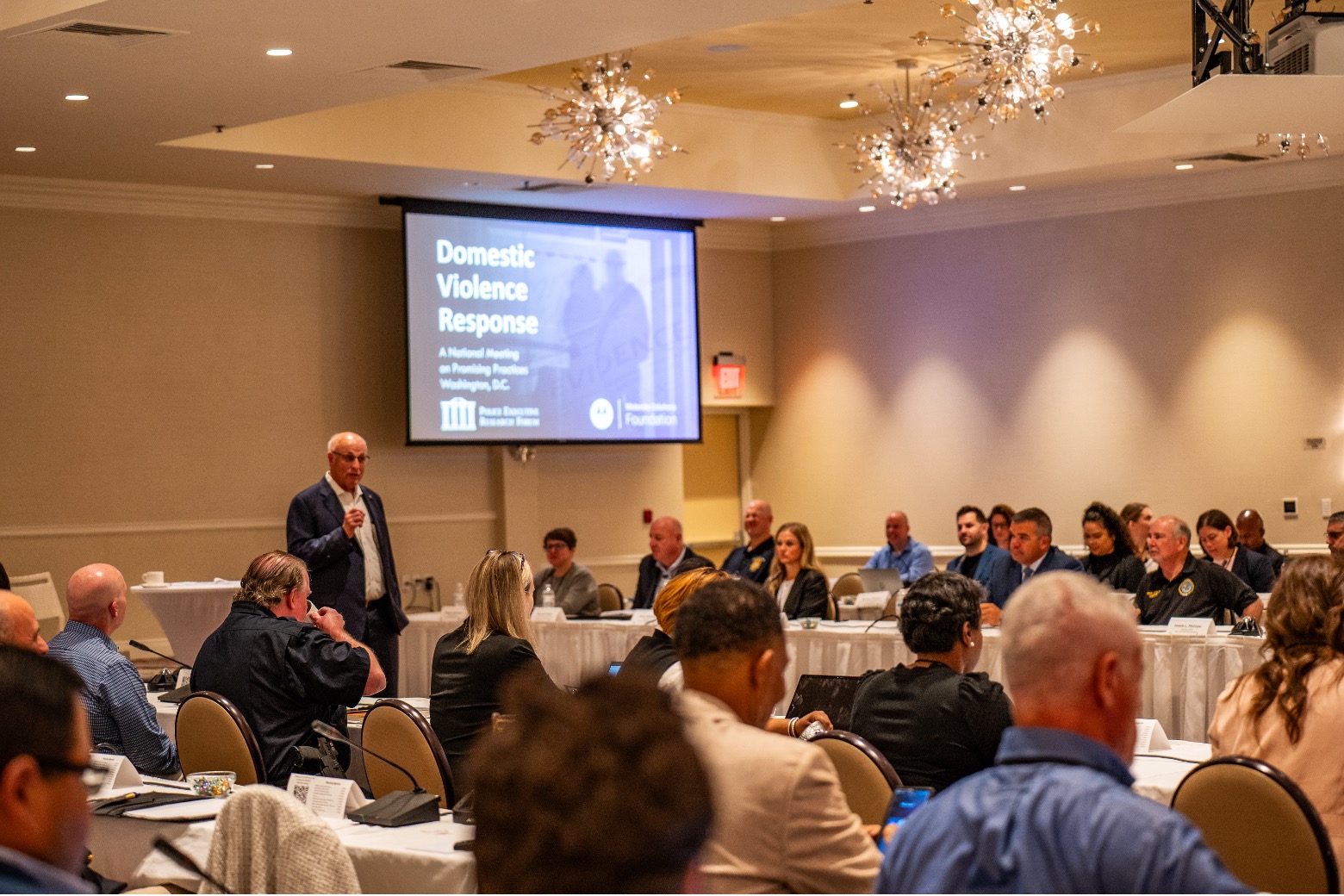
PERF’s September 18, 2026, meeting on domestic violence response, held in Washington, D.C.
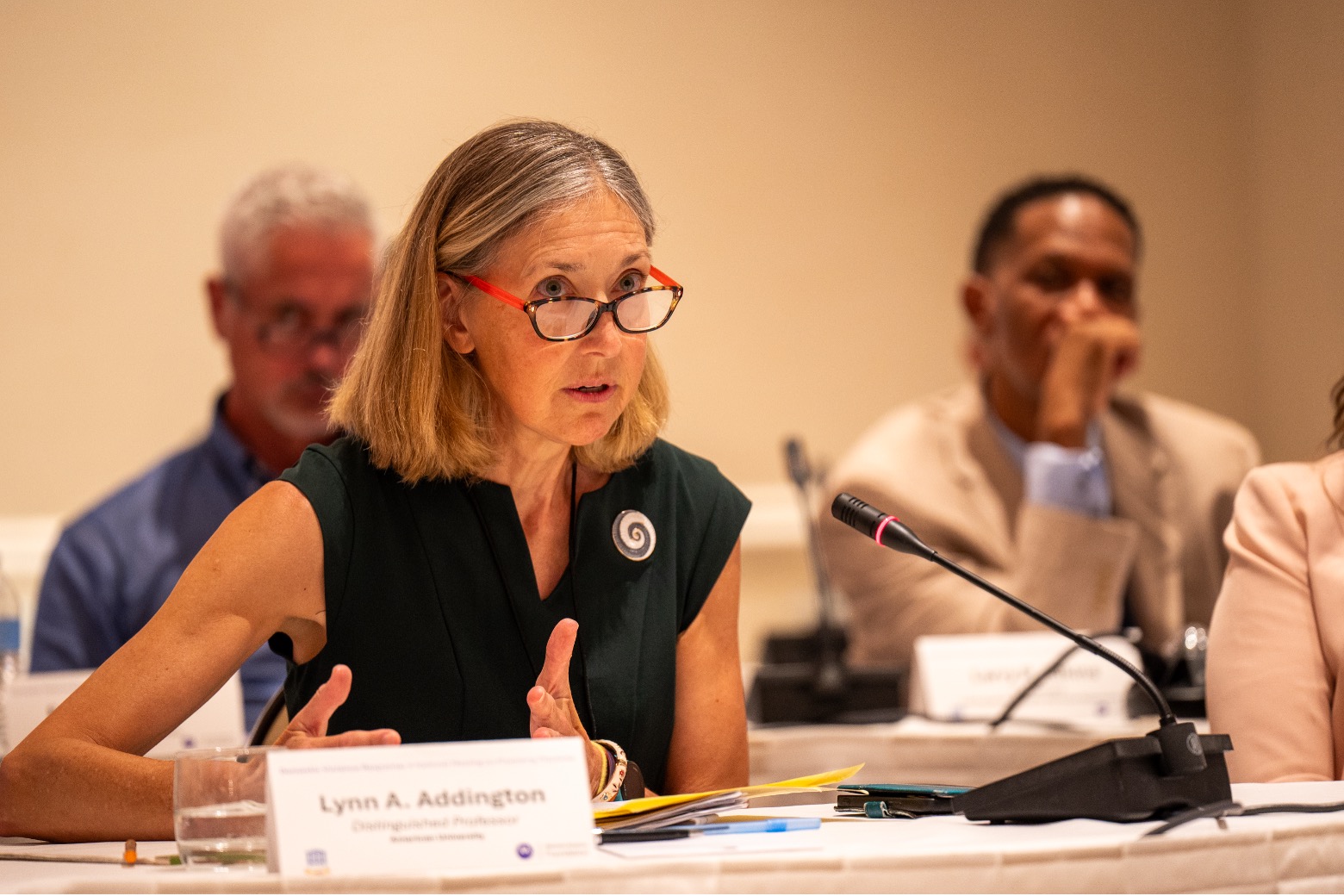
One challenge is that domestic violence (DV) and IPV are often difficult to measure. Lynn Addington, Distinguished Professor at American University, noted that "domestic violence" is defined differently across data sets. Some data systems’ definitions are limited to intimate partners, while others include parents, children, siblings, or older adults; data sets also differ in the types of offenses they include.
Dr. Addington speaks at PERF’s September 18 meeting.
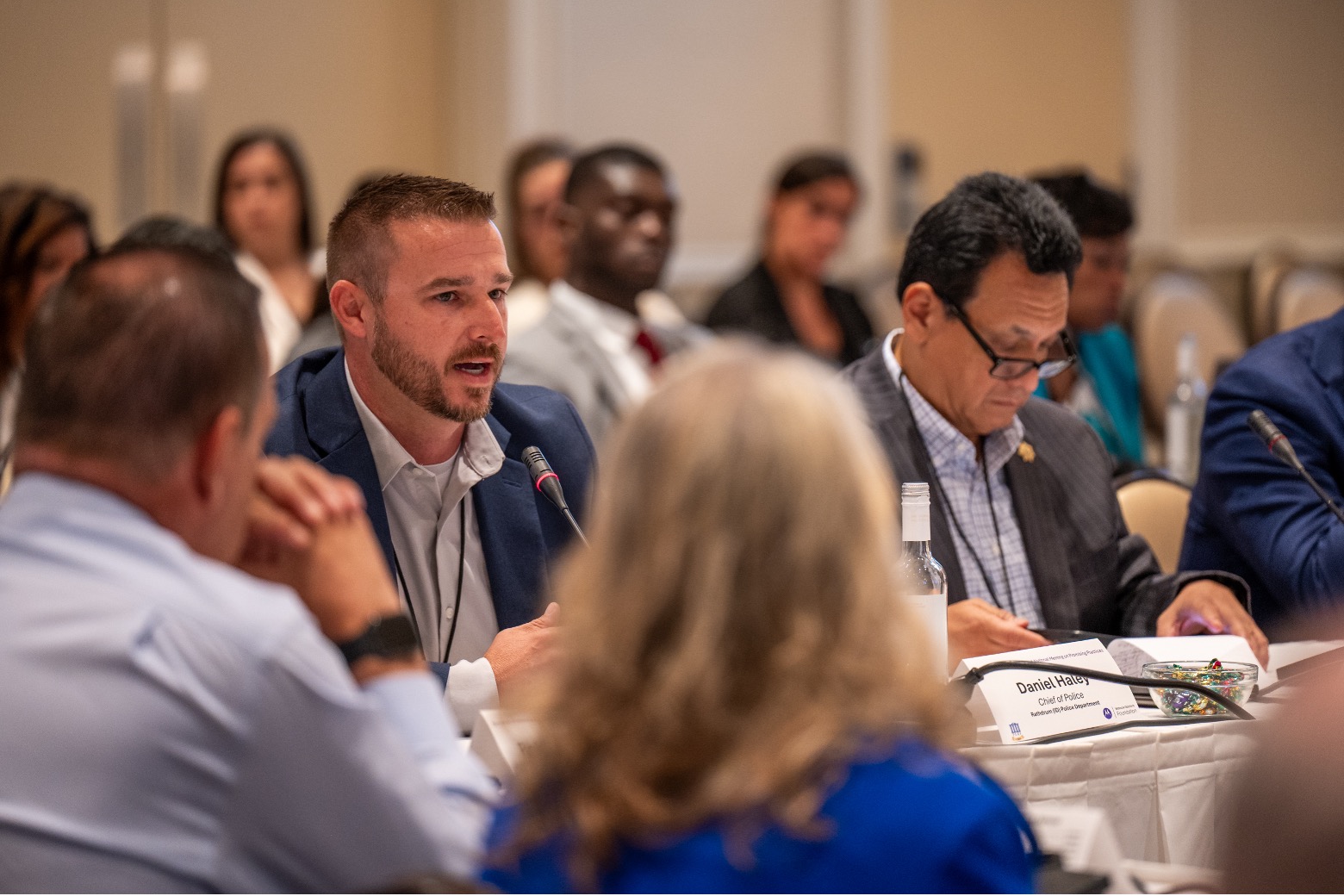
Further complicating matters, improved police practices can raise reported rates. When Rathdrum, Idaho, Police Chief Daniel Haley began requiring a report for every allegation of physical violence, the department's DV statistics rose—not because violence had increased but because incidents were being documented more consistently and accurately. Denver experienced a similar trend after opening its family justice center. As Commander Matt Clark said, "What we have is an increase in reported domestic violence," reflecting an increase in reporting rather than necessarily an increase in victimization.
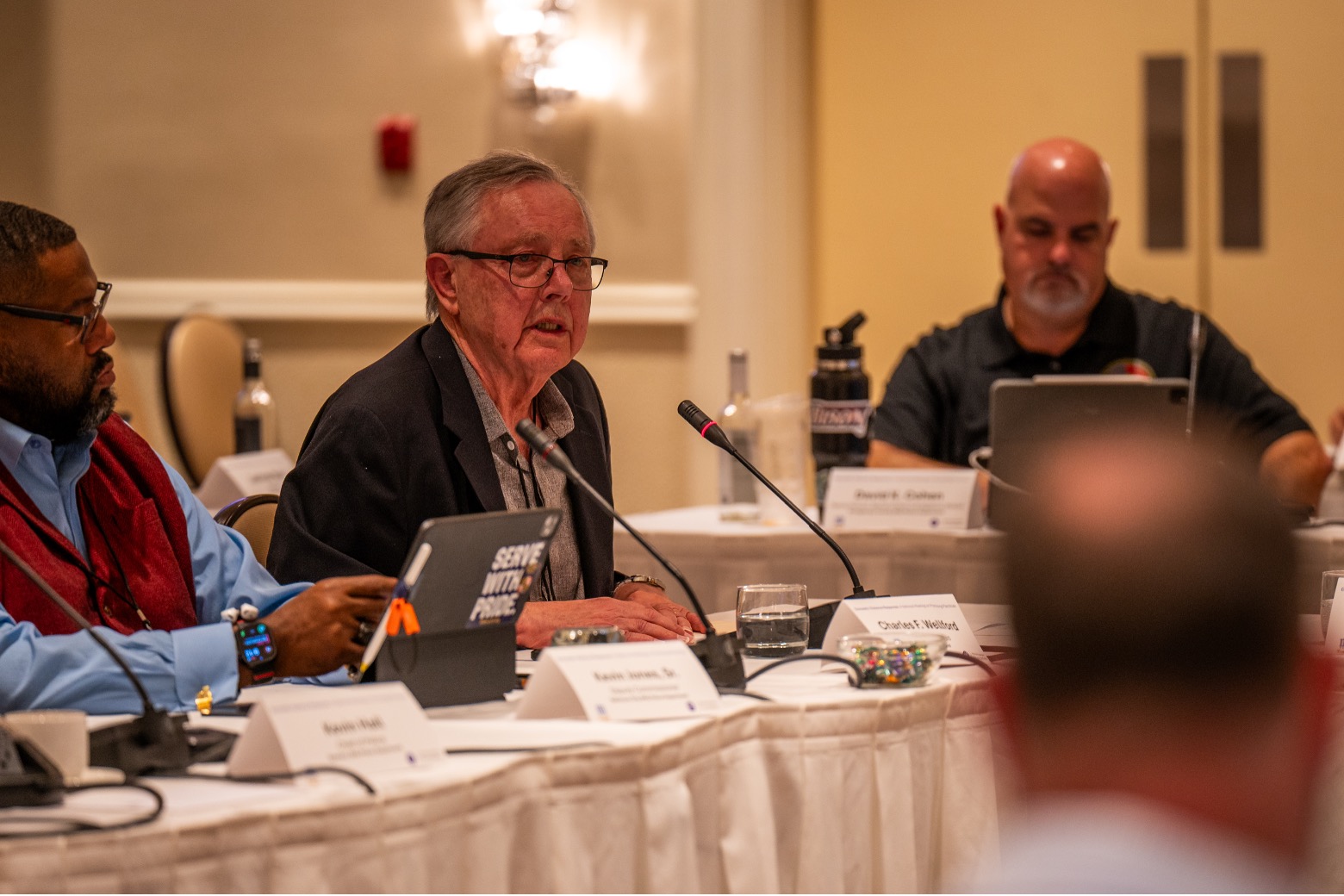
Rathdrum Chief Daniel Haley and Harris County Sheriff Ed Gonzalez at PERF’s September 18 meeting. There was also a discussion about the mandatory arrest laws and policies that emerged following the 1984 Minneapolis Domestic Violence Experiment, which found that arresting offenders reduced repeat incidents. Charles Wellford, Professor Emeritus at the University of Maryland, noted that the 1984 study was small, and when it was replicated in six cities, the results were mixed: Repeat violence dropped in two cities, didn't change in one, and increased in three. Later research found that arrest worked best on offenders with jobs and homes to lose. But by the time those findings were released, many states had already enacted mandatory-arrest statutes, and approximately 23 states retain some form of mandatory-arrest requirement today. Still, Dr. Wellford stressed that the lesson is not that police should step back. "Police matter," he said. "Showing up and doing something reduces domestic violence." Rather than relying on arrest alone, he called for a comprehensive, community-wide plan and a shift "from mandatory arrests to mandatory interventions: evidence-informed and appropriate to the event."
Dr. Wellford presents at the September 18 meeting. Participants were clear that some crimes should always result in arrest. However, many questioned whether arrest should be the default response to every DV call, including lower-level incidents that do not involve physical injury. As one participant put it, mandatory arrest may be "an unnuanced solution to a very nuanced problem." Several attendees instead agreed with Dr. Wellford’s call for "mandatory intervention" policies, under which officers would be required to take meaningful action on every call while retaining discretion to determine whether arrest is the most effective response. We came away with several takeaways from the day: Where possible, consider mandatory intervention over mandatory arrest. While arrest remains appropriate and necessary in many—if not most—cases, especially those involving physical violence, agencies should ensure every IPV call results in a meaningful intervention tailored to the circumstances. That may include arrest, but it can also involve robust risk assessment, safety planning, victim advocacy, referrals to community services, or follow-up investigation. In Nashville, for example, officers are required to connect victims with counseling, protective order assistance, prosecution resources, and shelter services on every domestic violence call and to document the incident even when victims decline help. Require lethality assessments and use them for more than prediction. More than three-quarters of PERF survey respondents reported that their agencies use a lethality or risk assessment tool. But participants emphasized that these assessments can do more than predict potential for future violence: Agencies can use them to guide investigations, inform safety planning, identify high-risk offenders, and alert responding officers to potential dangers. Participants noted that lethality assessments often uncover important information about past crimes that might not otherwise have come to light.
PERF Deputy Director Jen Sommers discusses lethality assessments. Make predominant aggressor determinations deliberately. Many observed that dual arrests go nowhere and help no one; in fact, they can become a tool of power and control for abusers. So predominant aggressor determinations need careful, thoughtful consideration. This was an area where those assembled agreed that training and guidance are significant. Adopt comprehensive strangulation protocols and charge all applicable crimes. All 50 states and the District of Columbia have laws that criminalize strangulation, and officers should vigorously use those statutes to hold offenders accountable and enhance victim safety. Research shows that a woman who has been strangled by her male partner is more than seven times as likely to later be killed by that partner as a woman who has not. Denver's protocol runs from the 911 call through prosecution and requires a medical response and forensic nurse exam.
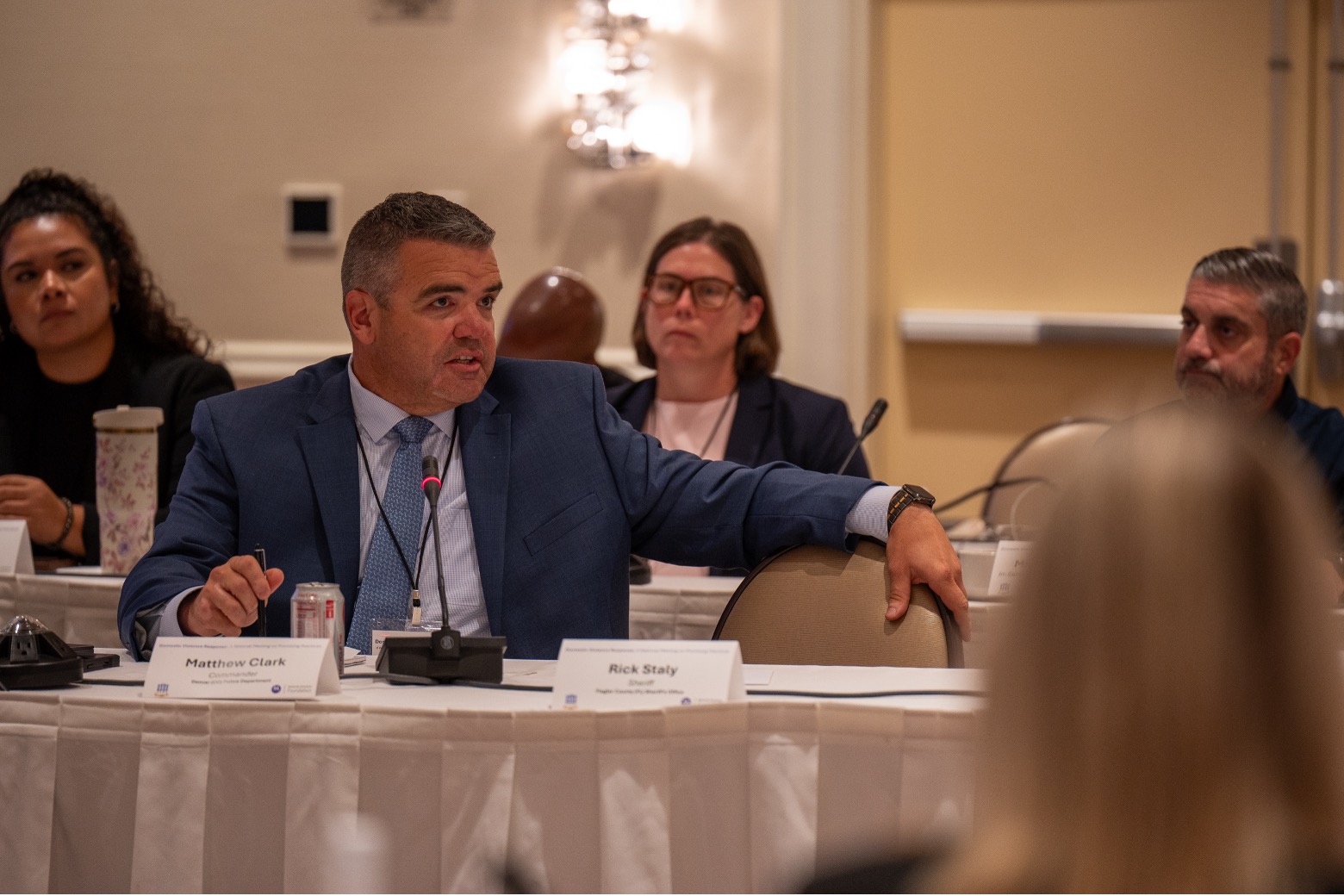
Commander Matt Clark, Denver Police Department, discusses his agency’s strangulation protocol at the September 18 meeting. Leverage available tools to reduce the risk of firearm-related IPV. Federal law prohibits individuals convicted of a felony or qualifying misdemeanor crime of DV, as well as persons subject to certain DV protection orders, from possessing firearms. Yet enforcement of these prohibitions varies considerably across jurisdictions, and firearm relinquishment often operates largely on an honor system. Agencies should work with prosecutors, courts, and community partners to maximize the use of available firearm surrender and dispossession mechanisms, establish procedures for verifying compliance, and take appropriate enforcement action when prohibited individuals retain access to firearms. Invest in victim engagement. Providing an immediate, trauma-informed response to DV calls can significantly increase victim engagement throughout the investigation and any subsequent prosecution. Agencies are trying new ways to do this. When Louisville Metro Police victim services staff responded immediately to homicide scenes during a pilot, they averaged 72 “touch points” with victims' families per case, compared with 12 when they did not. Multidisciplinary teams and co-location improve coordination and service delivery. Large cities such as Nashville and Denver co-locate IPV investigators, prosecutors, advocates, and medical and legal service providers to streamline case management and victim support. Smaller communities are implementing the multidisciplinary approach in different ways. In Yakima, Washington, police meet virtually every day with advocates, prosecutors, probation officers, and mental health providers to review cases. In Yuma County, Arizona, advocates from the local victim services center respond in person to law enforcement requests for assistance 24 hours a day, seven days a week. These partnerships allow agencies to identify risks, coordinate interventions, and connect victims with services more quickly than they could without them.
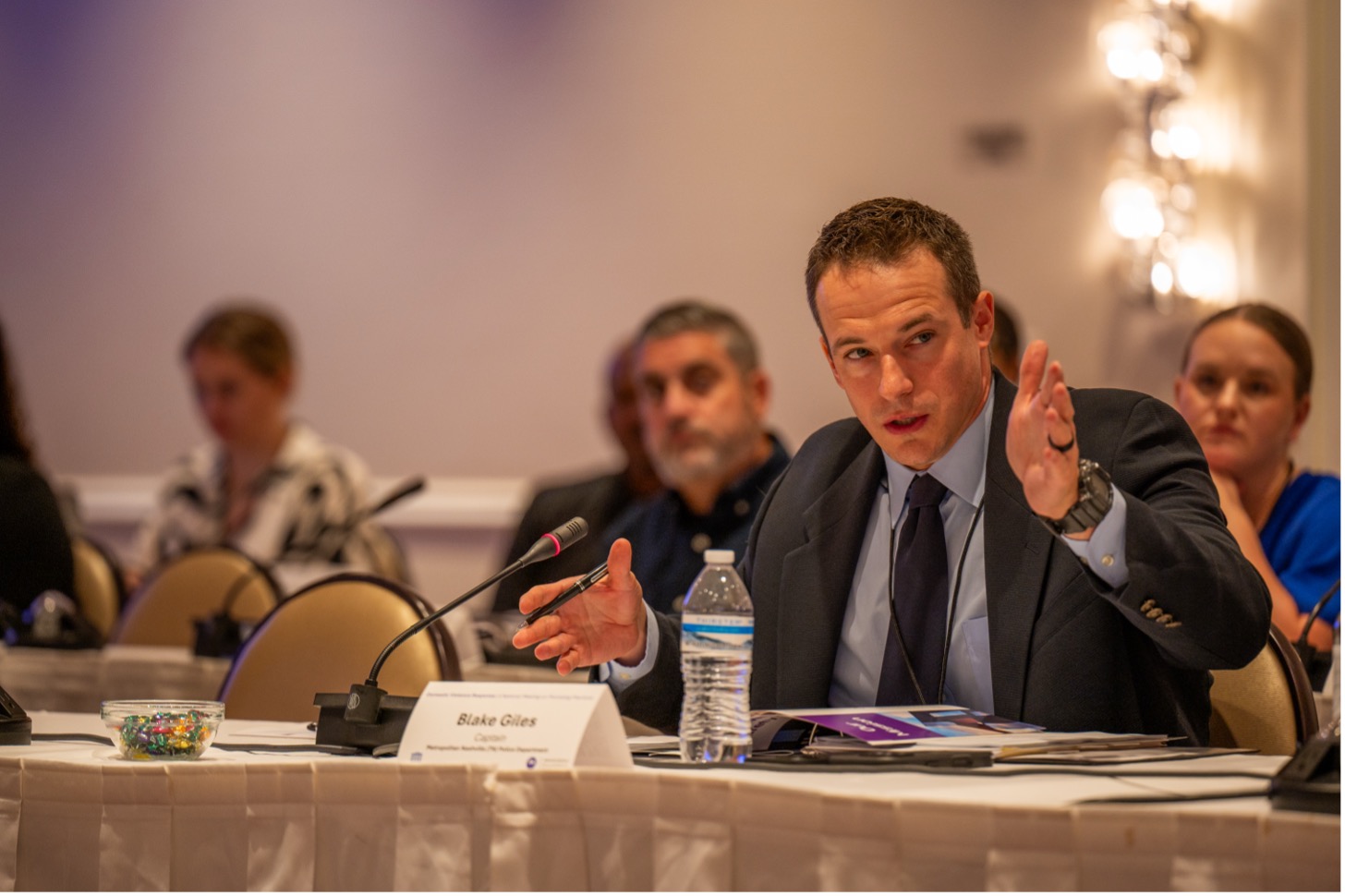
Captain Blake Giles, Nashville Metropolitan Police Department, speaks at the September 18 meeting. Implement systems for accurately tracking DV and IPV. Agencies can’t determine whether their strategies are working if they can’t reliably identify and count DV and IPV incidents. One participant described investigators having to reconstruct seven or eight years of calls because many incidents had never been coded as IPV. A practical first step is ensuring that officers classify these cases consistently, followed by ongoing efforts to improve the accuracy of that classification. Reliable data underpins effective prevention, intervention, and accountability. As Baltimore Police Deputy Commissioner Kevin Jones observed, “What gets measured gets managed.” Communities should adopt a comprehensive approach to IPV. Many cities have reduced violent crime by adopting comprehensive strategies focused on the individuals and circumstances driving the greatest harm. These approaches combine prevention and support services with accountability measures. In fact, beginning in 2023, PERF helped several jurisdictions implement 10 essential actions to reduce gun violence. Many at our meeting agreed that a similar, community-wide, top-down strategy is what is needed to reduce IPV the way that other strategies have reduced other violent crime. PERF will publish a full report expanding on these and other takeaways from this meeting in the coming months. I am grateful to the Motorola Solutions Foundation for supporting this project. And I thank everyone who traveled to Washington to share their expertise. Best, Chuck |