|
October 31, 2026 Debating license plate readers at our Town Hall Meeting
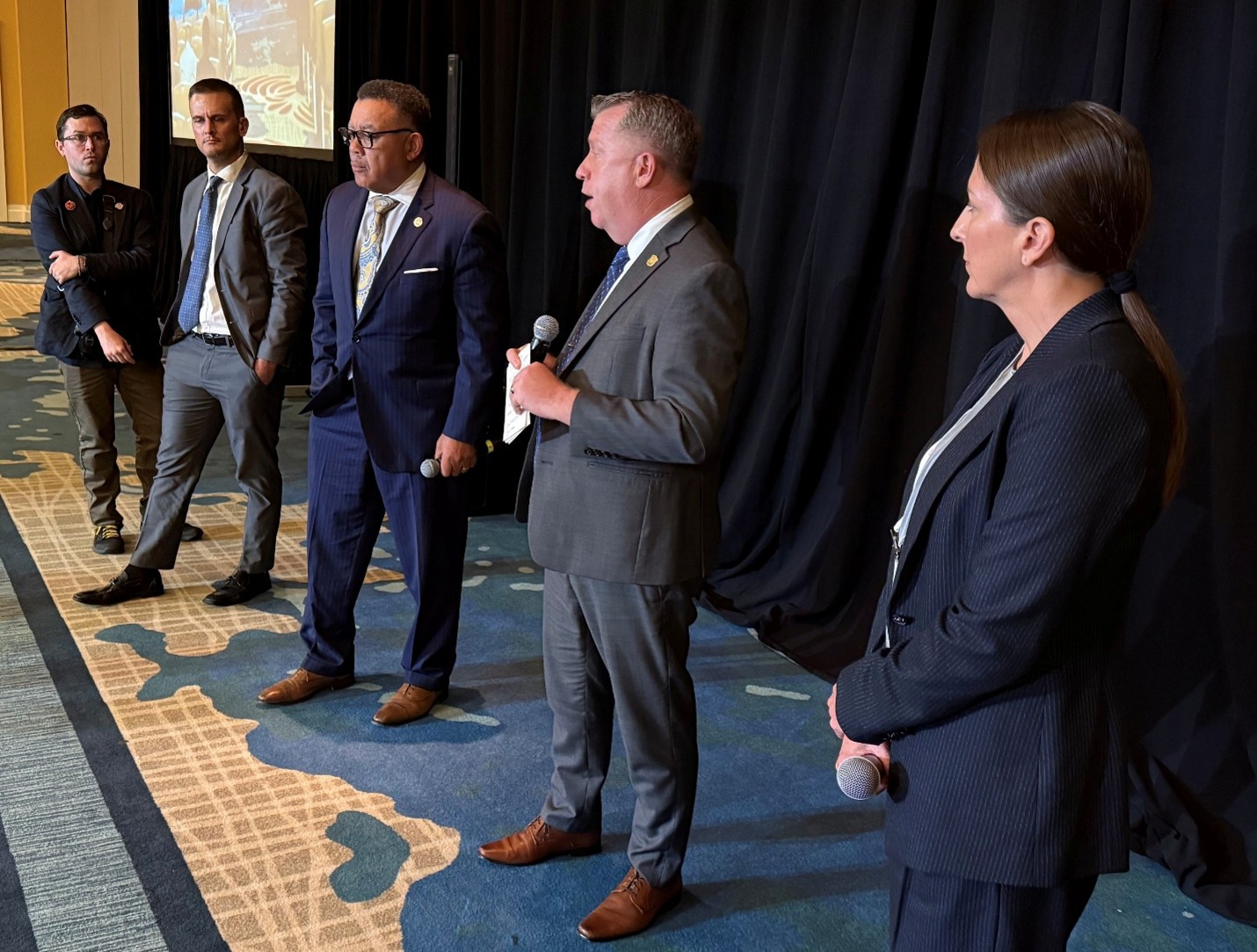
PERF members, As I’ve previously written in this column, I think automated license plate readers (ALPR) are a powerful technology that can help police quickly solve crimes. But the police use of ALPRs has come under recent public scrutiny, leading many municipalities to restrict or outright ban the technology. To help put this controversy in context, we asked the following three individuals to share their varied perspectives with our Town Hall Meeting attendees last Saturday in Orlando:
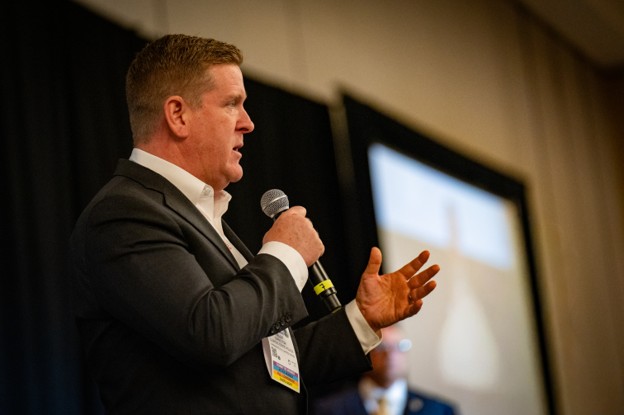
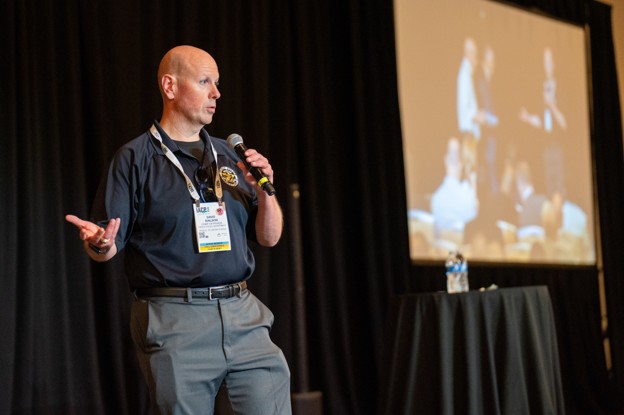
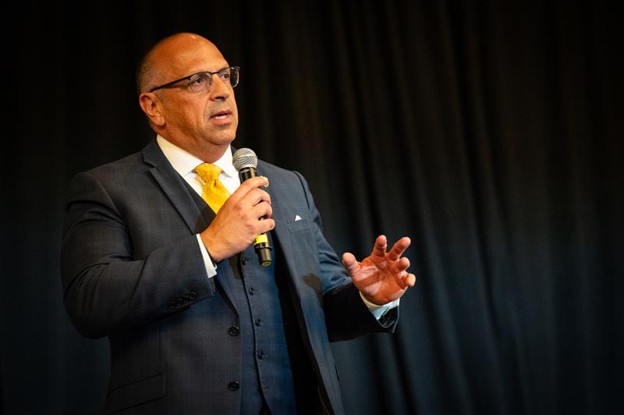
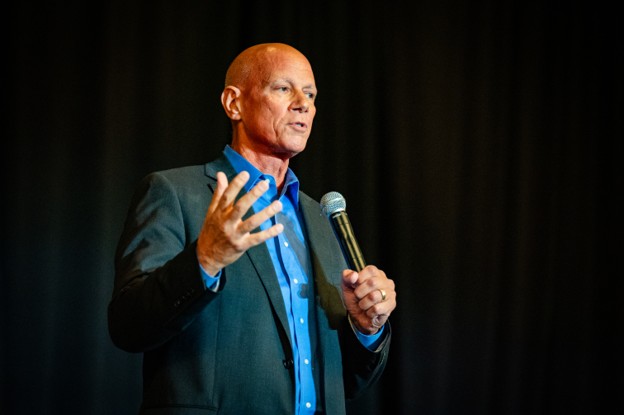
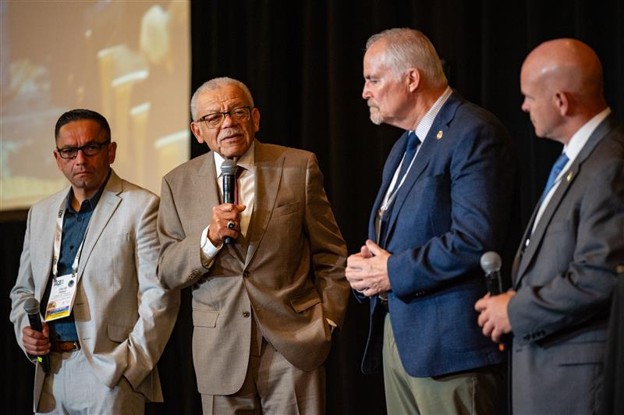
Bravo, Mangual, and Garvie address Town Hall attendees. Garvie highlighted recent survey findings from the National Policing Institute, noting that 54 percent of respondents opposed the police use of ALPRs in their communities but that support varied greatly depending on how the technology is used. Use of ALPRs to find a missing child was supported by 88 percent of respondents, while only 18 percent supported using it to surveil a public protest. “This shows me that if you look beyond the very heated debate that’s happening right now, there’s a more nuanced conversation that I think gets us closer to agreement on ALPRs than one might initially think,” Garvie said. Her organization, the Policing Project, argues that the public, through their democratically elected officials, should be the ones to authorize the use of any technology by law enforcement. She highlighted some of the risks associated with ALPRs, including the possibility of individual officer misuse and other dangers inherent in collecting and storing massive amounts of personal data. Garvie closed with a series of recommendations for the police officials in attendance. “Look for authorization, if possible,” she said. “If you’re pre-deployment, go to your elected officials. Have that conversation before that headline comes out and before the public pushback. Have a public policy. Consider the Constitution and whatever guardrails a vendor chooses to implement as the floor, and talk to your community members about what they want in addition to those. “If possible, test your systems,” Garvie continued. “Where are the benefits coming from? Where are the risks coming from? If your jurisdiction allows it, give independent researchers access to this data so we can move away from conversations based on emotions and anecdotes and toward a discussion of empirical benefits versus risks.” Mangual argued that much of the pushback against ALPRs rests on the disputed claim that their use violates the Fourth Amendment. “There have been two decades of litigation on this, and yet the appellate courts of this country, which actually set precedent, are unanimous on one thing—that these things comport with the Fourth Amendment of the Constitution,” Mangual said. “There is one—just one—standing case in all those years holding otherwise. That case was decided a couple of weeks ago [by a district judge, not an appellate court]. Meaning, you’ve got more than 20 years of ALPR use, and just one standing case, which I’m pretty confident is going to get overturned on appeal.” He argued that ALPR data are different from cell site location information, which the Supreme Court decided in 2018 is protected by the Fourth Amendment, and geolocation data, which the Supreme Court ruled earlier this year are protected. He cited the discovery in a recent Fourth Circuit case, which revealed that the plaintiffs’ license plates were captured only a couple times per day, and the captures happened 45 to 55 minutes and two to four miles apart. “There’s a ton of empty space in between those captures in which you have no idea what’s happening,” he said. “When the vehicle passes a camera, you don’t know where that trip originated. You don’t know where it ended. You don’t know who was in the car or what was being transported.” Mangual closed by referencing a recent success story he wrote about for The Washington Post, in which carjackers drove off in a vehicle with two children in the back seat. Richmond, Virginia, police used their city’s ALPR system to track down the car, rescue the children, and apprehend the perpetrators in 45 minutes. He also cited a recent study by Scott Mourtgos and Ian Adams finding that “fixed ALPR deployment is associated with lower theft and higher clearance, alongside a modest reduction in recovery lag among recorded recoveries that does not extend to all stolen vehicles.” Bravo argued that Flock Safety’s claimed accuracy of 96 percent is too low for police to rely on. “Flock and other ALPR cameras are taking 20 billion images a month,” she said. “If we have a 96 percent accuracy rate, that’s 80 million misreads of license plates. That’s your officers stopping the wrong person. That’s your officers wasting time going on leads that aren’t accurate, and that’s people being pulled over or being arrested for crimes they had nothing to do with, wasting everyone’s time and money.” She disagreed with Mangual about whether ALPR data is protected by the Fourth Amendment. “In the past decade or so, our Supreme Court has pushed more and more toward you having a right to privacy with your location data,” she told meeting attendees. And Bravo argued that ALPR data could be used to determine personal information. “This is a retroactive, searchable database that you’re creating, so you can follow people around,” she said. “Imagine you have four cameras in your city. Maybe they’re pointed at a church, or a school, or a gun shop, or a military base. These cameras, where they’re placed, and what they’re capturing can get loads of sensitive information and inferences.” She closed by emphasizing her organization’s opposition to ALPRs: “EPIC’s position is that this technology shouldn’t be used. At the very least, law enforcement should be using a warrant to get this technology. There need to be strong audit logs, data minimization, and purpose limitations to the crimes that ALPRs are actually suited to solve.” Law enforcement officials in attendance then shared their own views and experiences. Illinois State Police Director Brendan Kelly told the audience that his agency benefited from implementing its LPR program slowly. “Sometimes these programs have moved very, very quickly. We had the benefit of moving slowly, and building out the policies, procedures, and proper oversight,” he said. “You can go on our website right now and see how many hits we’re getting, and it’s in the millions. We don’t hide that data. We put it out there.”
Kelly. “We can only use it for specific offenses,” Director Kelly continued. “It’s not for traffic offenses. It’s for offenses like violent crime, terrorism, and human trafficking. The whole state of Illinois agrees we want law enforcement to be using this technology for these very serious offenses.” Frisco, Texas, Chief David Shilson shared a success story: “When we first implemented LPRs, about a week into our program, we had a case where a Lyft driver was stabbed and almost died, and his vehicle was stolen. Because of our LPR system, we captured the offender within a matter of hours because we had the license plate on the stolen vehicle. That suspect was going to use the vehicle to go pick up a 13-year-old who he’d been having a sexual relationship with and, I’m proud to say, that individual was just sentenced to 75 years in prison.”
Shilson. Sarasota, Florida, Chief Rex Troche discussed how his agency changed its policies when an officer was fired and criminally charged after he searched an ALPR database for his ex–romantic partner hundreds of times. “We needed to put guidelines on this, and nobody wanted to hear that, but we needed to do it,” Chief Troche said. “Sometimes we have to help our officers and save them from themselves. So we said, ‘No longer are you going to be able to run tags in the system. It’s going to be a supervisor or above, as well as people in our real-time operations center.’ I went to the briefings and lightened the blow. They’re all for it. They appreciate it.”
Troche. Pinellas County, Florida, Sheriff Bob Gualtieri agreed that it’s important for the profession to deal with the cases of employee misuse, but he didn’t think that problem was unique to this technology. “This isn’t an ALPR problem; this is a people problem,” Sheriff Gualtieri said. “How many times over our careers have we seen people stick their finger into the pool they shouldn’t be sticking their finger in? You deal with it. Whether it’s a state child welfare system, your records management system, the driver’s license system, or the Florida Department of Highway Safety and Motor Vehicles system, it’s no different.”
Gualtieri. I also asked a few attendees for their thoughts on my October 10 Trending column, which contrasted the police investigations into the December 2025 shooting at Brown University and the October 2002 Beltway Sniper attacks. In that column, I noted that ALPRs helped law enforcement quickly identify the Brown University shooter’s vehicle and speculated that ALPRs could have drastically shortened the 22-day manhunt for the Beltway Snipers. Acting Montgomery County, Maryland, Chief Darren Francke was a detective at the time of the Beltway Sniper attacks. “[License plate readers] would have absolutely changed the game for us,” Chief Francke said. “You mentioned the D.C. Sniper, but ten months of terror happened across the country. Before they got to Montgomery County, those individuals killed five people and critically wounded four others. If we had LPRs in those jurisdictions and we had something to go off [of], we could have stopped it in any one of those instances.” Tom Manger led the Fairfax County, Virginia, Police Department in 2002. “Once we made an arrest, we had the vehicle and the license plate,” Chief Manger said. “We went back and—just with the red light cameras and other cameras we had in place back in 2002—we were able to spot a bunch of places where these two guys were riding around looking for their next target. Just with the few cameras that we had then, we were able to put together a lot of information once we knew the license plate of the car we were looking for. So with LPRs, it would have been a matter of hours, maybe a day or two, and we’d have known what car we were looking for.”
Providence Chief Oscar Perez, Retired Chief Chuck Ramsey, Retired Chief Tom Manger, and Montgomery County Acting Chief Darren Francke. Chuck Ramsey was the police chief in Washington, D.C., at the time. “Had we had something like LPRs, we could have started to narrow it down,” Chief Ramsey told Town Hall attendees. “The same car is in the same area over and over again—it doesn’t take Dick Tracy to figure out something ain’t right. It would have been a help.” The discussion then turned to the case at Brown University in Providence, Rhode Island, where Oscar Perez leads the city’s police department. “There was a lead that came in with a tipster who just described a vehicle. That’s all we had,” Chief Perez said. “When we got that description, the license plate readers came into play. We had historical data on the individual. He was in the city, casing the university. We were able to get the plate, which led us to an Alamo rental car, and then from there we were able to identify him. It was within hours that we had the guy identified.” It was a lively discussion—thanks to everyone who shared their perspectives! Below are a few additional photos of PERF events this past week in Orlando.
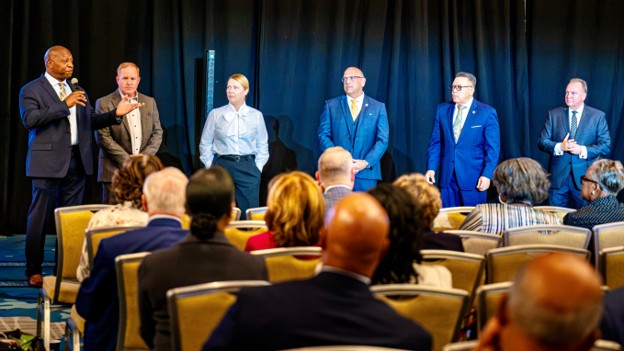
PERF Board Members Nashville Chief John Drake, Portland Chief Bob Day, Austin Chief Lisa Davis, Sarasota Chief Rex Troche, Philadelphia Commissioner Kevin Bethel, and St. Louis Commissioner Robert Tracy welcome attendees to the PERF Town Hall Meeting in Orlando. Not pictured: Elgin Chief Ana Lalley and University of Tennessee Chief Sean Patterson.
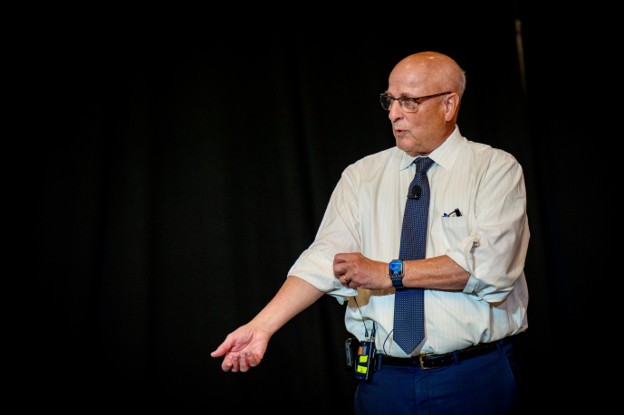
You know it’s time for business when I roll up my sleeves.
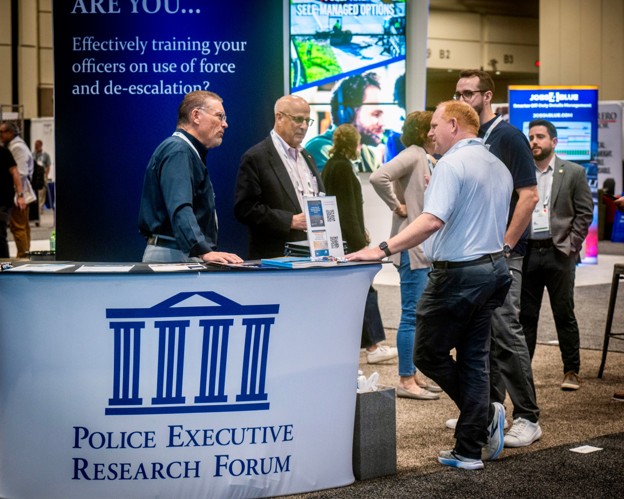
The PERF booth at the IACP 2026 Conference in Orlando.
Bureau of Alcohol, Tobacco, Firearms, and Explosives (ATF) Director Robert Cekada speaks at PERF Town Hall.
PERF staff members Dustin Waters and James McGinty, Philadelphia Commissioner Kevin Bethel, Atlanta Chief Darin Schierbaum, and Kansas City (MO) Chief Stacey Graves discuss policing the 2026 FIFA World Cup. Best, Chuck |