|
May 2, 2026 How police are addressing juvenile takeovers
PERF members, As the weather gets warmer, many jurisdictions are dealing with large groups of juveniles congregating in public spaces and sometimes causing disorder. This issue came to my attention when I read articles about incidents last weekend in Orlando, Florida, and Fairfield, Connecticut, where officials cancelled the town’s annual three-day elementary school carnival after large crowds of disorderly teenagers terrified attendees on the event’s opening night. I spoke with Fairfield Police Chief Michael Paris; Washington, D.C., Assistant Chief Ramey Kyle; Sacramento, California, Deputy Chief Daniel Monk; and Baltimore, Maryland, Colonel Ryan Lee about how they are preparing for and responding to these “juvenile takeovers.” Chief Michael Paris, Fairfield Police Department Wexler: Last weekend a large number of juveniles showed up at a carnival in Fairfield and caused issues. Can you tell me about the incident and how your agency responded? Chief Paris: These incidents are occurring not just in Connecticut, but nationwide. Typically, it’s been targeting carnivals. Usually, one particular person or group incites these mini-riots. These takeovers involve several juveniles and quads [all-terrain vehicles], dirt bikes, or motor scooters. Essentially, they show up. But by showing up in this force, it puts us on notice. In our incident, the carnival, against my advisement, did not establish one access point. They had individual rides fenced in, but not the whole venue, so people could just walk in without a cover charge. They came in droves.
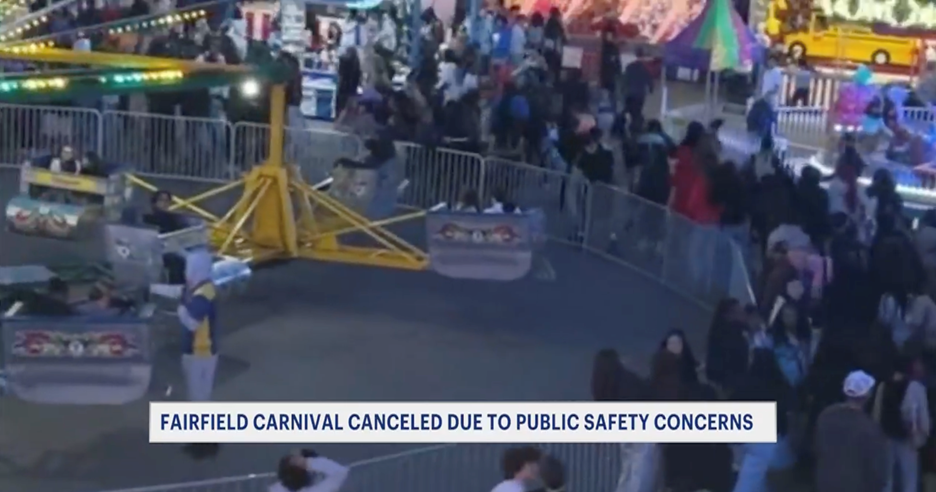
A young crowd gathers at the Fairfield Carnival for a teen takeover. Source: News12 Connecticut We called in surrounding agencies and had them station their vehicles in the parking lots. The juveniles didn’t care. They walked past the entrance, past all the police officers, and started gathering in groups. We had members of surrounding agencies’ gang units there identifying people they suspected were part of a gang. On the outskirts, we saw people with cameras filming the groups, giving the indication that something was going to happen. Basically, they would start a mini-fight or a pretend fight, and these groups would all start running at the same time. As you can imagine, parents there with their little kids were being trampled by these groups running stampede-style. They were trying to incite a type of riot. They were giving us the indication that something may happen or something is happening, then we all rushed to a certain area. Then little fights started breaking out on the outskirts. This depleted our resources pretty quickly. We developed a line pattern with our officers pushing the juveniles toward the entrance to get them out of the area. They started to fight back against us. We tried to detain as many people as we could. When you try to arrest a juvenile, some issues arise. Their parents are not there. They were not talking to us or [they were] giving us fake names. We basically got them out of the area. Then they decided to take over the restaurants in the surrounding areas. The restaurants were calling and were shut down. I ended up having to cancel the carnival for the next two days, which was a very sad state of affairs and kind of gave them the win. But the safety of the other kids there was [at the] forefront. The decision probably wasn’t the most popular, but we had to do it. We’ve been communicating with surrounding agencies that are going through the same thing. They post TikTok videos of flyers that say “Carnival Takeover.” It’s definitely a trend and definitely an issue for law enforcement leaders. Wexler: Did you have mutual aid agreements in place? Chief Paris: We have mutual aid agreements with our surrounding agencies and the state police. I give credit to the Connecticut State Police troopers who were working that evening. They stepped up without us even having to ask, because they saw us being overwhelmed by these groups of kids. Assistant Chief Ramey Kyle, Washington, DC, Metropolitan Police Department Wexler: Tell me about these juvenile takeovers in the Navy Yard and other parts of the city. What is the Metropolitan Police Department doing to address this issue? Assistant Chief Kyle: This has been a problem ever since it got warm. We’re seeing what I guess you would call “promoters.” They go on Instagram—and TikTok and other social media, but mostly Instagram—and put out a flyer saying, “We’re taking over Navy Yard at this date and time.”
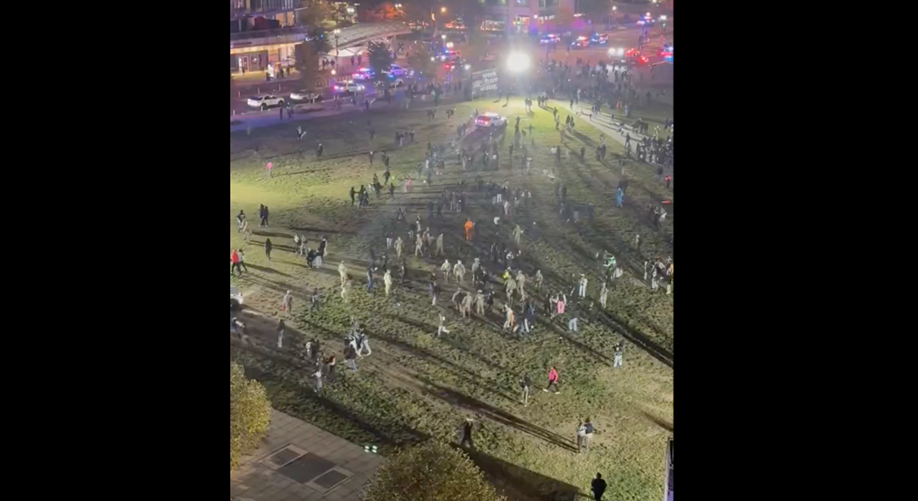
Members of the National Guard clash with teens at a takeover event at D.C.’s Navy Yard area. Source: @Robbb1947/X These flyers are passed around and then we’ll see up to 1,000, maybe even more, kids. Most are just there to hang out, but of course some take the opportunity to start fights. We’ve had firearms discharged and some weapons recovered. We’ve tried a bunch of different approaches. We’re now handling it almost like a civil disturbance. We put together our civil disturbance units and pre-position them throughout the city, because we’ve identified where these groups like to go. They definitely have patterns now. They’re using the Metro to get around and also these micro-mobility scooters and bicycles. That’s been a huge issue. Scooters are also being used to commit crimes on the periphery of these large-scale events. On the intel side, we have a whole team that’s constantly scouring the internet looking for these flyers. The promoters have gotten a little savvier. They don’t necessarily drop the location or time until maybe the night before or the day of.
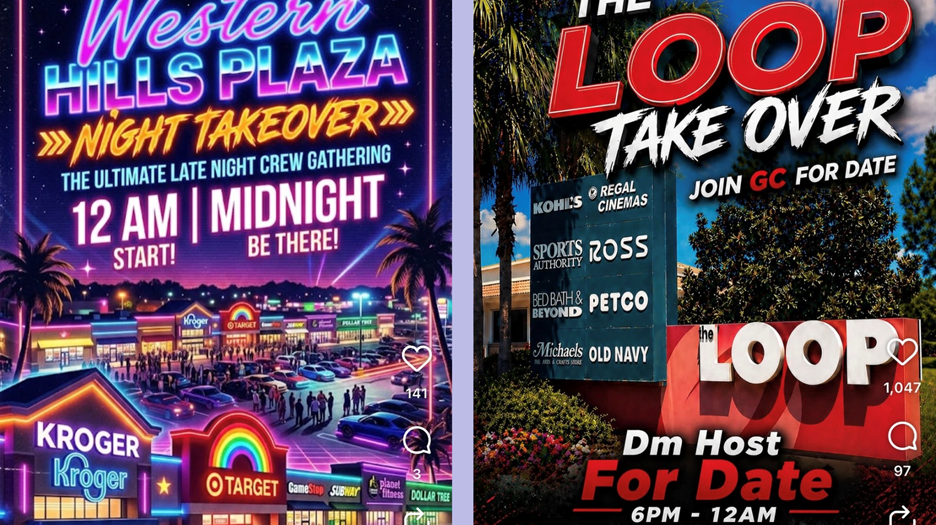
Social media posts promoting late-night takeover events. When we identify the individuals who are posting these flyers, we send out our detectives to try to talk to them about the dangers of this and talk to their parents. We’ve had some success in that and gotten some of these kids to stop posting. But the reality is, depending on the number of shares and clicks, some of them are actually making money off this. We’re also working with other jurisdictions—Prince George’s County [Maryland] and Arlington [Virginia]. We see them hit multiple places in a single night. And we’ve been working very closely with Metro Transit. They’ve been putting officers on trains with the groups so we have real-time intelligence about where they’re heading and what they’re doing. Then we get out in front of it. Once we see these large gatherings, we put eyes on them and officers on them. If the kids try to break off a little bit, we try to have an officer within sight of them. When we do that, we have a lot fewer fights, robberies, and shootings. Deputy Chief Daniel Monk, Sacramento Police Department Wexler: Are you experiencing similar issues on the West Coast? How are you managing the problem? Deputy Chief Monk: We’ve been dealing with this for a few years. We have an area that we refer to as our Downtown Common area. The Golden 1 Center, where the Sacramento Kings play, is right at the heart of that area. There are a lot of restaurants and retail areas. It’s a really nice area and people come from all over the region to be there. Within a stone’s throw of that is our Old Sacramento area, which is another outdoor retail area that’s a very popular spot for tourists. Those are the two main areas where we see juveniles come from all over to hang out. A lot of them are just there to hang out, but we have problems with fights, firearms, and marijuana being used. The crux of our strategy is around our curfew law. We have a city code that says if you’re under the age of 18, you can’t be out past 10 p.m. unless you’re with a parent or working. Our strategy is education, engagement, and enforcement. Ahead of time, we partner with our parking division for digital signage. These two areas are right off Interstate 5. When folks come off the freeway, like parents going to drop their kids off, they see digital signage that says, “Welcome to Sacramento. We’re going to be enforcing curfew laws at 10 p.m." We also have a partnership with our regional transit. We find that a lot of the youth come in from various areas on the light rail train. Our team will voice that same message on the train and at the platforms. We’ll deploy our community-based organizations to go out there and help us. They’re community leaders and youth mentors. They go out there, contact the juveniles, and just kind of say “hi” and see what they’re up to. About an hour or so prior to the curfew kicking in, we’ll have our officers start reminding everybody that the curfew starts at 10:00.
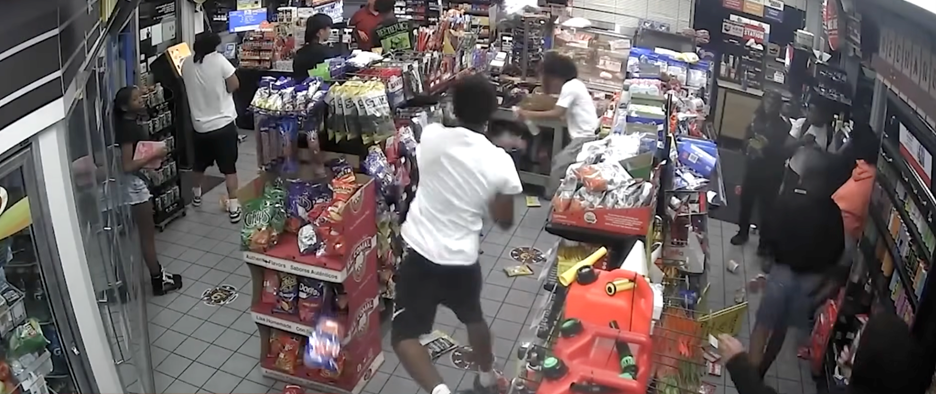
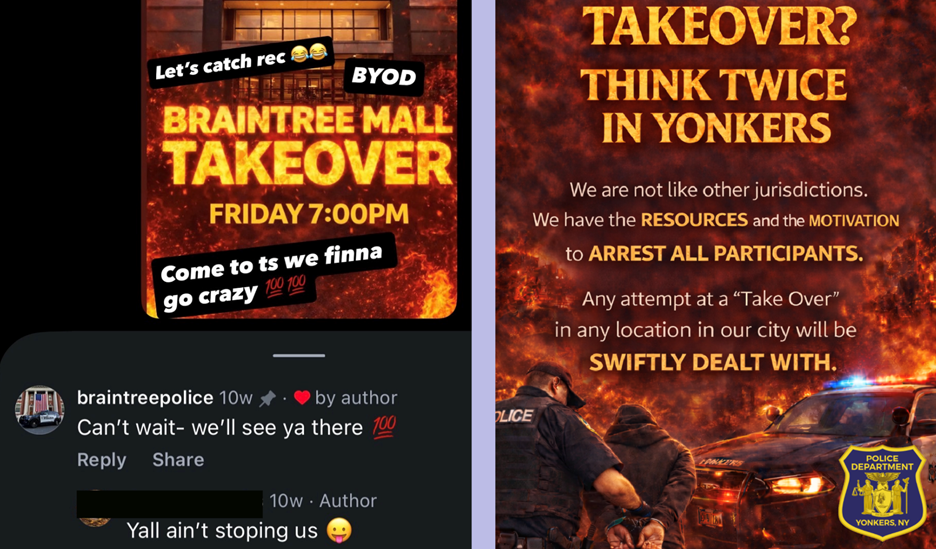
Security footage captures a teen takeover at a Sacramento convenience store. Source: Fox40 News Just about every single space of that area is on camera, and officers in our real-time information center are monitoring the area and will direct the ground units if they’re starting to see groups hanging out or clustered up. At 10:00, we start curfew enforcement. It is a misdemeanor, so we do make arrests. We then call parents, and our community-based organizations facilitate getting rides home for these individuals. Those are really the three components of how we deal with the issue out here. Colonel Ryan Lee, Baltimore Police Department Wexler: You’ve had takeovers in your Inner Harbor area and other parts of the city. Are you taking a similar approach to the other cities? Colonel Lee: I would say there are a lot of similarities in Baltimore. Social media plays a significant role. In the information age, everyone has the ability to generate information and push it out to a large number of people. We see very sophisticated, fancy-looking, AI-generated flyers that are clearly engineered to market excitement to the juvenile mind.
Agencies responding to social media posts promoting takeovers in Braintree, MA, and Yonkers, NY. This is really an evolution of what we saw maybe 10 years ago with the flash-mob challenges. This is a larger scale of it. It’s fundamentally very similar to a public order event. In Baltimore, we use a couple specific strategies. We monitor open-source information in real time to try to get ahead of these events. Like many police departments, we’re resource-constrained with our personnel. We try to marshal our resources when we know there’s an event coming. But we also have to be savvy, because it is so easy to generate information. Somebody might be trying to hype up their event, but they’re not getting any attention. We don’t have the personnel to respond to everything. We have to use our intelligence and open-source information to guide an appropriate deployment. If we know they’re going to be in the Inner Harbor—our entertainment district—we’re going to flood the area with resources from our two surrounding districts and units used to dealing with large groups of individuals. Part of it is visible deterrence. The other part is that if we’re there before people show up, we have the ability to set norms and expectations as they arrive.
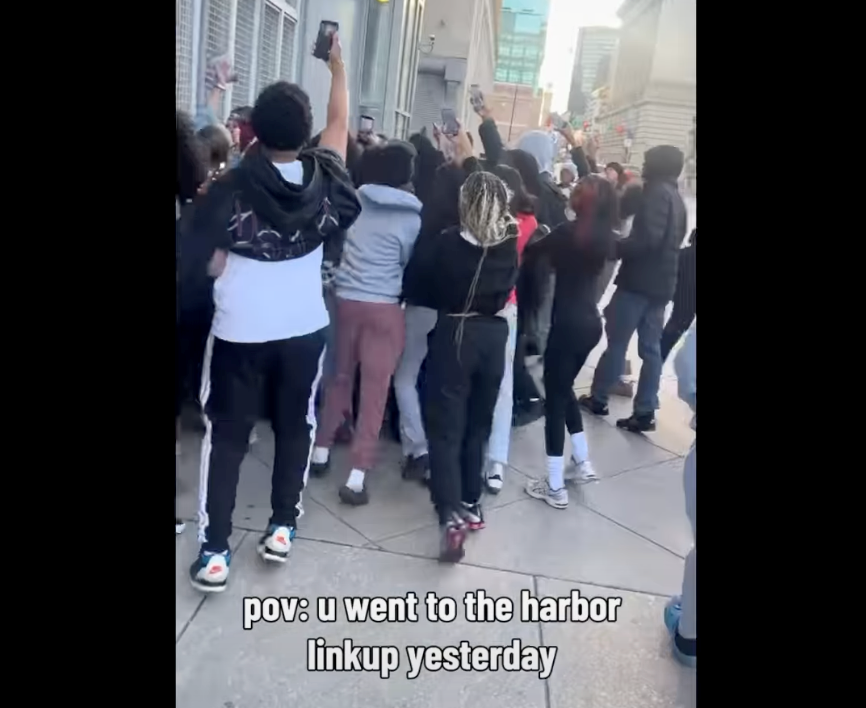
Teens at a meetup in Baltimore’s Inner Harbor record an alleged fight. Source: @djbenjiontheaux/Instagram The vast majority of the folks are there because they just sort of want the revelry of being out as a juvenile. And there’s a small set of people who are willing to engage in criminal activity or show up with a weapon. If we’re there and can set some norms and expectations as the groups are starting to form, we can focus on those who want to engage in violent activity or criminal activity. We’re very deliberate in the communication we send out. We don’t want to trigger reactance theory and say, “Don’t come down here.” Because, especially with a juvenile mind, that’s an open invitation to challenge authority. So, if we put anything out on social media, it’s much more along the lines of, “We are aware of the event. The police will be present.” We also have to maintain a degree of agility and nimbleness in our deployments, because if they can’t go to the Inner Harbor, it’s very easy to get on a bus or train and go to some other place. So we’re trying to leverage existing laws or rules on the books. If you show up at Mondawmin Mall—private property—they have the ability to [book people for trespassing.] We can begin to dissipate the crowd that way. The brick area around the Inner Harbor is technically a public park. All the park rules apply. We’re leveraging park rules, including park closure rules. And we’re not just making this a police problem, but reaching out to our trusted partners. So we’re engaging community outreach groups that do juvenile outreach and advocacy as legitimate communicators to set a tone and a message early on. Thanks to these four police leaders for taking the time to share their experience with our members. Best, Chuck |