|
November 28, 2026 Retired Chief Rick Myers discusses his illustrious career
PERF members, I know of few individuals who have served as police chief in more cities than Rick Myers. After six years as police officer and sheriff’s deputy in three Detroit-area agencies, Rick served as a permanent police chief in six municipalities:
He also served as an interim chief in three cities:
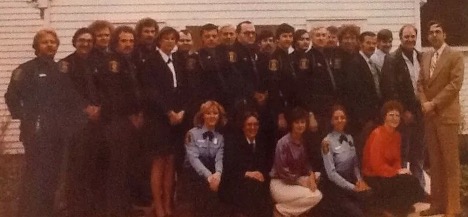
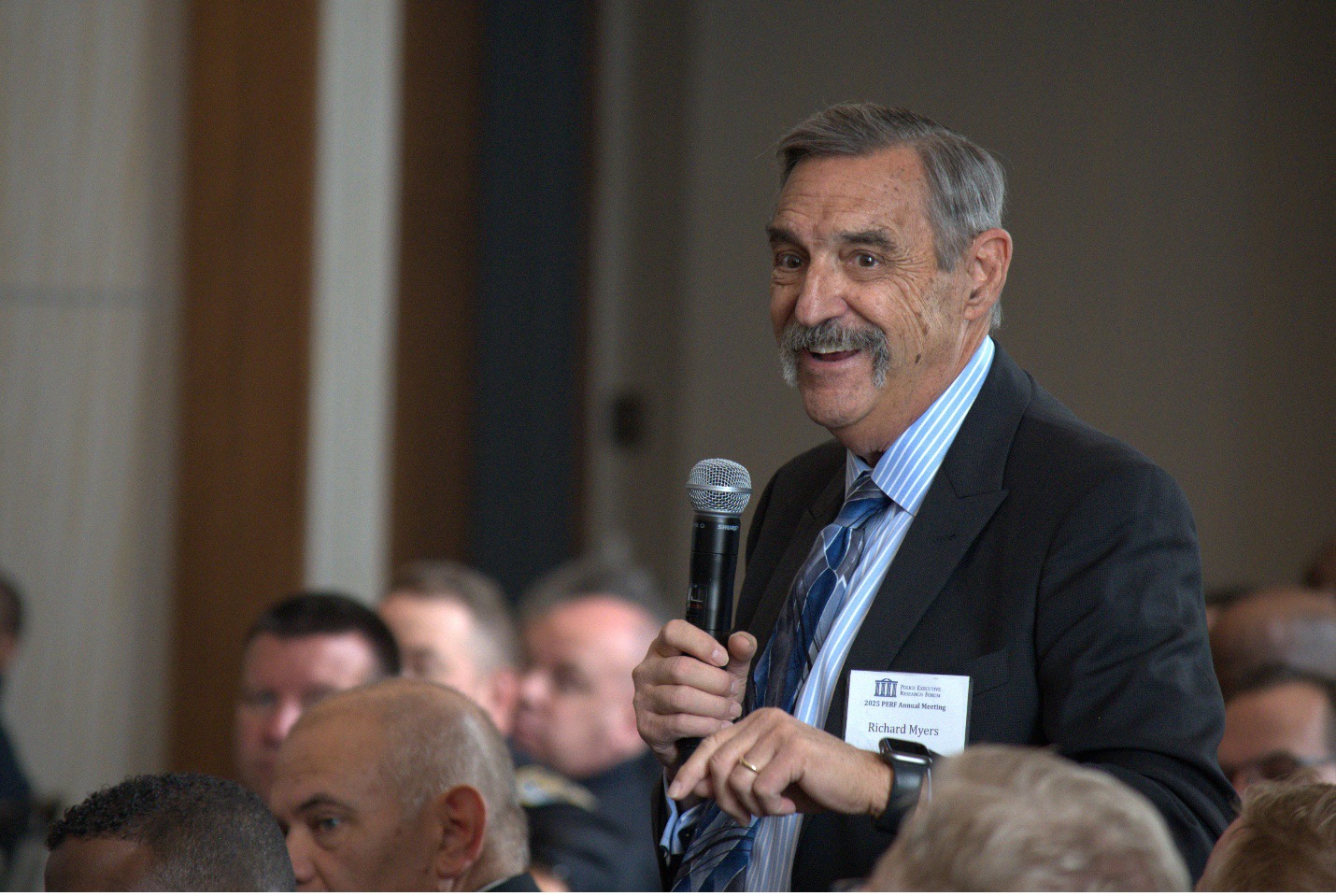
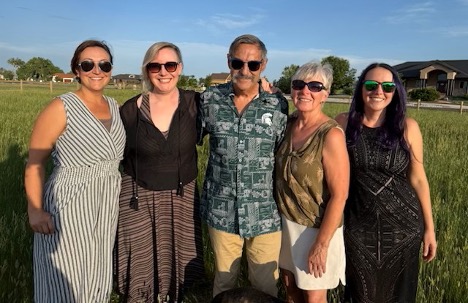
Rick was also the Executive Director of the Major Cities Chiefs Association from 2017–2019 and served on PERF’s Board of Directors. I recently spoke to Rick about how he managed organizational change, labor relations, and family life while leading nine different police departments. Chuck Wexler: You’ve been the permanent police chief in Atlas Township, Plymouth, Lisle, Appleton, Colorado Springs, and Newport News, and the interim police chief in Manitou Springs, Sanford, and Commerce City. What’s with you? Rick Myers: I can’t hold a job, Chuck. Wexler: Did you plan to be a chief in so many places? Myers: I didn’t plan it that way. In my first job, I was a working chief. In my second chief job, all I did was lead the agency. I had an interim city manager tell me, “Why are you still here? You’ve outgrown this job. You need to move on to a bigger job that will tap into your talents better and that you will get more job satisfaction out of.” And so I did. Myers (back row, second from left) as a police officer and his wife Cindy (front row, left) as a community service officer in 1979 in suburban Detroit. Credit: Rick Myers. And then I moved on to another one. In the 12 years I was in Appleton [Wisconsin], I thought, “Okay, I’ll retire from here.” Then I got a recruitment flyer for Colorado Springs. It was spectacular—the mountains, all the things to do there. I called a friend from Lakewood [Colorado] and asked if he was going to apply for that job. He said, “No, but you should.” I didn’t think I had much of a chance, but I did a little homework, threw my hat in the ring, and ended up getting hired. I loved that position, as stressful and difficult as it was. Then they changed their form of government from a city manager to a strong mayor, and the mayor got rid of every department head in the first year. Wexler: You were chief in small, medium, and large agencies. Did you have to manage them differently? Myers: In a smaller agency, you have the opportunity to do a lot of relationship building with your employees, the community, and community leaders. The larger the agency, the less time you have to do that. Personnel problems are the same everywhere. Budget problems are the same everywhere. Crime problems can change, but once you have a capable staff, they’re in the crime-fighting business and know the community better than you do. You just help guide them and empower them to do what they do. So I didn’t find the transitions difficult, other than the tempo changes. When you’ve got 20 officers in a sleepy suburb with a low crime rate, the tempo is not bad. When you’re leading in a city like Colorado Springs or Newport News, crime is more active and the tempo is much faster. Wexler: Is everything more personal in a smaller agency? Myers: Absolutely. It’s a lot easier to know every employee by their first name when you only have 40 or 50 employees, compared to 1,000 employees. In Colorado Springs, my three deputies and I would adopt a precinct every month. We’d hit every roll call in the precinct that month, then rotate. I did that for the five years I was there. And in the fifth year, I had officers sitting next to me saying, “I’ve never met a chief before.” How can that be? It’s such a large organization that you don’t get to meet other than that badge pinning. I also think there’s an ideal size for innovation and change—somewhere between 100 and 500 officers. You’re big enough to throw resources at something, but small enough to get the creative juices going and you’re not changing a behemoth culture. Wexler: How many officers did you have in Appleton, Wisconsin? And how many of them did you know? Myers: I had about 110 officers there, and in the 12 years I hired about 75 percent of the department. Wexler: Can you give examples of things you tried to implement there and things you achieved? Myers: Appleton had a pretty rich history of being an innovator and out front when I got there. My predecessor [David Gorski] was nationally recognized. He’d been there 18 years and had implemented a lot of things. They were the first accredited agency in Wisconsin. When I was there, we were the first to implement CIT [Crisis Intervention Team training] in Wisconsin. One of my officers is now retired and the statewide coordinator for CIT. We developed a problem-solving team based on [Herman] Goldstein’s model of POP [problem-oriented policing]. The team didn’t respond to calls. We did a little internal brainstorming, identified problems, and deployed the team as needed. So there were many innovative things they were already doing when I got there. We grew several of them. The culture was to embrace trying new things, as a opposed to a department where you get a grievance or they fight everything you do. Wexler: How did researchers Herman Goldstein and Bob Trojanowicz have an influence on you? Myers: Bob Trojanowicz was the key professor in my master’s program, and he was on my thesis committee. What a storyteller he was! He created the vision of community-oriented policing and talked about his father—who was a Bay City, Michigan, cop—walking the beat and developing relationships. I became a lifetime disciple of community-oriented policing after that. When I got to Appleton, Herman took an interest in me. I loved the guy. He was way down in Madison, so I’d see him four or five times a year at meetings. He had very in-depth conversations with me about how disappointed he was that problem-solving policing never really took off wildly at a national level. He mentored me on what it meant to him. I became a big fan. Herman and [Director of the Center for Problem-Oriented Policing at Arizona State University] Mike Scott put together a class for Wisconsin chiefs on implementing problem-solving policing. I was in the first class that went through that. It was great. Wexler: How did you become the interim chief in Sanford, Florida? Myers: That happened because of you, Chuck. My wife and I were on vacation in Costa Rica, and you called and said, “Hey, what are you doing next weekend? I need you to surreptitiously, without telling anyone, fly to Orlando. You’re going to stay in a hotel at the airport, and I want you to meet with the city manager of Sanford.” They were going through total chaos in the aftermath of the Trayvon Martin homicide. As a reminder, the police didn’t shoot Trayvon; George Zimmerman shot Trayvon. But the police—I think largely because of poor communication on the part of the rookie chief who was there—had become the punching bag for what people perceived was a poor investigation. So you brought three experienced leaders down to Orlando to meet with the city manager. He ultimately asked me to come spend three to four months there, which ended up lasting just under a year. Wexler: What is the difference between being an interim chief and being a permanent chief? Do you think about the role differently if you’re an interim chief? Myers: Well, the term “permanent chief” is somewhat of an oxymoron in our business, isn’t it? When you’re appointed as a regular chief, it’s your organization. You own it. You’re responsible for it. You can be a change agent. You’re affecting the vision, setting the boundaries, all of those things. When you’re an interim chief, you’re a caretaker. It’s not your organization. The last thing you want to do is put the employees in the middle of a ping-pong match, where you come in and change a bunch of stuff, then five months later they hire a new chief who changes everything all over again. I think there are three kinds of interim chiefs, and the three places I worked represent them. Manitou [Springs] was just to keep the wheels turning. It was no big deal and didn’t last long. Commerce City was to keep the wheels turning, but there were one or two major issues in the department that they wanted fixed before they hired a new chief. With the hard work of all the employees in Commerce City, we fixed those problems, they hired a new chief, and he’s flourishing there today. In Sanford, they were in chaos and everything was broken. I was hired for longer and expected to make a lot of changes. But the difference was that I didn’t care who I pissed off as an interim. I wasn’t there for the long run. In fact, I told the city council in Sanford that I was going to tell them what I saw and what I thought they needed to hear. If they didn’t like it, the worst thing they could do was send me back home to my loving wife and family. So it’s absolutely a different approach. Wexler: You were PERF’s representative on the Commission on Accreditation for Law Enforcement Agencies (CALEA) for nine years and served as the organization’s chairman. How relevant is accreditation to use of force and other controversial issues in policing? Myers: CALEA has more agencies accredited today than they’ve had at any point in the history of accreditation, so it’s still very relevant and flourishing. Accreditation is designed to bring a framework of policies and procedures that guide employees to do the right thing in the right way. It’s a built-in continuous improvement and audit function. But many of the problems today involve both individual and cultural concerns that really transcend policy and procedure. It might be a rogue actor, a rogue misuse of policy, or culturally embedded factors that go way beyond policies. As long as we hire human beings to be police officers and the community is full of human beings, we’re going to have interpersonal conflict and human frailties that lead to a lot of these problems. The difference is that today—in this age of transparency—when the aspect of police work that gets ugly goes viral, it can really create problems. Myers with students in Newport News in 2014. Credit: Rick Myers. I still believe in accreditation. I’m a big advocate for it, but it’s not the panacea for everything. It guarantees you get a squared-away agency with solid policies and procedures and are continuously auditing those, but you still have to manage and lead the people in the organization. Wexler: What are a few things that you think are important when you take over a new agency? Myers: When you come from the outside, you don’t know who to trust and who not to trust. With the people who are the first ones to step up and try to be helpful, you always have to wonder if they’re the brown-nosers or if they really want you to succeed. And it’s challenging to sort that out. Unlike some of my friends and colleagues who got to bring one or two people with them, I never had that luxury. It was me, myself, and I. I always told people that I wasn’t going to do anything for the first few weeks and months. I was going to ask a million questions, and I wasn’t being judgmental. I was just trying to understand why you do what you do. But there’s one answer I will never accept: “Because we’ve always done it this way.” It’s hilarious when you start going through every unit in the agency asking questions and you can see them start to go, “Well, because . . . oh, I can’t say that.” If they ask, “Why can’t we say that?” I tell them that if you can’t articulate why you’re doing something, we need to revisit how we’re doing it. Wexler: How did you manage labor relations? Myers: I called my second chief job the six-year war. I think I had about 48 grievances that went to arbitration and I won about 42 or 43 of those. They would grieve anything. I had to fire a union president who ended up getting elected to city council. It was a war. But in every job after that, I had an 80/10/10 rule. I told the union president that 80 percent of the time, we’re all going to want the same thing for the organization. Ten percent of the time, we’re going to disagree on what we’re doing, but there will be middle ground in there, and if we work hard at it, we’ll come to a good compromise. And the last 10 percent somebody else is going to have to figure out—an arbitrator or mediator or whatever—but that doesn’t mean we can’t be civil. Everyone I’ve had that conversation with agreed with me to invest our time in the 80 percent. In Appleton, there was a dark period of about a year when all the great union leaders had been promoted and I had a couple organizational terrorists who fought everything. That only lasted about a year. Then new union leadership stepped up and said, “Let’s work together.” In Colorado Springs, they didn’t have bargaining rights, but I treated them like a union and they bought into the 80 percent. Same thing in Newport News. I see a lot of chiefs who think that the relationship has to be fighting. I don’t think it has to be. But there are two halves of that—the chief and the union leader. And they’re as much a part of your command staff as you are. You may not want to admit it, but they are, so you better work with them and have a lot of communication. Wexler: Looking back at your career, what would you have done differently? Myers: Several things. One advantage of moving from place A to place B is that you get to leave your mistakes behind. I really wish I’d had the opportunity to enjoy the variety of assignments that cops can have today. I would have loved being an SRO. I was never a sergeant or lieutenant—I would have loved to work up the ranks. Another thing I regret is that early in my career, I thought I was important to distinguish myself from the rank and file by wearing a suit all the time. And the more I studied great leaders and watched them, I came to the position that you have to dress like your cops. Show them you’re one of them. Be out in the community. Let the community know you’re an advocate and an ambassador for the police department. And I regret that it took me a while to figure that out. Wexler: What role did PERF play in your career? Myers: My staff hated it when I came back from a PERF meeting because I’d say, “Let’s try this,” and “Call this department and research this.” For me, PERF was an idea generator, and I really valued the practical research. The “R” in PERF is very important. And when you gather an august group for one of your famous meetings—thank you, Motorola, for paying for a lot of them—people come together and exchange ideas. And you’d also bring in adversaries or opposing views and experts in the field. And you’d publish all that and say, “Here are PERF’s 30 guiding principles” or “Here’s PERF’s position on UAS.” Myers speaks at PERF’s 2025 Annual Meeting in Nashville. It’s invaluable stuff. I think PERF fits a critical niche that no one else is filling. There are great organizations out there, but PERF is doing something nobody else does. Wexler: You’ve moved to so many places. How do you navigate that with your wife and daughters? Myers: My wife has been my most steadfast cheerleader and support for the last 47 years. She’s the one who would encourage me to aim a little higher or try something new. I mentioned there was one year in Appleton when things got dark. My oldest daughter, who was in high school at the time, said to me, “Hey Dad, you know how you’ve always told us to do what we love? And if we ever find we’re not enjoying our work, go to do something else? You need to go do something else.” I said, “Wow, you’ve been listening.” We’d always have a family discussion. “Dad’s got an opportunity. Should he pursue this?” And if there was objection or they didn’t like the locality for whatever reason, I would not seek that out. Myers with his wife, Cindy, and daughters, Lauren, Lindsey, and Erin. Credit: Rick Myers. The only problem we had was when we moved to Colorado Springs and my daughter was a freshman in high school, we made the mistake of my daughter and my wife staying back until the end of the school year. We should have moved during the middle of the school year. Where do kids make friends? At school. She came out in the summer and we were living in a very nice neighborhood detached from the core city. She didn’t meet anyone. She was bored. She wanted to go back to Appleton. She was an at-risk child for a couple of years there. So there is a way to do it and a way not to do it, and I’ve been blessed with strong family support. Thanks to Rick for sharing his perspectives and experience with PERF’s members for this column and throughout his distinguished career! Best, Chuck |