|
March 28, 2026 Remembering former FBI Director Robert S. Mueller III—a man of character and determination
PERF members, One week before the planes crashed into the World Trade Center, Robert Mueller was sworn in as the FBI director. I had known Mueller when he was an Assistant U.S. Attorney in Boston during the 1980s. I was leading the Boston Police Department’s Community Disorders Unit at that time, and we worked with his office on cases involving racial violence and civil rights violations. Bob seemed to be right out of central casting for a federal attorney—white shirt, dark suit, quiet, and all business.
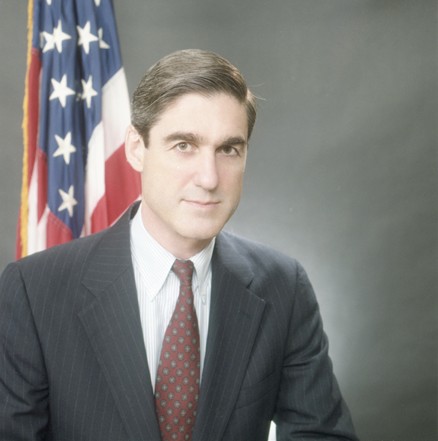
Mueller as Assistant Attorney General for the Criminal Division, 1992. Source: DOJ A week into the job as the director of the FBI, he had his hands full. The big issue for state and local law enforcement was that the FBI did not share intelligence information with them. In preparation for the attacks, some of the hijackers had spent time taking pilot training classes in Minnesota, Arizona, and Florida, and federal law enforcement would need help from local police to prevent the next attack. After the attacks, PERF had a meeting with the FBI Special Agents in Charge (SAC) of major cities and their local police chiefs. The SACs said they wanted information-sharing practices to change, but officials at FBI headquarters were resistant. They felt it was important that Director Mueller hear these concerns directly. Mueller was not aware of the meeting, so I contacted his chief of staff, Chuck Rosenberg. Mueller attended the meeting and listened to the police chiefs and SACs’ concerns. He said he was furious about these issues and determined to change the Bureau’s culture. PERF later held another meeting with police chiefs from around the country. They raised issues about intelligence sharing and difficulties they were having in obtaining security clearances. They also raised concerns about Joint Terrorism Task Forces (JTTF), which the government had formed in the 1980s and 1990s. There was consensus at the meeting that JTTFs had not been given the necessary resources, and our subsequent report recommended major changes. USA Today wrote about the report under the headline “Terror task forces ill-prepared for job, report says.” At the time, Louis Quijas was the FBI’s assistant director in charge of the newly established Office of Law Enforcement Coordination. He called me to tell me I was going to get a call from the Director and said I should “be prepared—the Director is not happy.” Sure enough, my phone rang and this normally quiet, unassuming man was, to put it mildly, livid. That day I saw the passionate side of Bob Mueller. I later found out that he had just left a meeting at the White House with President Bush, who had lit him up about the USA Today headline. So Bob, in turn, lit me up! But I understood, because I knew that he was dead set on changing the culture of the FBI and he was not going to do it quietly. Thousands of agents were reassigned to terrorism cases. State and local law enforcement were given security clearances. And Bob Mueller was a force of nature who was determined to change a very insular culture. PERF was again involved with the FBI in 2007, when Special Agent Barry Lee Bush was tragically killed by friendly fire as agents attempted to apprehend bank robbery suspects in Newark, New Jersey. Mueller was determined to find out how similar future incidents could be avoided. He asked PERF to independently review the training that agents received. We interviewed many agents assigned to field offices, as well as members of the Hostage Rescue Team, and drafted recommended improvements. Mueller asked us to present our findings to his senior staff. In the middle of our presentation, Mueller asked if we could step outside for a few minutes. He later told me that he appreciated our recommendations and didn’t want to criticize his staff in front of us. This was vintage Mueller—wanting to get to the bottom of an issue but also not wanting to publicly embarrass his agents. So much about the man is impressive. He attended Princeton; then, when one of his buddies died in Vietnam, he signed up for the Marines. He led troops in battle, was shot through the leg, and was awarded a Bronze Star and Purple Heart.
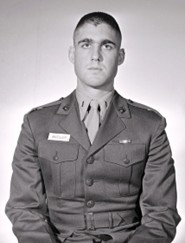
Mueller as a Marine lieutenant. Source: National Archives After I first crossed paths with him in Boston, he went to Washington from 1990 to 1993 to lead the U.S. Department of Justice’s Criminal Division. He then worked at a prestigious law firm in Boston for two years, but in 1995 he returned to public service as a senior litigator with the homicide unit of the U.S. Attorney’s Office for the District of Columbia. This surprised colleagues, as it was several rungs below his previous federal positions, and he was known for answering the phone, “Mueller, homicide.” When I think about people who were committed to a lifetime of honorable public service, Bob Mueller immediately comes to mind. Time after time, he put his country first. Bob Mueller had the credibility and integrity needed to make fundamental changes in the FBI. Today, as the United States wages war in Iran and faces a renewed threat of attacks, the country is better prepared because of the time the FBI spent under the leadership of Bob Mueller. Police shootings can have lasting effects on the officers involved On another note, I’ll call your attention to an NJ.com article about the ways that fatal police shootings affect the officers involved in the incident. You may have seen this piece in Monday’s PERF Daily Clips. Some officers “are so psychologically affected by the deadly incident, their lives also fall apart,” the article states. “NJ.com found that since 2019, at least 64 police officers across the state have retired with disability pensions following fatal shootings.” One reason I’m so passionate about PERF’s ICAT training is that I strongly believe it can help some officers avoid using deadly force and the many negative downstream consequences of those incidents. Officers who are involved in police shootings often face ongoing trauma. I think ICAT can prevent the situations that are sometimes referred to as “lawful but awful,” such as when a mother calls the police because her son is threatening to hurt himself, officers feel threatened when they arrive, and they shoot him. That’s clearly not the outcome anyone wants. If we can train police to resolve these situations peacefully, we’ve saved both a life and a career. Best, Chuck |