|
October 24, 2026 Chief Mike Krantz discusses his agency’s response to the recent Bend, Oregon, school shooting
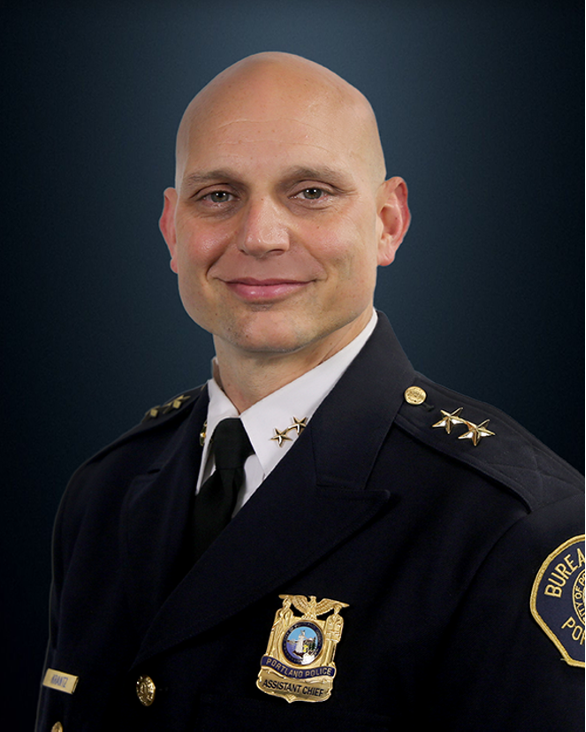
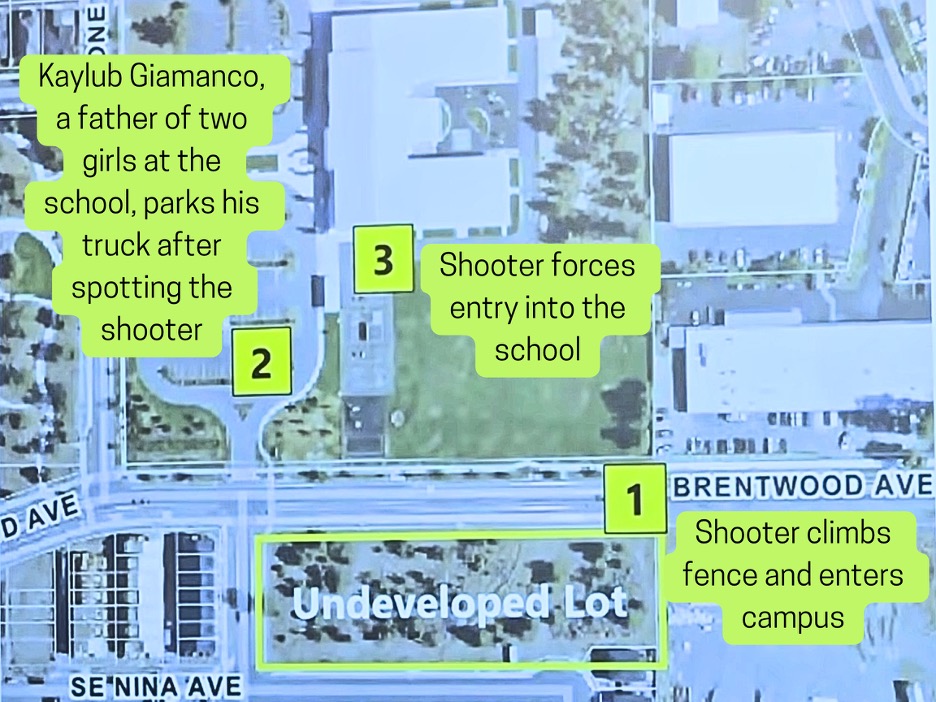
PERF members, Nine days ago, a 16-year-old shot and killed three children and a teacher at Silver Rail Elementary School in Bend, Oregon. A fourth child and a second teacher were also taken to the hospital with injuries. An armed bystander stopped the shooting within minutes, and Bend police officers were on the scene seconds later. On Monday, I spoke with Bend Police Chief Mike Krantz about the incident. Chief Krantz has led the Bend Police Department since 2020. He previously spent 27 years with the Portland, Oregon, Police Bureau, where he retired as an Assistant Chief. Chief Krantz Chuck Wexler: Let’s start with a little bit about your career. Did you always want to be a police officer? Chief Mike Krantz: I always did want to be a police officer. I had an experience when I was a kid where my bicycle was stolen by the neighborhood bully. I lived in Portland, and the Portland neighborhood officer—who I happened to get to know once I was hired in Portland and she was still working there—recovered my bicycle, and I thought it was the most magical thing ever. From then on, it was just like, “That’s what I’m doing.” There was no question about it. I joined the safety patrol in elementary school, when I was the big fifth grader. They gave me a plastic Portland Police Safety Patrol badge, with the same shape and look as the Portland Police badge. I progressed from there. I joined the cadet program for Portland when I was 15, and I’ve been involved ever since. In college, I was a volunteer firefighter and worked for juvenile corrections for Marion County. At 20, I still couldn’t get hired by Portland yet, so I joined Washington County 911 as a dispatcher until I turned 21. Then I applied for full-time work and was hired pretty quickly by Portland. Wexler: Tell me a bit about your time with the Portland Police Department and your experience during the 2020 protests and rioting. Chief Mike Krantz: I had a lot of opportunity in Portland and I loved my time there. I wouldn’t trade it for the world. It was amazing. It developed me. It prepared me for doing things like what I’m doing today. I was in the majority of the different units there and retired as assistant chief. I was the commander of the Central Precinct when the riots kicked off. I was also a public order incident commander at the time. So I was one of the citywide incident commanders for the first 30 days or so of the protests, until I was promoted to assistant chief. Of all my time in Portland, that was definitely the hardest. There was a lot going on, impacting a lot of our folks, and impacting the city in a way that, I think we all recognize, it’s still recovering from. So it was a difficult time. I never planned on leaving, but an opportunity came up that was really hard to pass up, which is this job in Bend. Wexler: What was your transition to Bend like? Chief Krantz: When you’re with a big agency and you’re in leadership, a lot of things come to you that are already completed. There are people doing that work, and they come to you for decisions or sign-offs or guidance. But then when you come to a mid-size agency—we’re still in the largest five or six agencies in Oregon, but a mid-size agency with 160 employees—there’s a lot more work that you have to do as the chief. You’re doing the work and making decisions. That was fun, because I got more involved, but it’s also an adjustment. The other big thing I realized was that when you’re in a major metro, there are so many people above you making decisions and second-guessing decisions and coming back to tell you, “No, we’re going to do it this way.” But when you’re a chief at a mid-size or smaller agency and have the trust of elected officials and the city manager, you realize that your decision is the decision. The buck stops there. It was an adjustment of about six months until I finally figured that out. And the community is a lot more close-knit. Everybody knows somebody, and there are only a few degrees of separation. We have about 110,000 people now. There’s a lot less violent crime, but it’s proportionally similar. We have robberies, we have some murders, we have car crash fatalities, we have assaults. It’s at a lower level, but proportionally, we still have that stuff. So we still have to be proficient as an agency in doing all the serious work to keep our community’s trust and keep our community safe, but it’s not at such a level where we can’t respond because we’re too busy. Wexler: Moving to the recent shooting, where were you when you first found out about it? Chief Krantz: It was 12:58 p.m., and I was sitting at my desk working on emails. I heard something come over my radio about an active shooter threat. They tone it when it’s something serious, and I knew dispatch must have thought it was serious because they sent a tone out. Then it was an active shooter threat. I picked up my radio and peeked down the hallway to look for some other command staff, and I said, “Did you just hear that? Is that a threat or is it an active shooter?” Right at that time, someone on the radio said, “Are we getting 911 calls in on this?” And dispatch said, “Yes, multiple shooting calls. We have people down.” So then I knew that was it. I was ready to go and immediately went down to my car in the lot. The school is two miles from here, so I was on scene in three minutes or so. Wexler: Had your agency done a lot of active shooter training? Chief Krantz: We had an active shooter event in August of 2022 here at a Safeway. Hundreds of rounds were fired. We were there in less than two minutes. We train annually, with multiple different types of training. We do tabletops with all our command staff and supervisors. We do tabletops with the schools. We do scenario-based active threat training with all our folks pretty regularly. We have instructors we bring in and train with the fire department frequently, all with the idea that someday we might have to be the best at this. With the Safeway shooting, everyone on the outside would say was an amazing response. But of course, we’re going to do an after-action to tear it apart. What did we do right? What did we do wrong? Where can we improve? We took those improvements and included them in our next several years of training. We just did training again in August. I don’t want to say that we’re good at this, because no one wants to be good at this. But we took those lessons and improved even more on what we had done in the past. And we were prepared to shine for our community in this instance, and do the work that needed to be done. Wexler: And your officers were there within minutes, right? Chief Krantz: It’s not necessarily just about their response, getting there within two to three minutes. The first officer on the scene was inside. We don’t wait. We don’t huddle up. We get inside. One of our officers drove through a big fence to get to the doors and got inside. And there’s the additional work. The lesson we learned at Safeway was to set up a reunification center faster, to be able to get people out of the area faster. So we did that almost immediately. At the school, we knew we were going to have parents coming in quickly to make sure their kids are safe. That creates more of an issue at that location. We set up a reunification center quickly with the school, had them get their staff there, and had counselors get there immediately. As we were doing all the other work, we assigned that to a command staff member. And we immediately set up the ICS command structure and got those jobs assigned. That’s the stuff I think people will remember. Parents will judge us on how much worry they had, and whether they felt like they knew what was going on. Were they informed? We got information out quickly; that was a big piece for us. Wexler: Could you briefly lay out the facts of the incident? Chief Krantz: Our first call came in at 12:58 or 12:59 about the active shooter threat. It was quickly followed up with information that someone had shot into a vehicle. And then there were several more 911 calls of shooting outside the school. At 1:01, we got a report that the shooter was down and was engaged by a community member. We were in the door roughly 10 seconds or so after that. What had happened initially was the suspect walked to the school, threw the shotgun over the fence, and jumped over the fence. An observant driver was driving by, stopped, and said, “Hey, what are you doing?” The suspect turned around and shot at him three times. That guy drove on, and was being followed by the Good Samaritan community member with the firearm. That guy saw what happened and pulled into the parking lot of the school. The shooter forced entry into a locked double door by blasting it with a shotgun. He immediately went to the classroom to the left and engaged victims. The community member followed, went in the door, observed him in the hallway, heard shooting, and observed a teacher wrestling with him over the gun. The community member stepped into the classroom and shot multiple rounds at the suspect, hitting him multiple times. He was deceased.
A diagram of the events of the shooting released by Bend police, annotated by PERF. Wexler: Did your officers know that the armed community member wasn’t the bad guy? Chief Krantz: I heard there was a call that came in that there were potentially two shooters, because people don’t know. Someone inside the school could think there were two shooters there. I spoke with one of our officers who went inside and he was lamenting that exact thing. “I went in, I passed this guy with a gun—kind of without even considering it—and I went to the classroom.” I look at that and I think that there’s risk going into active shooter events, especially when our protocol is that if you’re there, you’re going in alone. There’s risk to that. And we’ve seen that play out at times where there have been two shooters and it has not been a great outcome. But the other side of that is that the amount and type of training we do—looking for indicators, sounds, screams, and victims—I think trains your brain to look past things that aren’t a true threat. So something the community member was doing was not threatening to the officers. It didn’t stand out as something that they needed to address as a threat. I think through repetitive scenario-based training, you learn, whether it’s consciously or subconsciously, that there is something that takes you to the threat—the sounds or what you’re seeing. And we had a very similar response in the Safeway shooting, where the officers passed by armed people who had guns out, but they were outside. It was clear to them that those people weren’t threats, and they could see and hear where the actual event was happening. Wexler: What was your approach to dealing with the media? Chief Krantz: We have a great communications manager I work with here at the police department. She’s a civilian member. And I think that is the way to go for police departments—people with expertise and experience in the field, rather than throwing a lieutenant into that role as a rotational position. We work together on almost every communication that goes out. We want a unified message. Our goal is to inform our local media first, because we feel like our local media informs our community. And they’re much more invested in this community. When national media shows up, it’s definitely a different circus. They want a few sound bites and clips, then they’re out of here as quickly as they got here. So we generally have a policy that there is no reason for us to do national media interviews if we’ve already shared the information. We did a press conference Thursday night at about 5:00, which was four hours after the event. We told the media that the next day between 2:00 and 5:00, we would do a full press conference. That included a lot of details around the event—as much as we could get out without jeopardizing the investigation. After that, a bunch of national media want their own private interview, but I feel like the information is already out there. We have the information. We don’t want to sensationalize it or bring more attention to it just because it’s a national media outlet. But we will do local media work and continue to inform them. My experience with Safeway was similar, in that we put out as much as we could. I think it satisfies the appetite for the national media, and it also stops a lot of the rumor mill information that’s bad. There’s still a lot out there. There’s so much information out there that we did not put out or I didn’t say, but is being credited to me or the Bend Police Department. But we’ve worked on getting information out there when we can, being transparent with it, and answering the questions as best we could. Then we’ll do additional releases as information comes out, but we’re not going to do any more press conference releases.
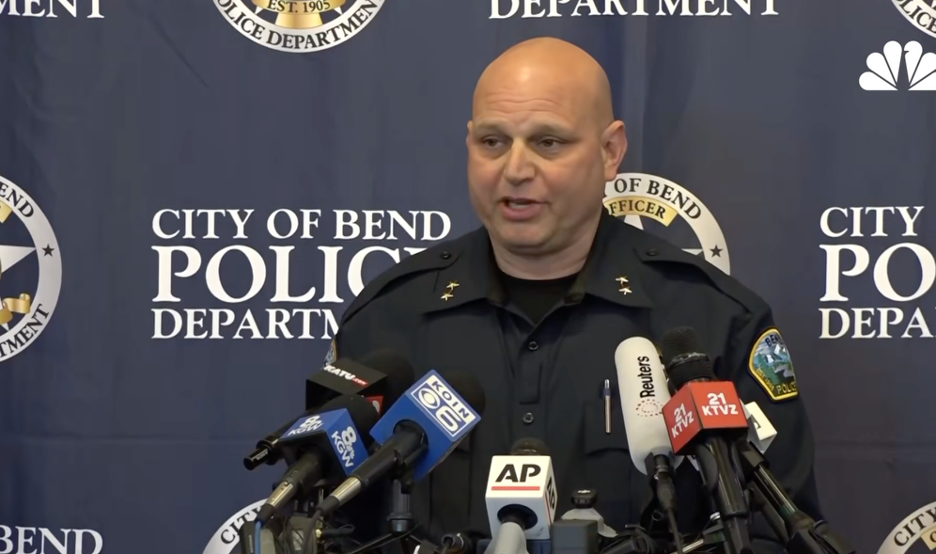
Chief Krantz updates the public on Oct. 15 shooting at Silver Rail Elementary School. Source: NBCLA Wexler: What are your takeaways about community members’ intervention in this situation? Chief Krantz: I don’t know the solution to fix this type of situation, whether it’s mental health or different interventions with kids who are younger. However that can be fixed, we in law enforcement need to be a partner in that. And I think what we can do is train and be the best that we can in response. We can also celebrate when people are willing to take risks and intervene. I know we tell community members to not intervene in a lot of criminal activity, because we think that’s going to get them hurt, so let the police deal with it. But when it’s these types of instances, we’ve seen that—at least in both incidents we’ve had—community member intervention has drastically reduced the number of lives lost and potentially brought resolution to the event. That’s something you can’t underestimate. But you also question, do we tell people to intervene? Where is that line? Do we tell people, “When you see this, we want you to intervene?” A lot of times these end when the first officer is on the scene, because the killer isn’t thinking someone is going to stop them. That is not in their plan. Their plan is to do X, Y, and Z. And as soon as they have their first contact with somebody who’s there to stop them, it frequently throws their plan off. They stop, or commit suicide, or something happens. But it’s hard to tell your community to intervene, because they’re not trained for it. Sometimes they’re not ready for that. But we see intervention stop these events. Wexler: What lessons have you learned about managing yourself over the past week? Chief Krantz: Be prepared for everyone in the world to reach out to you during the time you’re trying to get all this stuff done. Most cops carry two phones, and both phones were getting calls, texts, and emails for about three days straight while I was trying to get all this work done. People are trying to do what they can, because they feel like there must be something they could do. And usually that’s just to reach out to say, “Hey, we’re thinking about you.” I appreciate that, and it’s nice to have that support from folks, but also be prepared for it. And be prepared to navigate all the elected officials who reach out. Your federal delegation, your state delegation, your state governor, and the White House all want to reach out to say they’re thinking about you. And usually it’s too soon. Usually it’s right when you’re still dealing with the first two hours of the aftermath. But they just want to help. So have a plan for that. After our first event, we learned to have a plan for that. I referred all those folks to my city manager, who was on scene with me. I had the city manager address all the elected officials, create a communication plan with them, and a place and time where I could do a Q&A with them. I think that really helps, because the elected officials want to be there. They have to inform the community—their job is to keep the community informed as well. But it starts mucking things up if you don’t have a plan. Thanks to Chief Krantz for taking the time to share his experiences with our members! He will also be speaking about this at today’s PERF Town Hall Meeting, which will be held from 1:30–5:00 p.m. in the Orange Ballroom at the Hilton Orlando. Today's meeting will also include a debate about the use of automated license plate readers (ALPRs). The police use of ALPRs has come under scrutiny in recent months, and many municipalities have restricted or banned the technology. The three panelists will be Maria Villegas Bravo, Counsel at the Electronic Privacy Information Center (EPIC); Clare Garvie, Deputy Director of Technology Law & Policy at the Policing Project; and Rafael Mangual, Nick Ohnell Fellow at the Manhattan Institute, contributing editor at the City Journal, and a member of the Council on Criminal Justice. Following brief remarks from the panelists, attendees will be invited to ask questions and share their perspectives, experience, and practical considerations from their own agencies and communities. I hope to see you at the Town Hall Meeting at 1:30! Best, Chuck |