
|
March 21, 2026 American police must prepare for drones and other threats during the war in Iran
PERF members, Three weeks ago today, the United States and Israel began a war in Iran with missile and drone strikes across the country. In response, Iran and its allies have launched missile and drone attacks on targets across the Middle East. While Iran is not capable of striking the United States with ballistic missiles, American law enforcement should prepare for potential drone strikes or smaller-scale attacks by Iran or non-state actors. We’ve already seen the first attacks that appear to have been inspired by the war:
Terrorism prevention was a high priority for law enforcement in the years after the September 11, 2001, attacks, but I think other issues have taken precedence more recently. This month’s attacks should alert law enforcement to refocus on the threat posed not just by state actors like Iran but also by terrorist groups, including the threat of lone wolf attacks. One big difference since the first decade after September 11 is the threat posed by drones. The FBI sent a threat bulletin late last month to California law enforcement agencies warning of unverified intelligence about a potential Iranian drone strike in the state. And earlier this week, American officials spotted unknown drones around Fort Lesley J. McNair in Washington, D.C. I immediately thought of Operation Spiderweb, the June 2025 Ukrainian strike on multiple Russian military bases. Ukraine hid explosive-laden drones in cargo trucks, moved those trucks near their targets, and then simultaneously released dozens of drones from each truck. The Security Service of Ukraine said it damaged 41 Russian aircrafts in that attack. Shortly after the attack, I visited Ukraine with a PERF delegation—including philanthropist Howard Buffett, whose foundation has provided extensive support for Ukraine’s people and police—to better understand how that country’s police and military are responding to the threat of malicious drones. Police there told us that the latest threat they face is tethered drones, which are controlled with thin optical wires and do not emit any electronic signal.
Members of the Ukrainian National Police demonstrate examples of drone technology to the visiting PERF delegation. Source: Ukrainian National Police This topic has been of interest to PERF for some time. In 2019, we brought federal, state, and local law enforcement officials together to discuss the threat posed by the malicious use of drones. That meeting was held a few months after the 115th Congress authorized the U.S. Departments of Justice and Homeland Security to intercede when they observed potentially threatening drones. But that law did not provide local law enforcement with any authority to act in those situations. Now, under a law passed by the 119th Congress in December 2025, state and local law enforcement agencies can now apply to the federal government for authority to take down threatening drones. And last fall the FBI opened the National Counter-Unmanned Training Center in Huntsville, Alabama, which will prepare law enforcement to address the threat of malicious drones. But I don’t think many local agencies are prepared to respond to that threat should it occur today. Agencies hosting 2026 FIFA World Cup matches this summer should be on particularly high alert for potential threats. These major international events could be seen as potential targets, and the Iranian team has already expressed concern about their safety.
I recommend local law enforcement consider taking advantage of federal expertise, particularly about threats like cyber and drone attacks. Agencies should think about reviewing their policies and training on addressing terrorism threats and update those materials as needed. They may want to ensure they have systems in place to receive and share accurate, timely information with local, state, and federal partners. They can reach out to potential local targets, such as government facilities, schools, and places of worship, to ensure those locations are prepared for potential attacks. They might develop a plan for communicating with their community about any threats. Finally, they can coordinate with other emergency responders on a response plan in case an attack does occur. I hope that none of these preparations are necessary, but I worry that we may see a rise in attacks on our communities as a result of this war. Best, Chuck |

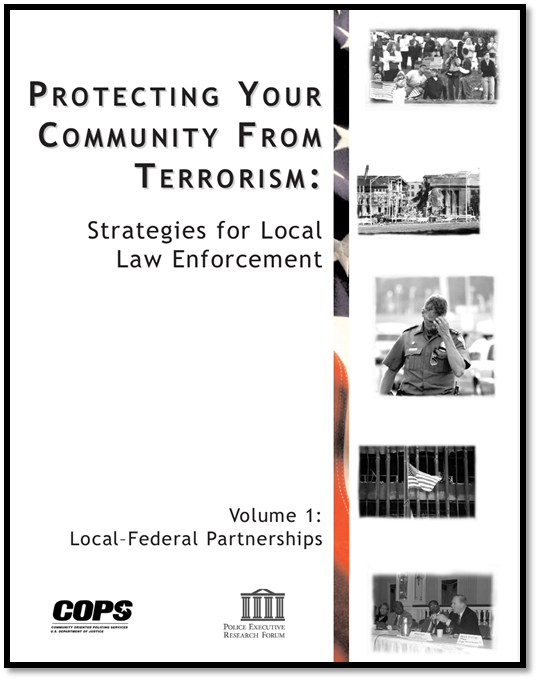 How should local police departments and sheriffs’ offices prepare for the threat? This was a focus for PERF in the years after the September 11 attacks. In 2004, we published a series of six reports on protecting communities from terrorism: