|
February 21, 2026 Considering the role of local police in monitoring federal law enforcement and remembering pioneering criminologist Al Blumstein
PERF members, Something unusual has been happening recently: Several cities and states have enacted measures to limit federal law enforcement’s actions, potentially leaving local police in an incredibly difficult position. This emerging dynamic—where local agencies must navigate, interpret, or even enforce restrictions directed at federal agencies—creates unprecedented operational, legal, and personal challenges. Six Massachusetts cities, including Boston, have put orders in place banning federal agencies from staging for civil immigration enforcement actions on city-owned property; requiring city officials to “publicly release video footage of violence or property damage by federal officials;” and affirming that “consistent with its statutory authority and longstanding practice,” police will “investigate all violence, property damage, and allegations of criminal conduct, including by federal officials, and appropriately document such incidents.” In Minneapolis, Mayor Jacob Frey signed an executive order banning federal law enforcement from using city-owned property to stage civil immigration enforcement operations. Police Chief Brian O’Hara has also said he expects his officers to intervene “if unlawful force is being used by any law enforcement officer against any person in this city and one of our officers is there.” Chicago Mayor Brandon Johnson signed an executive order requiring the city’s police officers to preserve body-worn camera footage of federal agents’ civil immigration enforcement actions and inform their supervisors of any information they receive about federal agents violating state or local law. In the meantime, California passed a law banning federal law enforcement from wearing face coverings. However, LAPD Chief Jim McDonnell said his agency wouldn’t enforce that measure. “The reality of one armed agency approaching another armed agency to create conflict over something that would be a misdemeanor at best or an infraction, it doesn’t make any sense,” Chief McDonnell said at a January 29 press conference. “It’s not a good public policy decision, and it wasn’t well thought out in my opinion.” His comments underscore concerns about the feasibility and wisdom of requiring local police to enforce restrictions on federal personnel. (The law has since been struck down by a federal judge.) I think these measures are unprecedented, and I can’t help but feel for the local police chiefs and sheriffs, as well as their officers and deputies, who may be caught in the crosshairs of political battles regardless of which side has the moral high ground. Local officers may face the contradictory expectations that they uphold state and local directives while avoiding interference with federal operations—sometimes in a rapidly evolving, high-stakes environment. I cannot recall a time when local police were asked, in essence, to police the feds. Usually, the opposite has occurred—the federal government investigates possible civil rights violations committed by local law enforcement. The growing divergence between federal enforcement practices and some cities’ municipal policies may create significant operational friction, public confusion, and strained intergovernmental relationships. Jurisdictions adopting these measures should pair them with clear operational guidance, legal training, and agency communication protocols so that local police officers are not left to navigate the resulting conflicts on their own. And federal agencies should meet with local agencies in advance of operations to define parameters, clarify expectations, and reduce the likelihood of operational conflict or misunderstandings. Criminologist Al Blumstein dies at 95 On an unrelated note, I was saddened to hear that Al Blumstein, who worked as a criminology professor at Carnegie Mellon University for nearly five decades, passed away last month at the age of 95. I wasn’t fortunate enough to know him personally, but I was very familiar with his work and his impact on the field. I asked two people who knew Professor Blumstein well—University of Maryland Professor Emeritus Charles Wellford and Carnegie Mellon University Professor Daniel Nagin—to discuss his influence on the field of criminology.
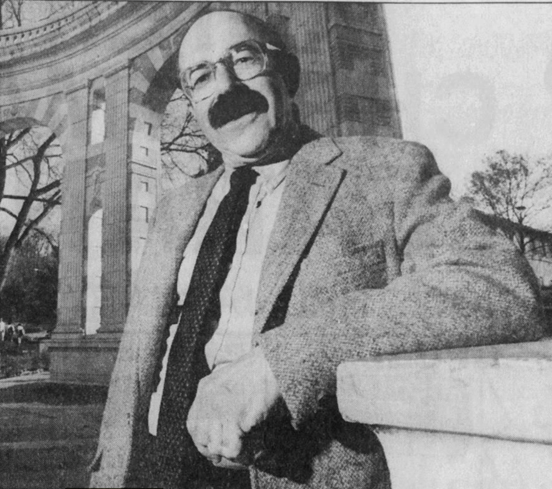
Blumstein. Source: AP/archive Prof. Wellford first met Prof. Blumstein in 1969 and worked with him throughout the subsequent decades. When asked to identify Prof. Blumstein’s most significant work, here’s what Prof. Wellford told me: “I would say his work on criminal careers. He really pioneered how we could approach that idea both methodologically and statistically, to understand what careers look like, how we could characterize them, how we could do research on them, and why it was important. That whole criminal career area was the most important for me and, I think, the field. “Beyond that, it was his ability to demonstrate how important it was that our field become more rigorous. He did that in his own work, by using the best research designs that could be used for the topics he was addressing. He built a strong program of research on crime issues at Carnegie Mellon. He also developed a training program for young criminologists and others who were interested in crime and justice studies to help them develop and advance their quantitative skills. Some of the best people in our field over the last 20 years came through that program, and I think all of them would say that it was Al’s inspiration and guidance that contributed to their advances after that training program. “He showed how to quantify the criminal justice system and understand why it was important to use a systemic perspective in understanding crime and justice in the United States. “Criminal careers, training programs, the development of academic programs, and the analysis of criminal justice systems stand out to me as his contributions.” Prof. Blumstein was Prof. Nagin’s principal Ph.D. advisor and then his research collaborator and close colleague. When asked to describe Prof. Blumstein’s influence on the field, Prof. Nagin told me this: “He’s a giant in the field of criminology. I say that for two interrelated reasons. “The first was simply his own contributions. He’s the person who coined the phrase ‘criminal justice system.’ Coming out of the operations research world and just learning about crime, he was brought onto President Johnson’s commission on crime to study science and technology. He was the first person to recognize that this was an interconnected system, and proceeded to lay out and model those connections. “Subsequent to that, he played a leading role in forming and shaping criminal career research. That had an influential impact on what is now called developmental criminology. “Beginning in the 1990s, when the crime drop started, he was a very active figure in tracking the crime drop and trying to provide different explanations for what was going on. Those were his individual contributions. “More broadly, Al was a generous mentor to me and many, many others in supporting us and helping to move our careers along. It’s often the case in academia that senior scholars are not nearly so generous. Al was very, very aware that he had a responsibility to help the people working alongside him on these projects develop their own careers independent of him. That was certainly the case for me. “We had different styles of doing research. I tended to be more statistically oriented than Al was, in a way. He let me go in that direction and helped and supported me in doing it. That kind of generosity wasn’t only directed at me; it was also directed at many, many others. That’s why I think so many people are mourning his loss. “Al lived to be 95, and his was a life well lived.” Thanks to Professors Wellford and Nagin for sharing their memories of one of the most influential figures in criminology. Best, Chuck |