|
September 19, 2026 A clear and present danger—A new report on what police leaders need to know about the threat of malicious drones
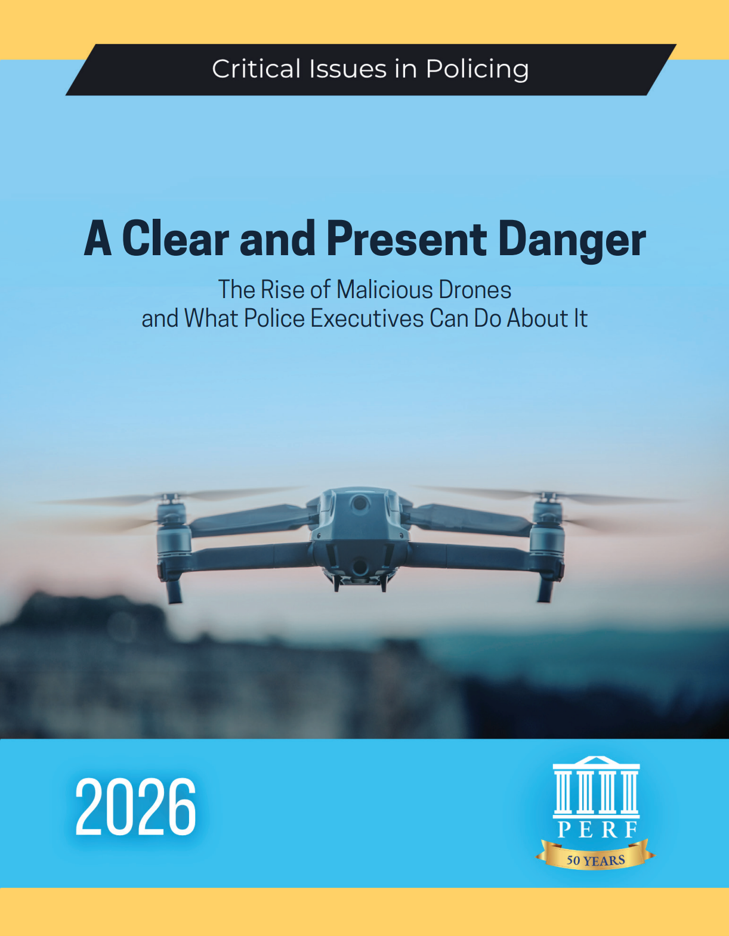
PERF members, Twenty-five years ago, our nation experienced the deadliest act of domestic terrorism in its history. Terrorists hijacked four commercial airliners and used them as weapons against iconic symbols of America's economic, military, and political strength. In the course of those horrific attacks, nearly 3,000 people lost their lives. Since then, thousands more have died from illnesses linked to the attacks, while many others continue to endure lasting physical and psychological injuries. The impact of 9/11 did not end that day. Survivors, families, first responders, and communities across the nation still feel its consequences. In the wake of that devastation, the bipartisan 9/11 Commission was established to review the attacks, identify failures, and recommend reforms to prevent future tragedies. The Commission concluded that “the 9/11 attacks revealed four kinds of failures: in imagination, policy, capabilities, and management.” The failure of imagination was listed first: Despite warning signs and intelligence indicators, officials failed to contemplate how terrorists could use existing technology in a novel way to carry out a catastrophic attack on American soil. A quarter century later, I believe we face a similar challenge: the malicious use of unmanned aircraft systems (UAS), commonly known as drones. The risk is not simply the technology itself but whether we can recognize how quickly it is evolving and anticipate how it might be used before a tragedy forces the issue. To be clear, this isn't the first time PERF has sounded this type of alarm. PERF first raised this concern in 2019, when we convened experts from law enforcement, government, and industry to examine the emerging threat of malicious drones. The resulting report highlighted a troubling reality: Congress had granted counter-drone authority exclusively to DHS and DOJ, leaving local law enforcement largely dependent on federal assistance after an incident had already begun. Our meeting attendees then warned that local authorities had little capability to stop a determined attack, especially given how limited their authority was. Seven years later, that ambiguity has been resolved, and the federal government's role has shifted from restricting local authority to actively building it. Through the FBI's new National Counter-UAS Training Center (NCUTC), state and local agencies can now become certified and authorized to act on their own. This evolving landscape is the focus of PERF's latest report: A Clear and Present Danger—The Rise of Malicious Drones and What Police Executives Can Do About It. This report is part of PERF’s Critical Issues in Policing series, supported by the Motorola Solutions Foundation. For more than two decades, the Motorola Solutions Foundation has enabled PERF to address some of policing’s biggest challenges. PERF’s latest report in the Critical Issues in Policing series. At a recent PERF meeting, Serhii Bolvinov, Deputy Chief of the Kyiv Regional Police in Ukraine, offered perhaps the clearest warning of how rapidly the threat is evolving. "The war in 2022 and the war today are already two different wars," he told the group, describing how Iranian-made drones once used mainly for reconnaissance have become instruments of war, striking supply lines and terrorizing civilians. He explained how Russia has increasingly connected drones to their operators through fiber-optic cables that can stretch for miles, making them immune to the radio-frequency jamming that once neutralized this kind of threat. The lesson for American law enforcement is direct: The tools and tactics used against drones today may not work against the drones of tomorrow.
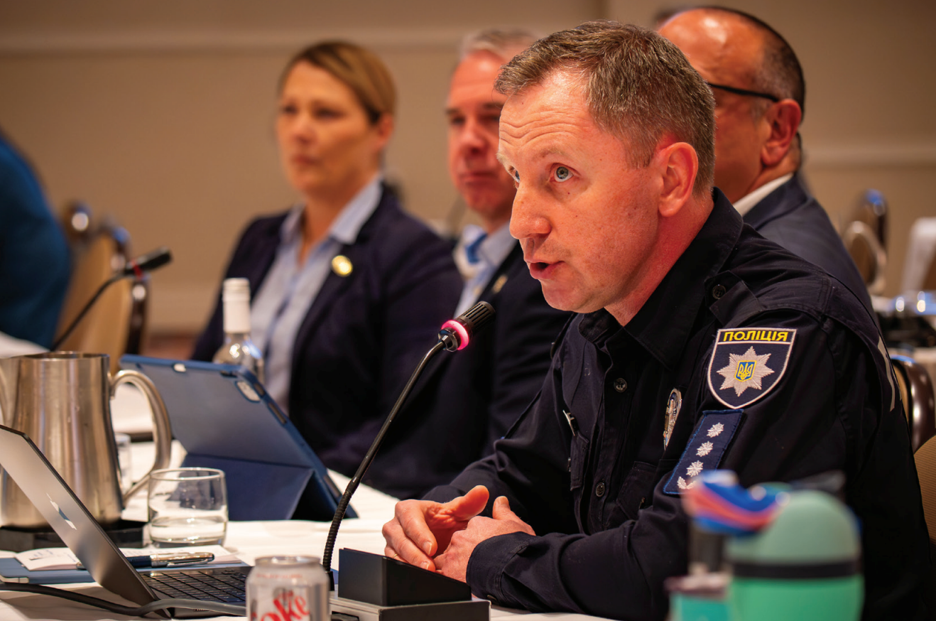
Deputy Chief of the Kyiv Regional Police Serhii Bolvinov. Cathy Lanier, the NFL's Chief Security Officer and former Washington, D.C., Metropolitan Police Chief, voiced a related worry closer to home. Lanier said that NFL security teams face at least a dozen drone incursions during every game, forcing ground intercept teams to identify operators and intervene before a drone can threaten players or fans. "The drone threat has really, really taken off," Lanier said. Her concern is that the threat is accelerating much faster than local law enforcement's authority to respond to it.
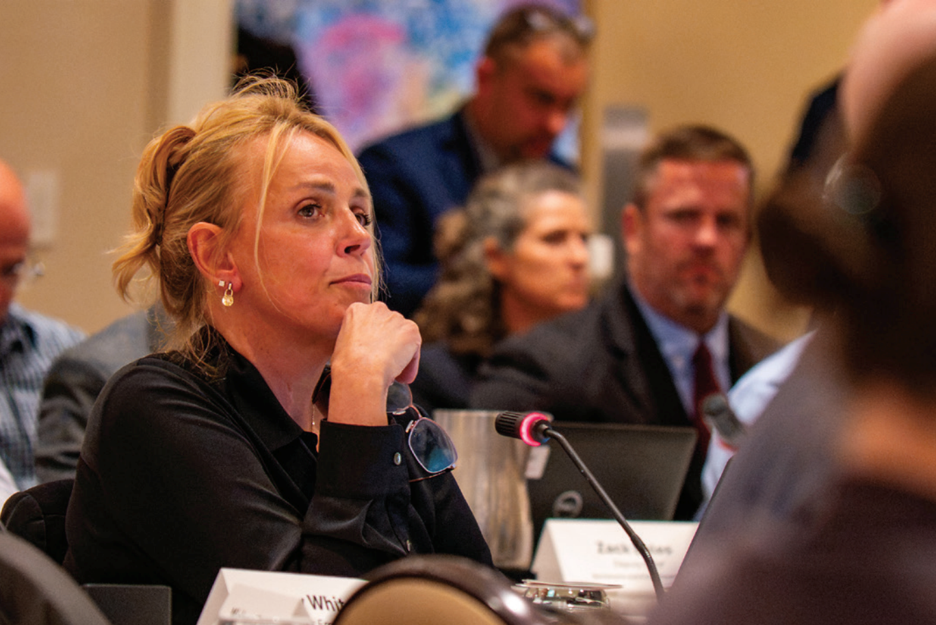
NFL Chief Security Officer Cathy Lanier speaks at PERF’s 2026 meeting. Lanier's concern highlights a longstanding challenge. For years, many law enforcement leaders understood the threat but lacked the legal authority, technology, and operational capability to address it effectively. But that has finally started to change. As the report notes, that evolution has taken concrete form over the past year. In 2025, Congress passed the SAFER SKIES Act, creating a pathway for state and local agencies to obtain counter-UAS authority—the ability not just to detect a malicious drone but also to take action against it. The legislation included $500 million in grant funding for training and equipment and helped spur the creation of the FBI's NCUTC in Huntsville, Alabama, where officers from around the country are trained. Combined with two 2025 executive orders directing federal agencies to expand and support local counter-drone capabilities, these developments represent the most significant increase in local counter-UAS authority in American history. The linchpin for obtaining authority to act against malicious drones is certification through the NCUTC. That process starts with a short online course and assessment, then culminates in a two-week, in-person training course that ends with an individual Mitigation Certificate. Until recently, only officers deputized to a federal task force could act on that certification—but as of a July 2026 rule change, certified graduates can now operate under their own agency's authority once that agency is accredited. Many agencies have already sent personnel through the program, and representatives of many others are waiting for their turn. The shift to agency authority is significant because federal task force deputation was neither intended nor built as a permanent measure. FBI Assistant Section Chief Micheal Torphy, who helped create the NCUTC and oversees the certification process, told PERF's meeting attendees that relying on federal deputization is “impractical for the bureau” and inefficient for state and local agencies. Continued reliance on deputation, he added, would ultimately defeat the purpose of the mitigation authority Congress granted to state and local agencies in the first place—leaving them permanently dependent on federal partners rather than operating on their own authority.
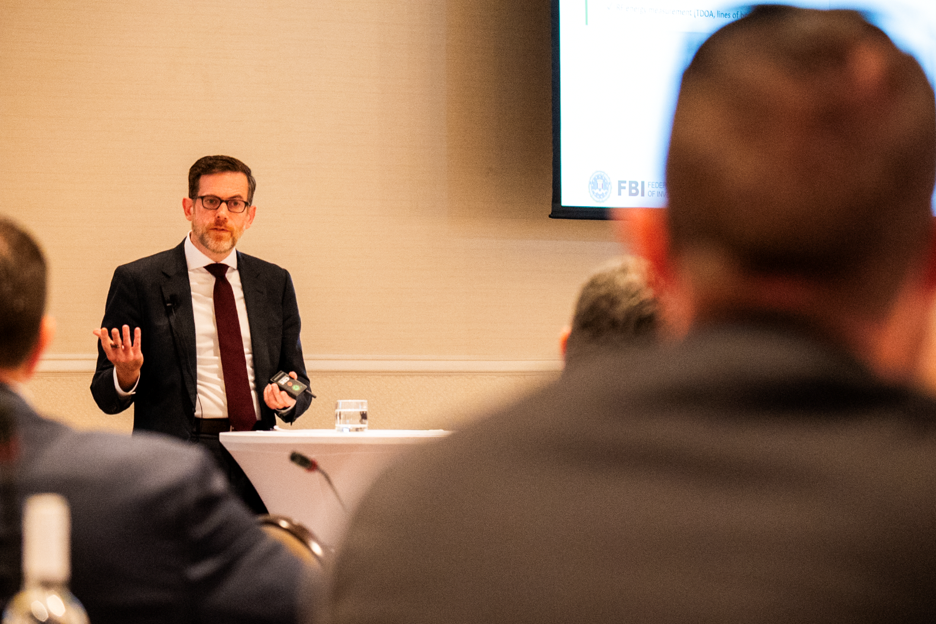
FBI Assistant Section Chief Micheal Torphy presents at PERF’s 2026 meeting. Our new report provides guidance for what law enforcement executives can do before and after certification—from building public support and assessing critical infrastructure to developing internal policy and sustaining proficiency once an agency is accredited. Together, these steps give police executives a practical roadmap for building a counter-drone program that lasts rather than one that depends indefinitely on federal partners. This progress is real. Seven years ago, local police agencies largely lacked the authority to counter malicious drones on their own. Today, they have a pathway to obtain that authority, build operational capability, and protect their communities themselves. But a pathway is not the same as preparedness. The responsibility now shifts to individual police departments: to seek that authority, build the partnerships and policies around it, and use it before the types of threats that Deputy Chief Bolvinov and Chief Lanier described become tragedies we could have prevented. Back in 2019, NYPD Deputy Commissioner of Intelligence and Counterterrorism John Miller warned that “anyone can buy" a drone, and that terrorists wouldn't need a suicide bomber if they could fly a bomb into a target remotely and repeatedly. That warning is even more relevant today. The technology is more capable, more accessible, and evolving faster than ever. Twenty-five years after 9/11, the lesson remains unchanged. The greatest failures are often not failures of technology or resources but failures of imagination. Recognizing a threat is not enough. Law enforcement leaders must anticipate how malicious actors will use emerging technologies and build the capabilities needed to stop them. This report's guidance is intended to help close the gap between imagination and action before a preventable tragedy forces another national reckoning. Best, Chuck |