|
April 18, 2026 PERF celebrates 50 years and discusses some of today’s policing challenges
PERF members, I returned from our Annual Meeting in Los Angeles late last night after spending a few wonderful days with more than 200 PERF members and other guests. Here are a few highlights from the meeting.
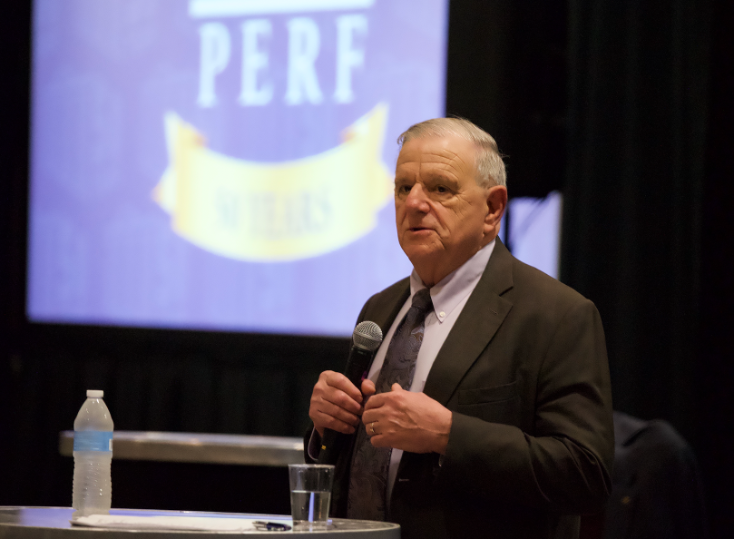
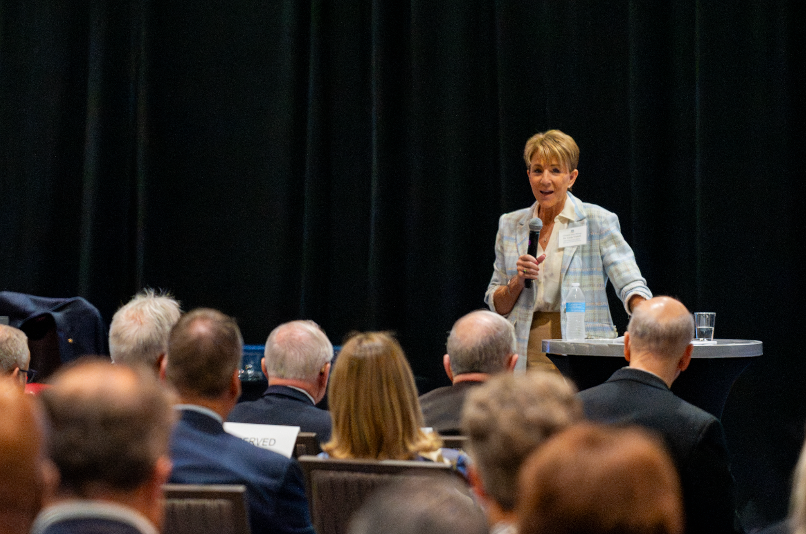
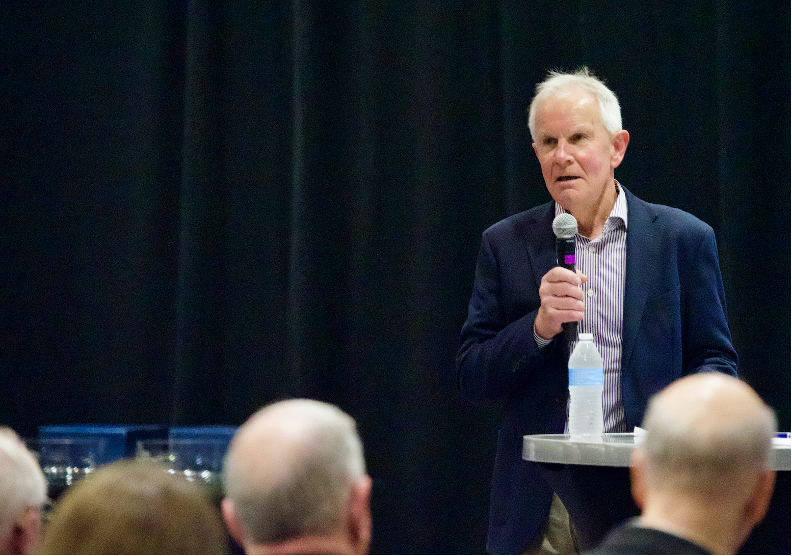
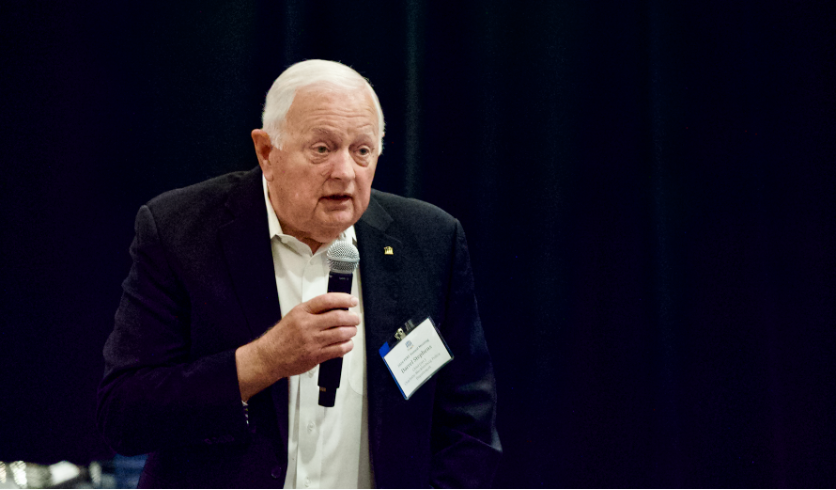
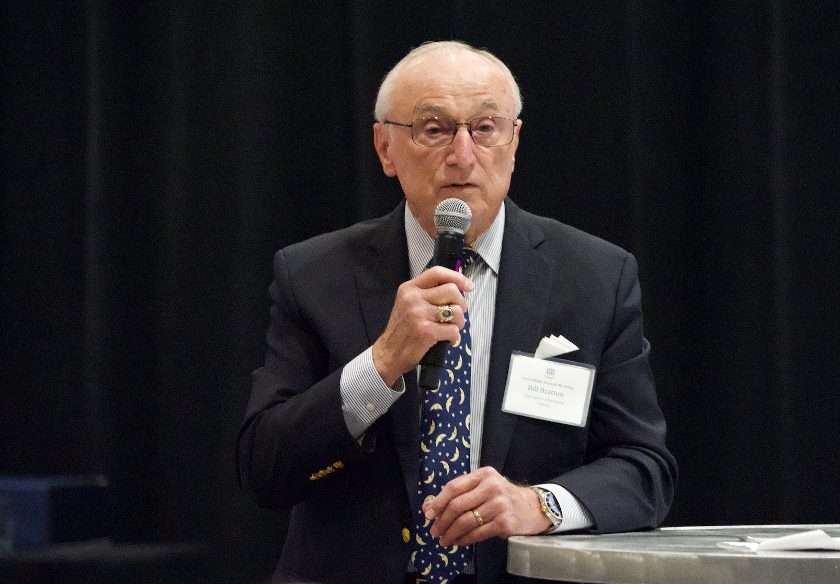
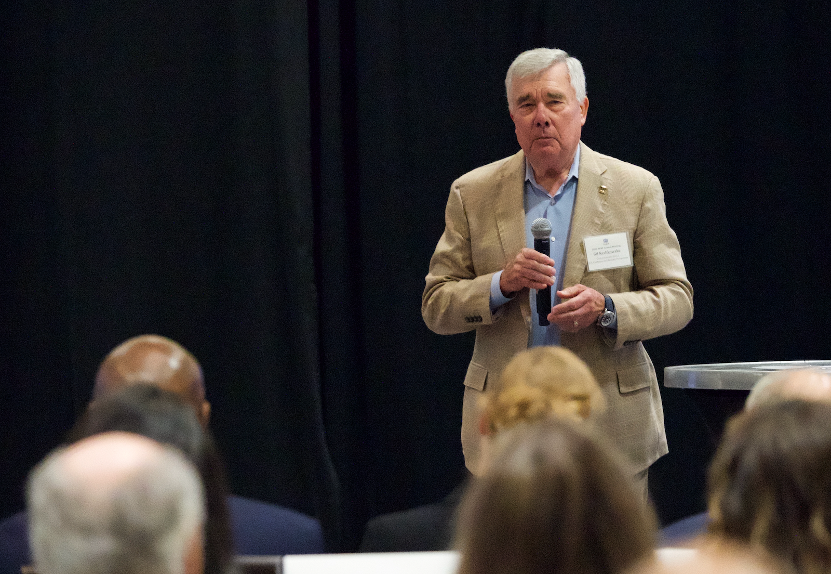
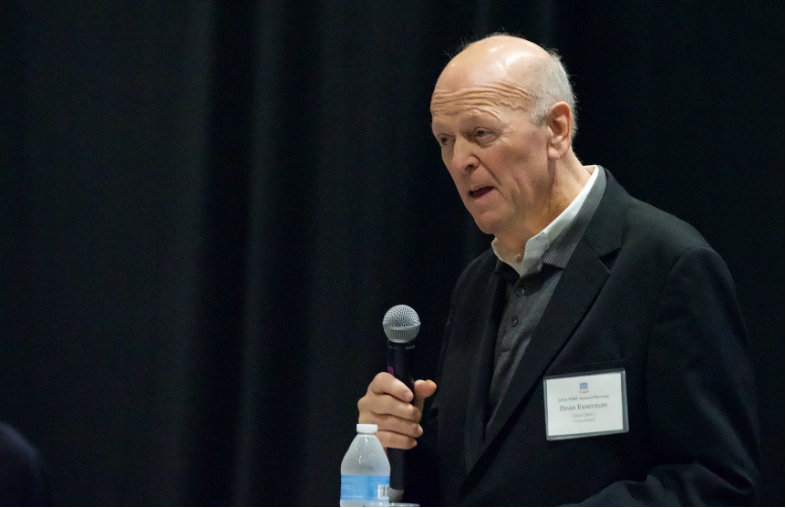
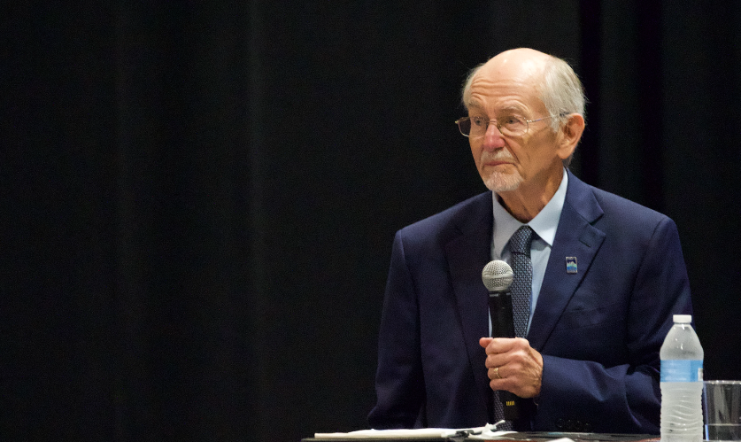
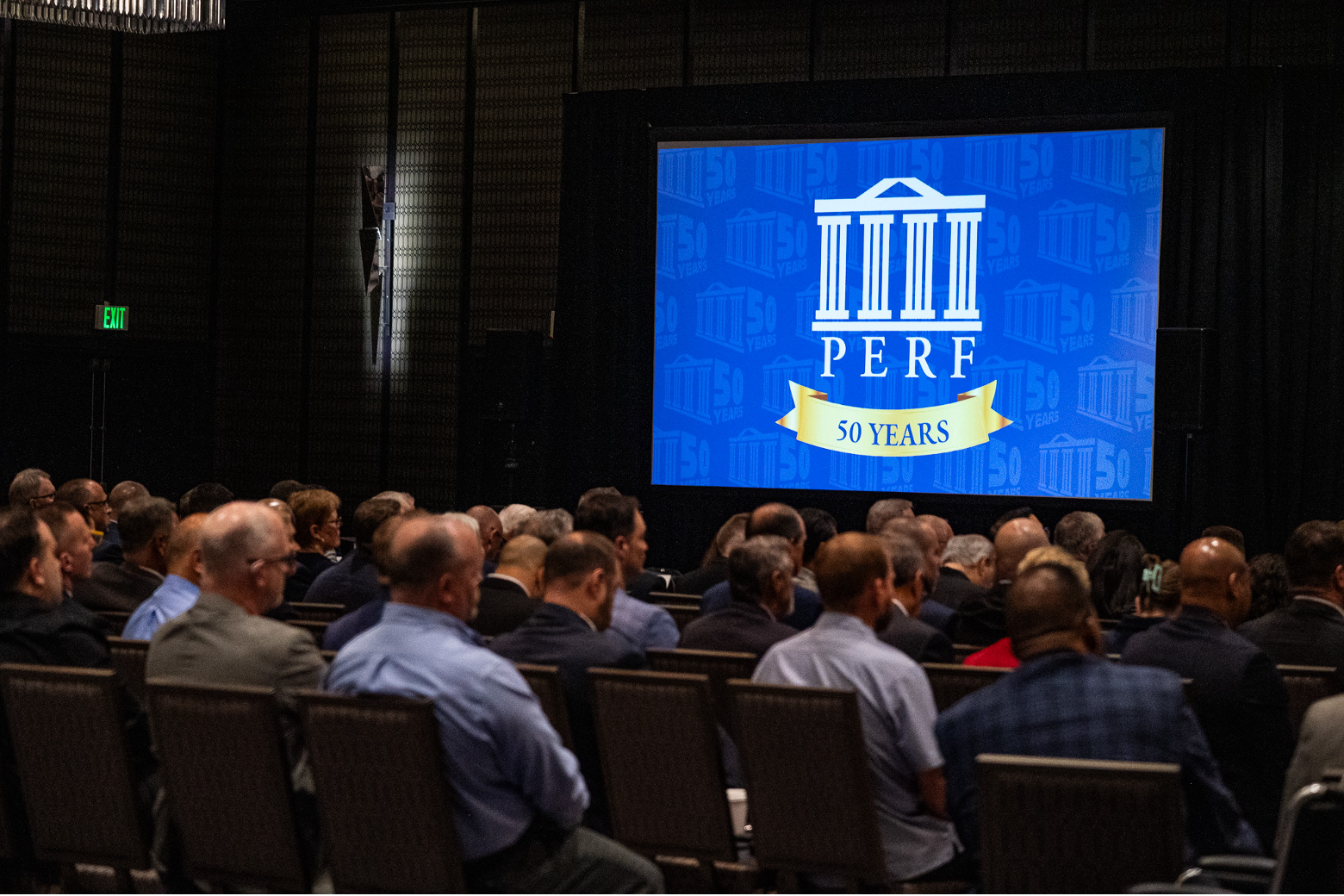
50 Years of PERF At this year’s Annual Meeting, we recognized PERF’s 50th anniversary. We heard from a number of speakers who each touched upon key moments in the organization’s history.
Former PERF board member Bernard Melekian represented the Police Foundation (now known as the National Policing Institute), which provided the initial funding to establish PERF. He also served as police chief in Pasadena and Santa Barbara, California; undersheriff in Santa Barbara County, California; and Director of the COPS Office.
Lorie Fridell conducted influential research on implicit bias while serving as PERF’s Research Director.
Sir Peter Fahy was Chief Constable of Greater Manchester Police and a PERF Board member. Darrel Stephens was PERF’s executive director from 1986 to 1992 and the police chief in Charlotte-Mecklenburg, North Carolina; Newport News, Virginia; and St. Petersburg and Largo, Florida.
Former NYPD Commissioner and LAPD Chief Bill Bratton was an early attendee of PERF’s SMIP program, former PERF President, and winner of PERF’s Leadership and Gary P. Hayes Awards. Gil Kerlikowske was an early SMIP attendee, former PERF President, and recipient of the Leadership and Gary P. Hayes Awards. He also served as police chief in Buffalo and Seattle prior to his time as Commissioner for U.S. Customs and Border Protection.
Dean Esserman was a member of PERF’s Board of Directors, a Gary P. Hayes Award recipient, and served as police chief in Providence, Rhode Island, and Stamford and New Haven, Connecticut, as well as for the Metro-North Railroad Police Department.
Robert Olson served as PERF’s President and led the police departments in Minneapolis; Yonkers, New York; and Corpus Christi, Texas.
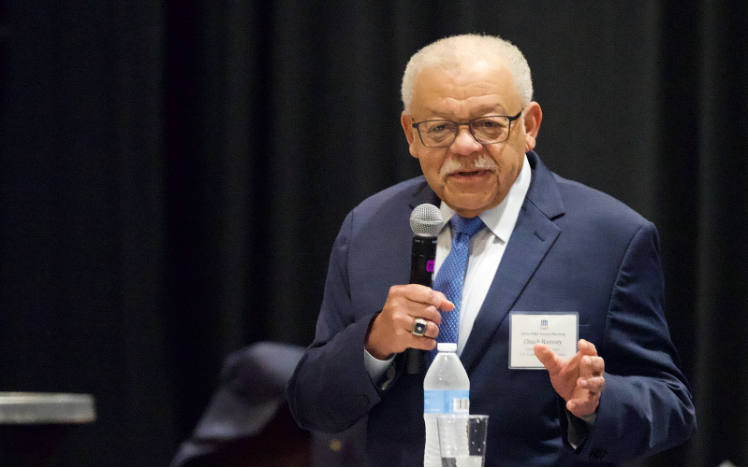
Former Philadelphia Commissioner and Washington, D.C., Chief Chuck Ramsey served as PERF’s President and received PERF’s Leadership and Gary P. Hayes Awards.
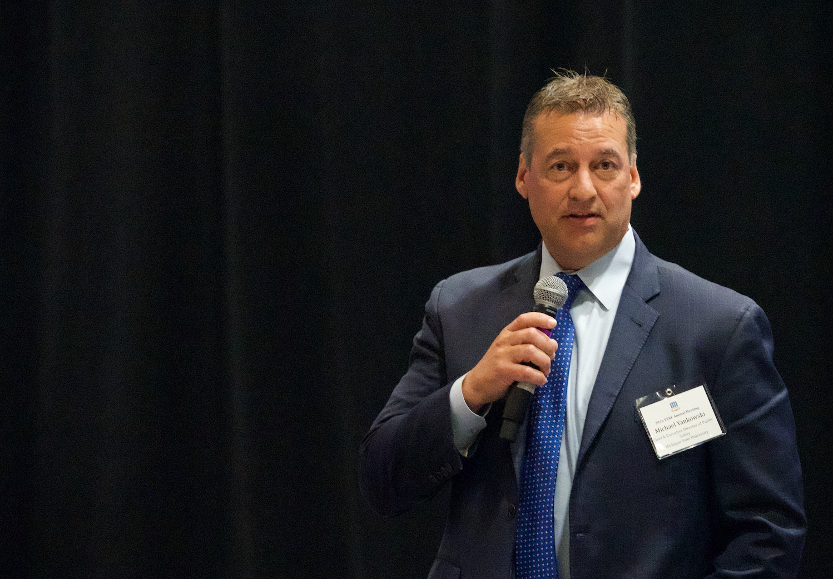
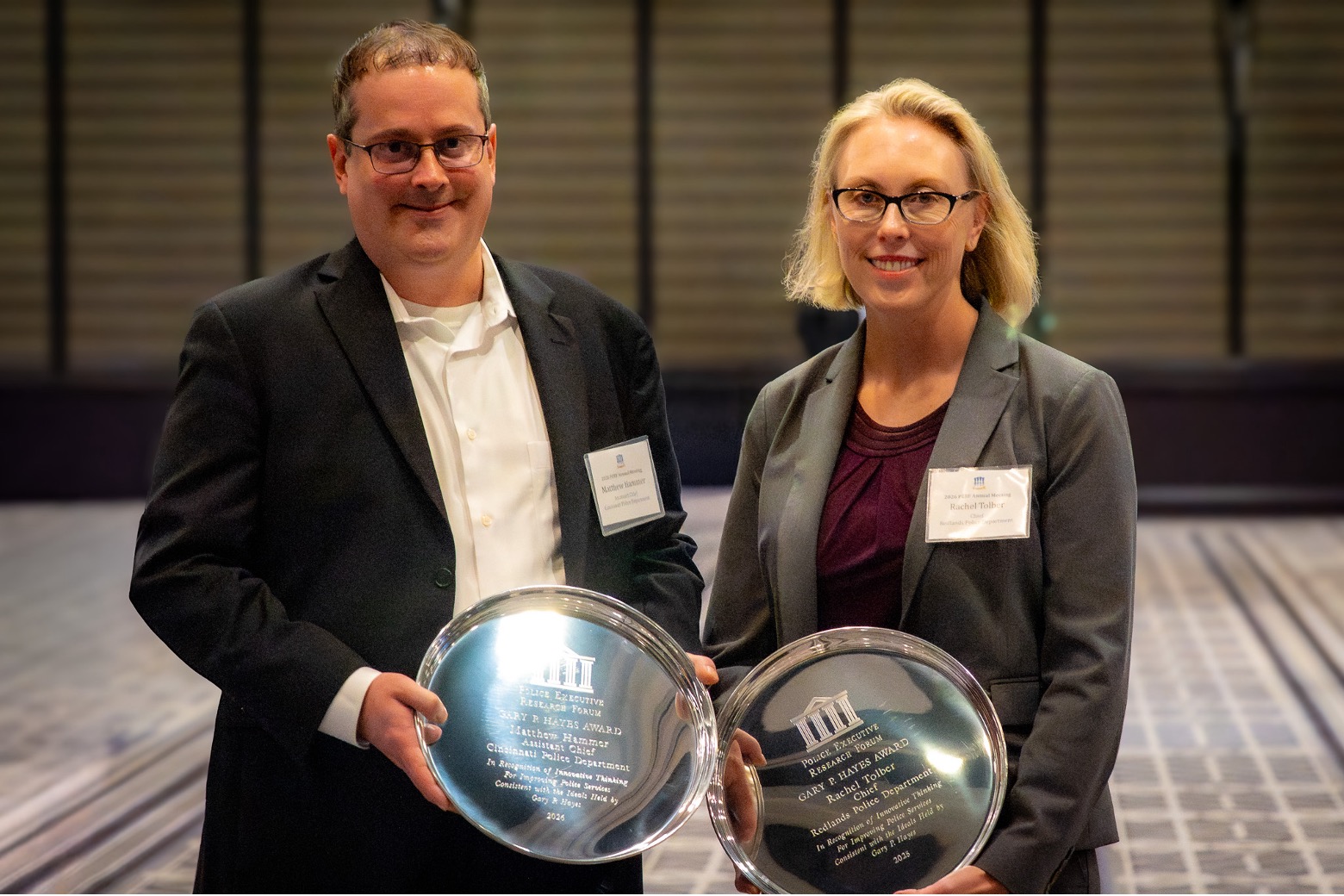
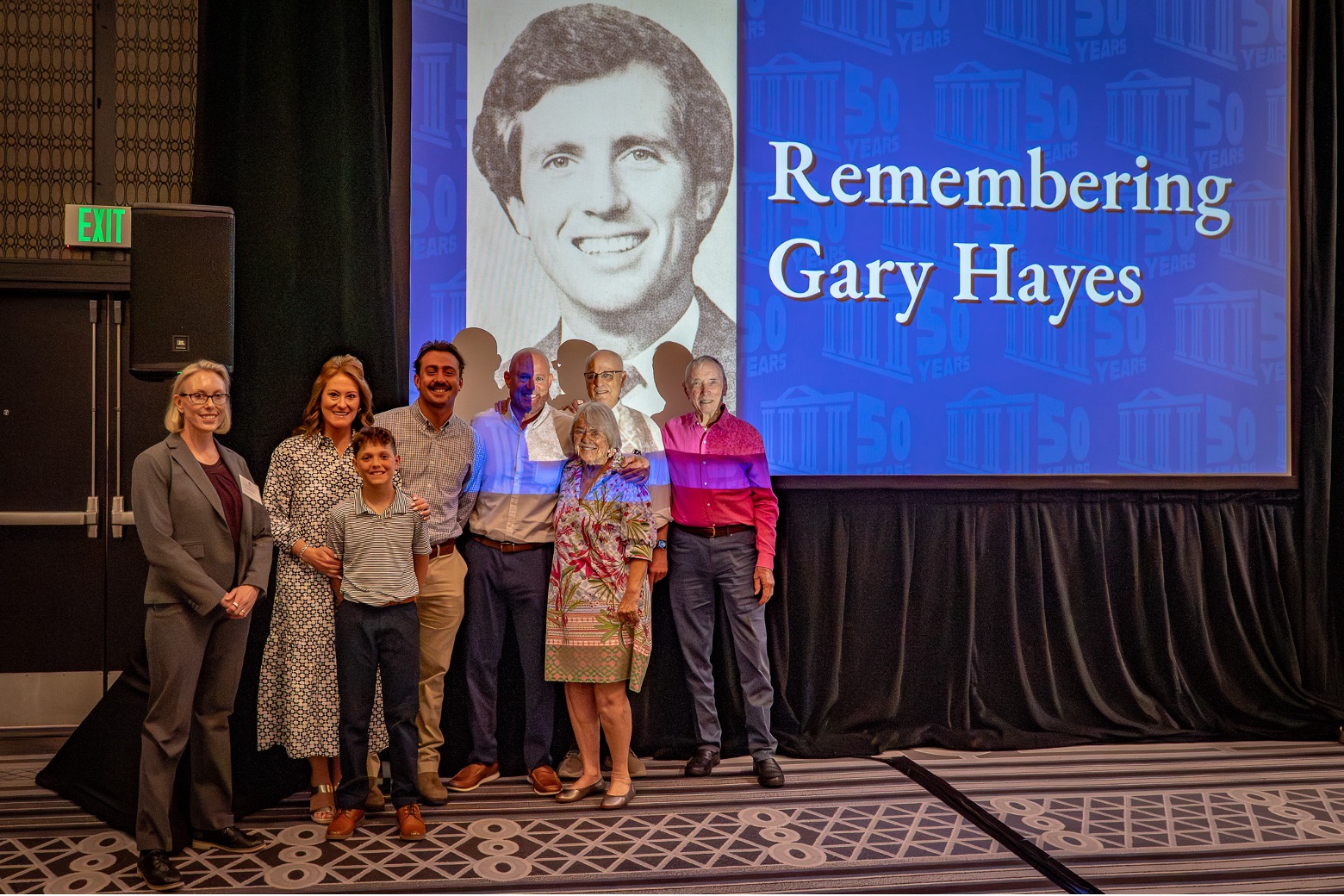
Longtime PERF member Mike Yankowski is the Chief of Police and Executive Director of Public Safety at Michigan State University. In addition to the great lineup of speakers attending the meeting, several important figures from PERF’s past who could not attend in person appeared in pre-taped video messages, such as John Eck, Sir Denis O’Connor, David Couper, Ellen Hanson, and Ed Flynn. Artificial Intelligence We led off with a lively discussion about the use of artificial intelligence (AI) in policing. Assistant Professor Ian Adams from the University of South Carolina presented the findings of several studies he’s published on AI. In a 2024 study, he and his coauthors found that an AI tool did not help officers write reports faster than a control group that did not have access to the tool. A 2025 study found that while officers using an AI tool to assist with report writing thought they were producing better reports than they had previously, independent evaluators did not perceive any improvements. Conversely, a 2025 study found that AI-automated reviews of body-worn camera footage improved officer professionalism in the two agencies studied. Attendees had varied opinions about the use of AI for report writing. "We were one of the early testers of an AI report writing product, and we had what I would call success with it," said Boulder, Colorado, Chief Steve Redfearn. "Maybe it's because we have a really young patrol force. What we've heard from them, what we've heard from our detectives, and what we've heard from the DA is the quality of the reports absolutely improved." "What I think a lot of people are forgetting with AI in this scenario is that it is information in, information out," said Washington, D.C., Metro Transit Deputy Chief Daniel Alvarez. "If you're doing a poor on-scene investigation, or you're not asking the right questions, there's only so much cleaning up the AI can do. If you want AI to assist and make things more in-depth, you have to start at the officer or investigator level to increase those basic skills of on-scene investigations in order for this new technology to have the proposed benefit that we're looking for." But attendees were more positive about other potential uses of AI, such as its ability to sort through copious amounts of evidence—a task that can prove daunting for agencies, especially those who are short-staffed. "Developing leads, listening to jail calls, and reviewing police reports and digital evidence is overwhelming to us," said PERF member Kristine Hamann, executive director of the Prosecutors’ Center for Excellence and a former longtime prosecutor. "There is so much evidence that both police and prosecutors do not have time to look at it all. That is not what justice should be, and that is where as prosecutors, we're working to use AI to help us absorb this mountain of evidence that we're not having a chance to examine." Gary P. Hayes Award PERF presented our Gary P. Hayes Award to two individuals at our Annual Meeting. The award is presented annually to mid-career police officials who have demonstrated leadership and innovation. It is named for PERF’s first Executive Director, who tragically passed away in 1986 at the age of 40. We were honored to have members of Gary Hayes’s family join us for the meeting. One award recipient was Chief Rachel Tolber of the Redlands, California, Police Department. She joined the agency in 1998 and became the police chief in 2023. Chief Tolber was nominated for the award by Andy Mills, who serves as police chief in the neighboring city of Palm Springs. "She has been an amazing advocate for women in policing," Chief Mills said at the Annual Meeting. "But far beyond that, she's also been one of the original founders of evidence-based policing and has written multiple articles, has spoken numerous times around the country about evidence-based policing and how to lead forward, and that was all before she was chief." "I just want to say thank you to my community and my team, because without their trust and support, we wouldn't be able to do the great work we're doing," Chief Tolber said when receiving the award. "To all of you who've gone before, those who are going through it with us now, thank you for making policing better, because ultimately that's what we're here to do. And at the end of the day, it's not about titles. It's about the trust that we're building and the difference that we make in people's lives." The other Hayes Award recipient was Assistant Chief Matthew Hammer of the Cincinnati, Ohio, Police Department. He oversees the department’s patrol bureau and strategic innovations bureau, and he has served with the agency since 1999. Assistant Chief Hammer was nominated by Maris Herold, who spent the majority of her career with the Cincinnati Police Department and is now the Chief of Strategic Initiatives with the Austin, Texas, Police Department. In nominating Assistant Chief Hammer, she highlighted his work on place network investigations to reduce violent crime. She wrote that "he has demonstrated imagination and creativity in developing new approaches to policing. He has shown initiative and leadership in implementing those approaches in real-world settings. He has enlisted others in carrying out innovative initiatives that reduce violence and improve community safety. And he has demonstrated the intellectual curiosity and commitment to democratic policing values that will continue to shape the future of the profession." Austin Police Chief Lisa Davis, who also previously worked with Assistant Chief Hammer in Cincinnati, spoke about his contributions to his department. "Matt brings people together, he works on truly making communities safer, and he’s the best of what policing is," said Chief Davis. "He’s thoughtful, he’s collaborative, and he’s focused on bringing people together to truly make a difference in the world of policing. So when I think about the best of us, he’s one of them." "What an honor it is simply to be a part of this organization and then to be in the presence of such phenomenal, thoughtful people in this room," Assistant Chief Hammer told meeting attendees.
Gary P. Hayes Award recipients Assistant Chief Hammer and Chief Tolber.
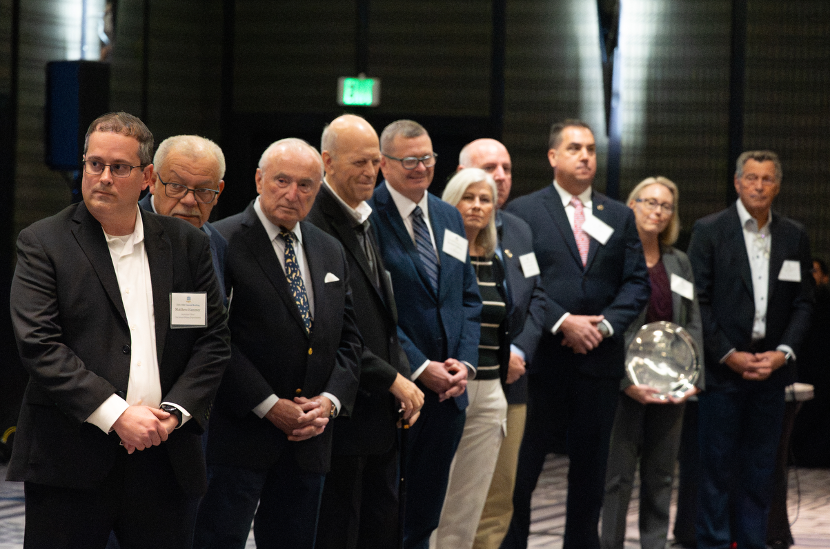
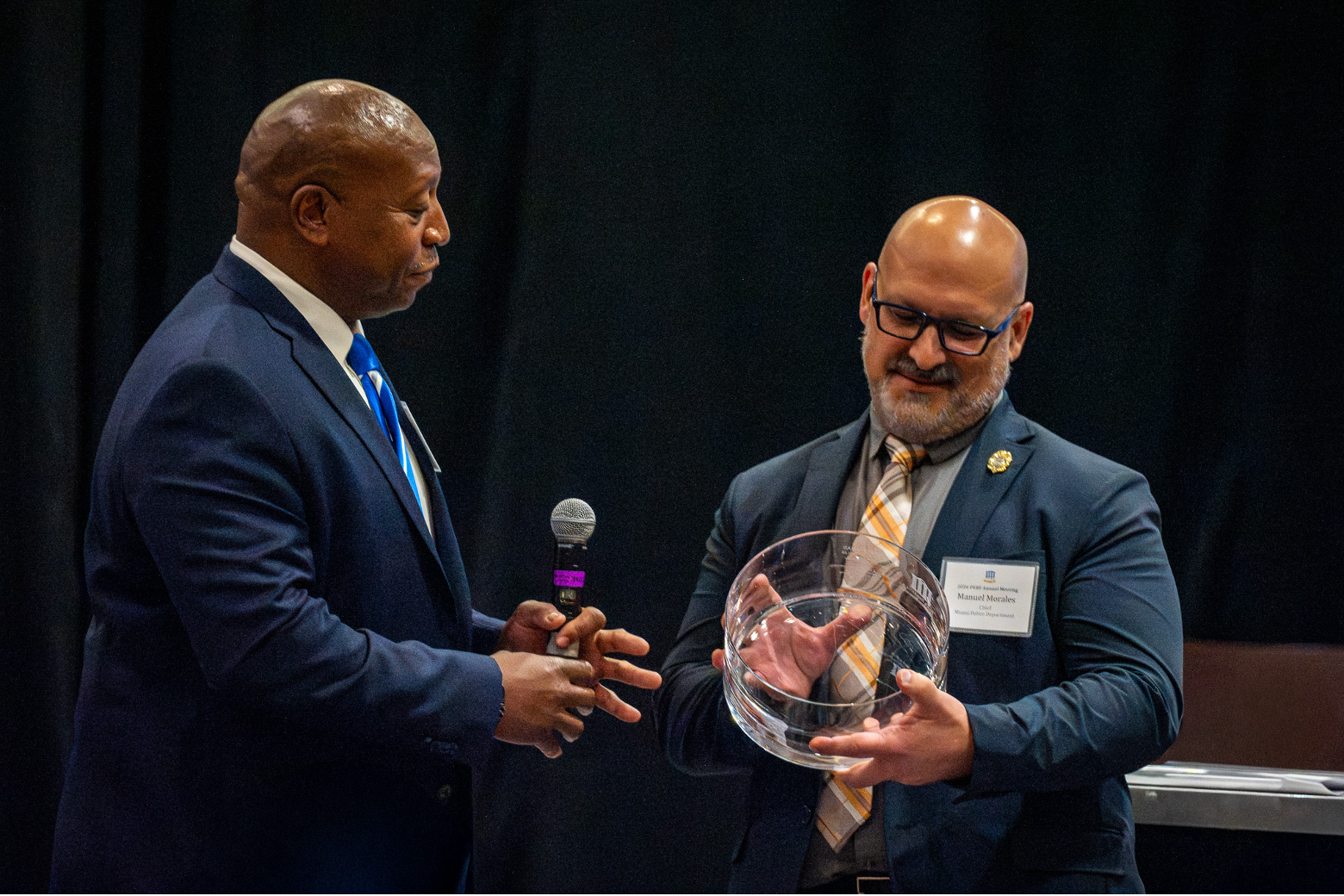
The newest Hayes Award winners join a lineup of past recipients. Hayes Award-winner Chief Tolber, the Hayes family, and Chuck Wexler. Leadership Award PERF also presented two individuals with our Leadership Award, which recognizes police leaders who have a long track record of accomplishment in the profession. One recipient was Chief Manuel "Manny" Morales of the Miami Police Department. Chief Morales joined the agency in 1994 and rose through the ranks to become chief in 2022. He has overseen a large decrease in homicides, aggravated assault, and property crime. He will retire in October. PERF President John Drake presented the award to Chief Morales. "Chief Morales is such an amazing leader," Chief Drake said. "He works in one of the most diverse cities in America, a city that was known for violence, a city that didn’t have a lot of trust in law enforcement, and he came in as an innovator." "I am so incredibly honored to be here today," Chief Morales told PERF’s members in Los Angeles. "I never could have imagined, almost 33 years ago going through the police academy, fresh out of the Army, that I would ever have the opportunity to lead one of the greatest police departments in our nation and to stand here and be honored."
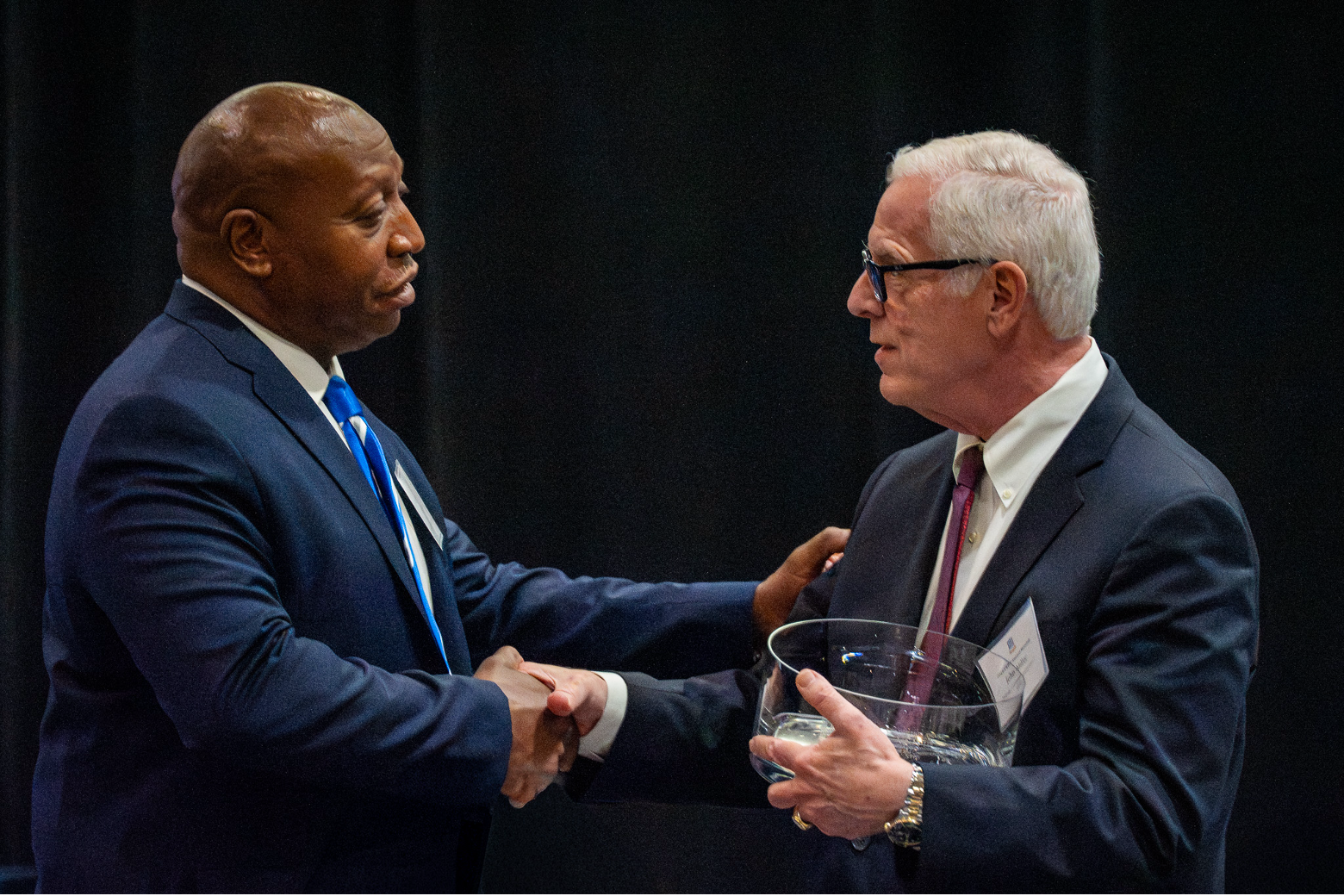
Metropolitan Nashville Police Chief and PERF President John Drake presents Chief Morales with the PERF Leadership Award. We also presented our Leadership Award to John Miller, who has had a one-of-a-kind career bouncing between law enforcement and journalism. Miller began his career as a local reporter in the New York City area. From 1994 to 1995, he joined the New York City Police Department (NYPD) as the Deputy Commissioner of Public Information under Commissioner Bill Bratton. He returned to journalism from 1995 to 2002 as a correspondent with ABC News. In 2003, he reunited with Bratton at the Los Angeles Police Department, where he served as chief of the department’s Counterterrorism and Criminal Intelligence Bureau. He joined the FBI as its Assistant Director for Public Affairs in 2005. He went back to journalism in 2011 as a senior correspondent for CBS News. He did a second stint with the NYPD from 2013 to 2022 as the agency’s Deputy Commissioner for Intelligence and Counterterrorism. And he is now the chief law enforcement and intelligence analyst for CNN. "Thank you for the contributions you’ve made to law enforcement, saving millions of lives," PERF President John Drake said in presenting the award. "Thank you for being a source of credibility. When we look at that TV, we know what you say is going to be the truth. Thank you for everything you do." "I want to thank John Drake and the board for selecting me," Miller said. "And anybody who knows me knows anything I know about leadership came from Bill Bratton. To receive this award from this organization is a great honor."
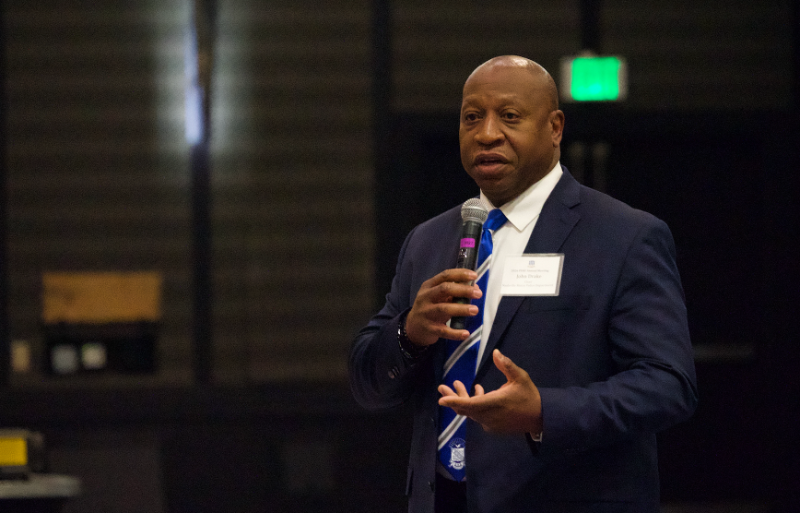
Chief Drake presents Miller with the PERF Leadership Award. Additional photos PERF President Metropolitan Nashville Police Chief John Drake.
PERF Board Member Sacramento Police Chief Kathy Lester.
PERF Board Member Minneapolis Police Chief Brian O’Hara. PERF Board Member Elgin, Illinois, Police Chief Ana Lalley.
PERF Board Member Philadelphia Police Commissioner Kevin Bethel.
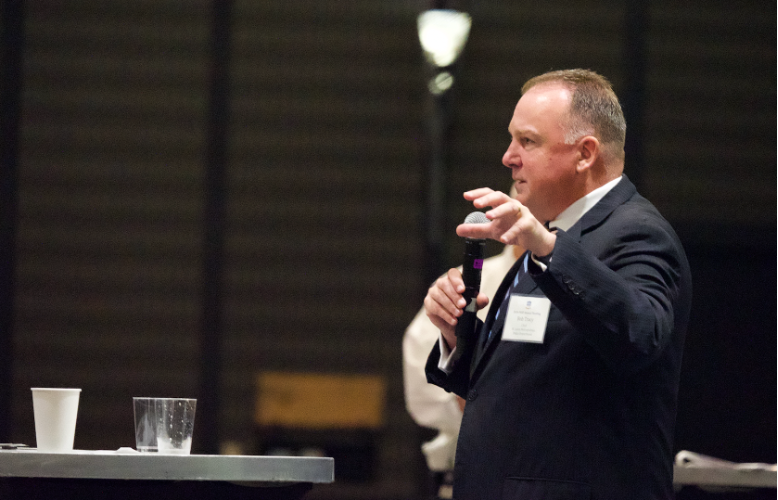
PERF Board Member St. Louis Metropolitan Police Commissioner Bob Tracy.
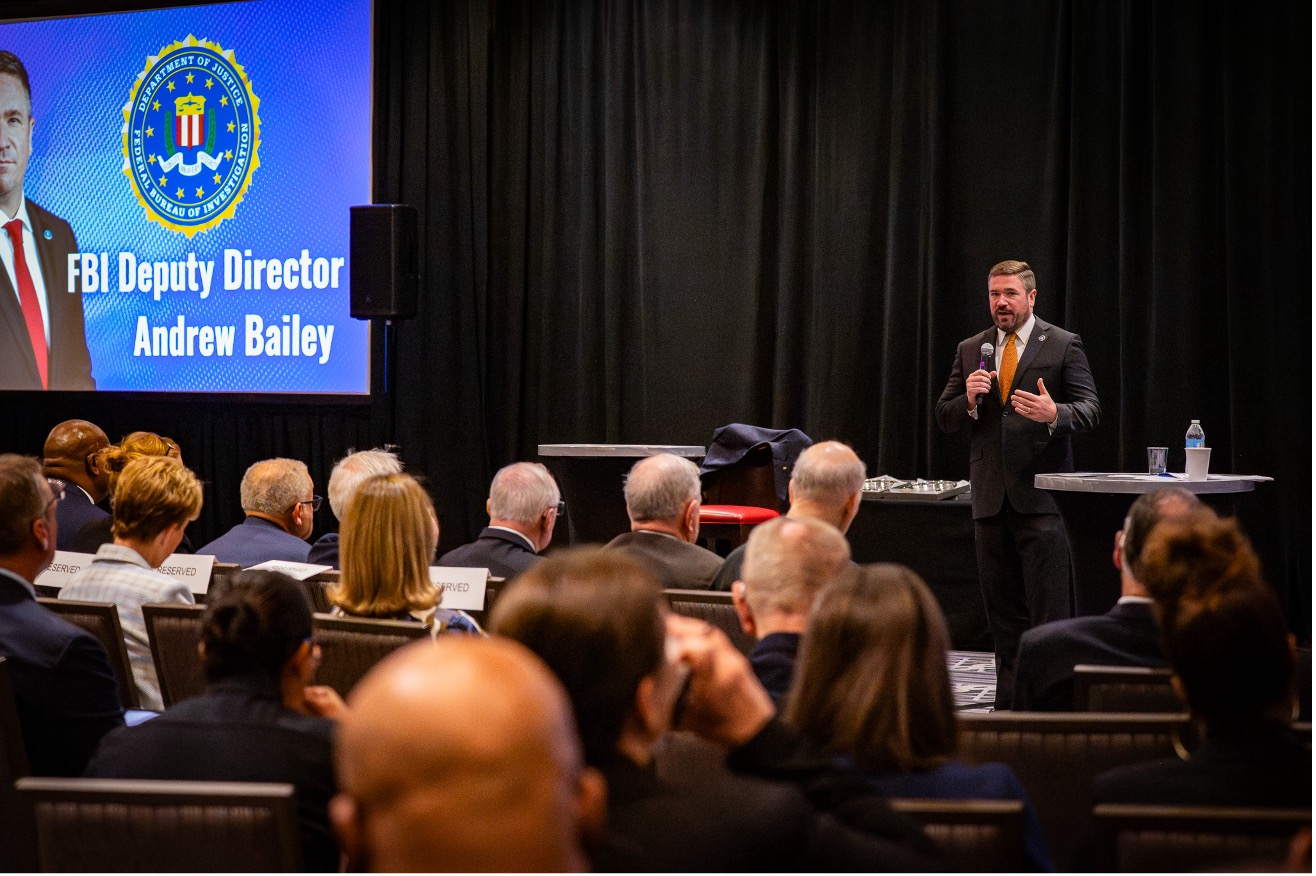
FBI Deputy Director Andrew Bailey discusses counter-drone responses and other national security issues with the PERF Annual Meeting audience in Los Angeles.
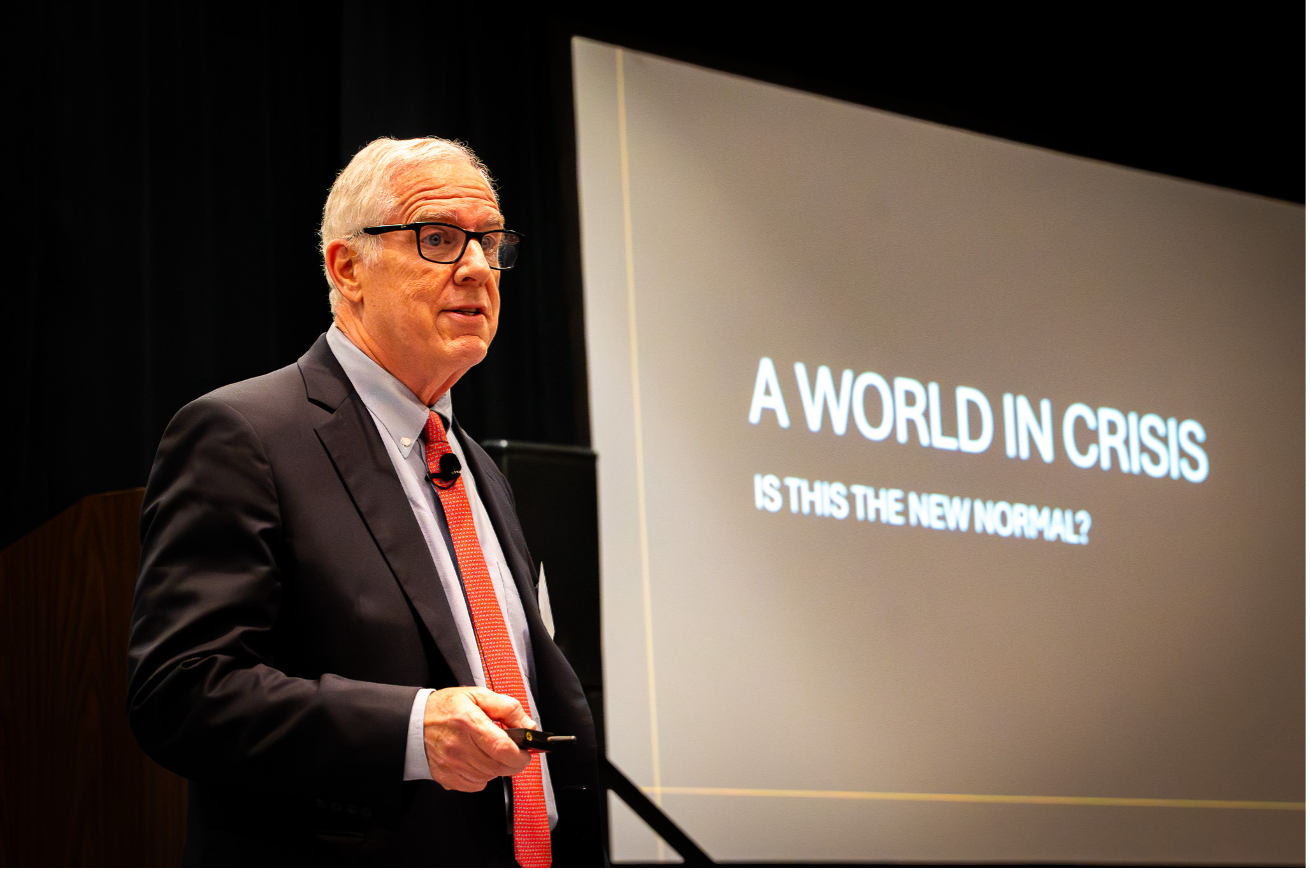
John Miller provides a nationwide overview on threat awareness and crisis response.
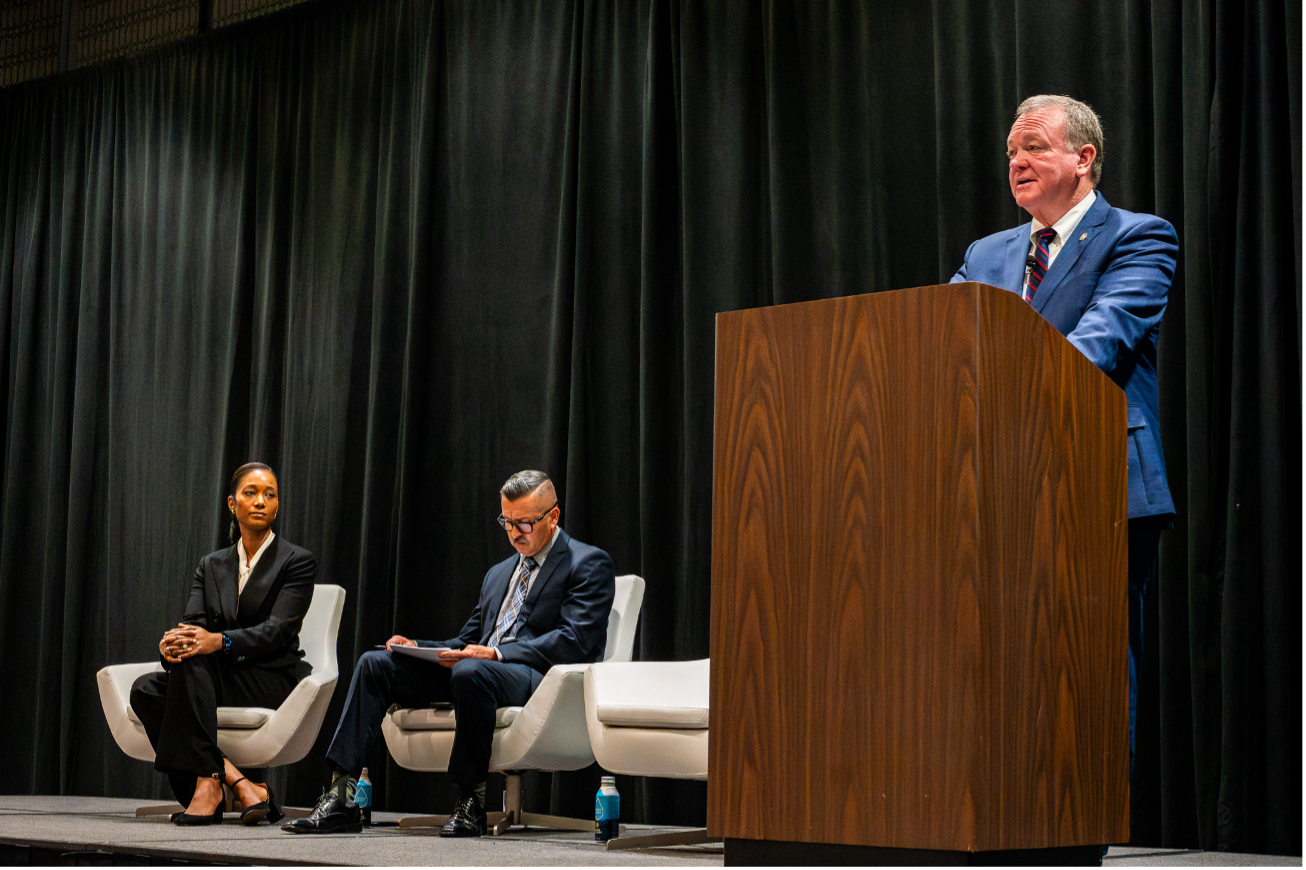
LAPD Chief Jim McDonnell (right), along with Captain Shannon White and Captain Mario Mota, presents on security preparation for the 2026 World Cup and the 2028 Summer Olympics. Thanks to everyone who joined us in Los Angeles this week! Best, Chuck
|
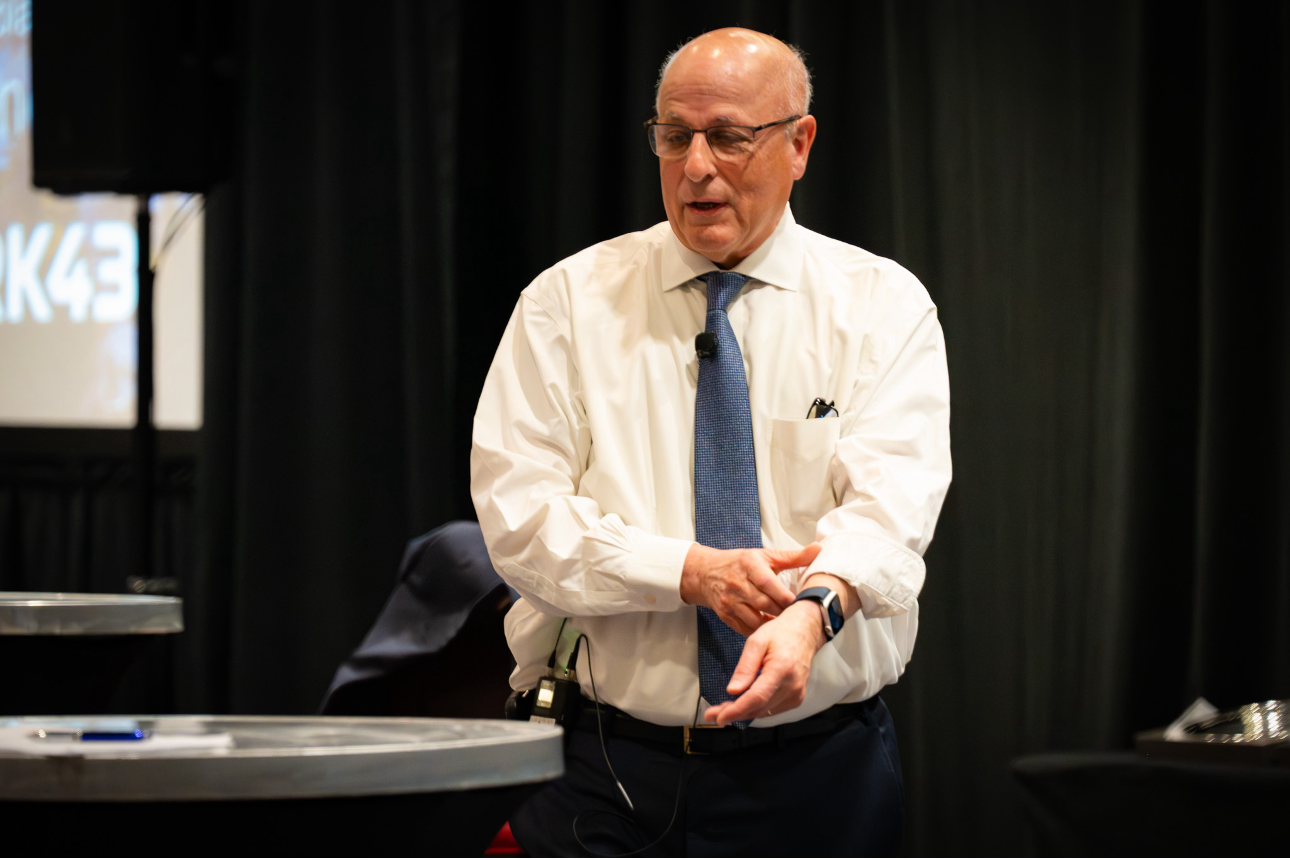
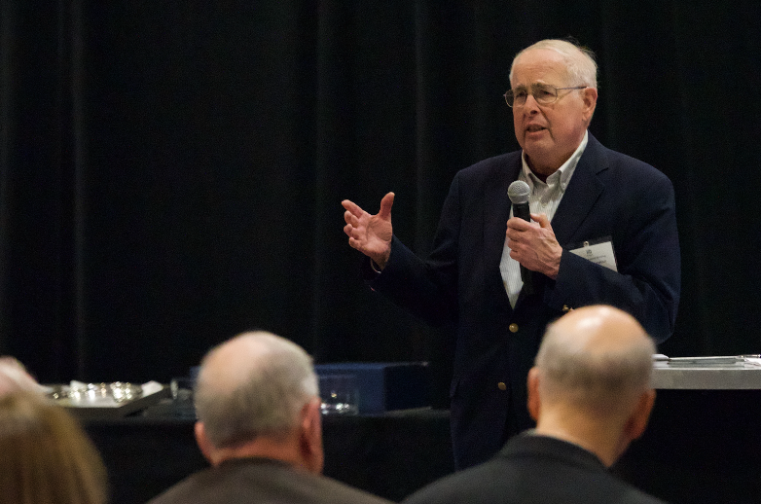 Bob Wasserman has been a very well-known and highly respected and trusted adviser to countless chiefs over the years. He authored the original proposal that created PERF and has continued in his support and contributions to the organization.