|
February 14, 2026 ICAT at 10—A decade of saving lives and careers and improving policing
PERF members
Use of force has always been a defining issue for American policing. In 2014, the issue took on new urgency following the unrest after the shooting of Michael Brown in Ferguson, Missouri, and other high-profile incidents that shook public confidence in the police. At PERF, we knew we had to do something to help police executives navigate these turbulent waters. So we assembled a wide array of experts, studied the issue from all angles, and produced a seminal publication on the topic. Guiding Principles on Use of Force became a blueprint for agencies looking to take their use-of-force policies and procedures to a new level of excellence.
Still, we knew that enhancing policies and procedures was just the start. What officers and deputies needed was training—specific, realistic, and actionable instruction—on how to implement the 30 Guiding Principles on the street. Our research showed that many fatal use-of-force incidents involved subjects who were either unarmed or armed with a weapon other than a firearm. What could be done to help officers de-escalate and peacefully resolve these types of encounters without using lethal force?
To help answer that question, we again turned to experts in the field. We visited Police Scotland and the Police Service of Northern Ireland to see how they dealt with subjects armed with knives (most members of Police Scotland don’t carry firearms). We studied the NYPD’s Emergency Service Unit, which is world renowned for its tactical and communications excellence in dealing with emotionally disturbed persons. And we assembled a diverse group of training experts to help us figure out how to translate these lessons into training designed specifically for patrol officers, who are usually the first to respond to these challenging situations.
The result was ICAT: Integrating Communications, Assessment, and Tactics, which PERF made available to the field 10 years ago. Since that time, at least 1,500 agencies from 49 states, the District of Columbia, Guam, and Canada have trained their officers in ICAT. As the name implies, ICAT combines sound tactics with useful tools for assessing threats and communicating with subjects, presented through a combination of classroom instruction and realistic, scenario-based training.
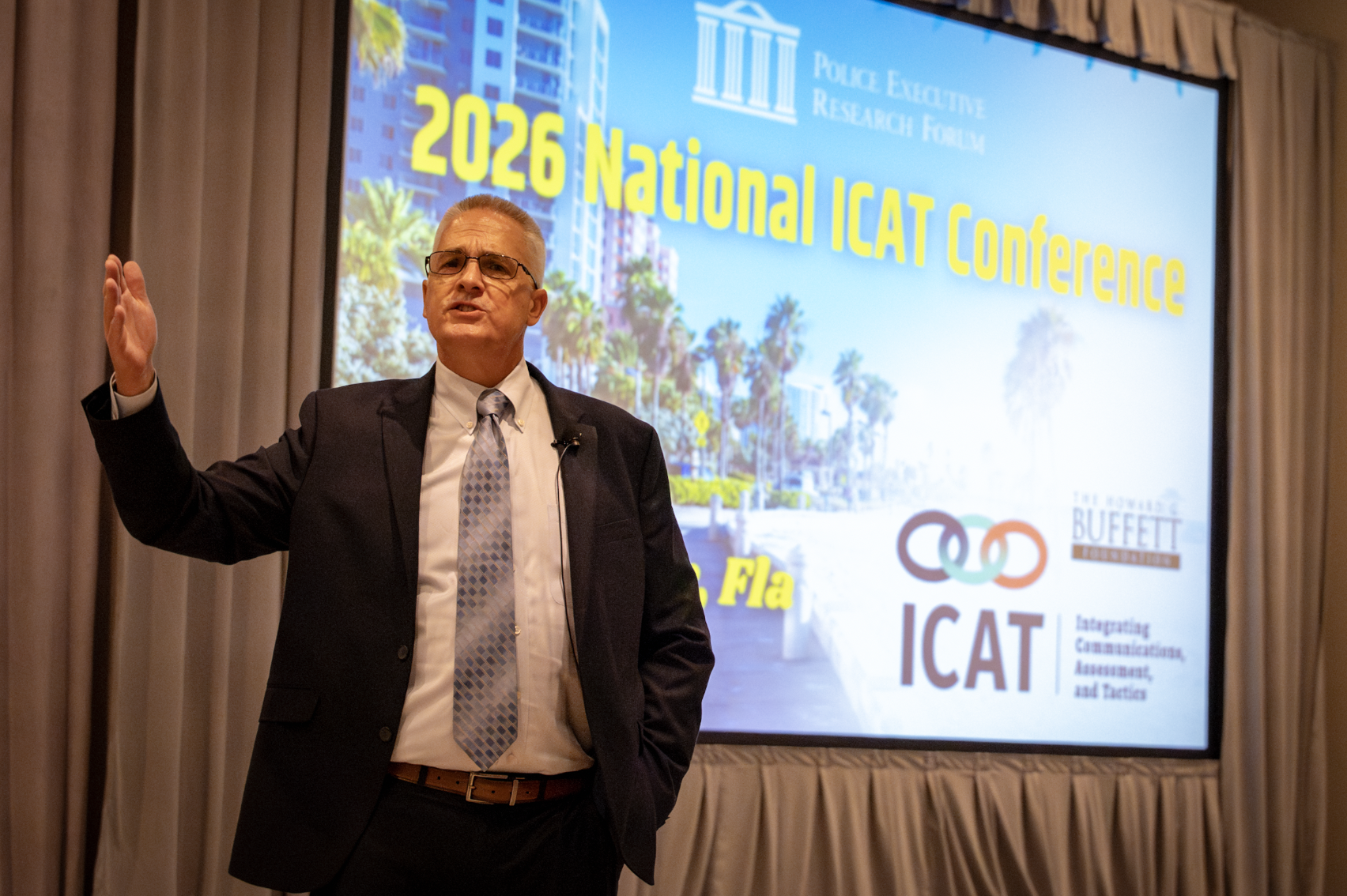
To help mark ICAT’s 10th year, PERF this past week hosted our fourth National ICAT Conference in Clearwater, Florida. This annual gathering is a forum for ICAT practitioners to receive the latest curriculum updates, exchange insights, and learn best practices from one another.
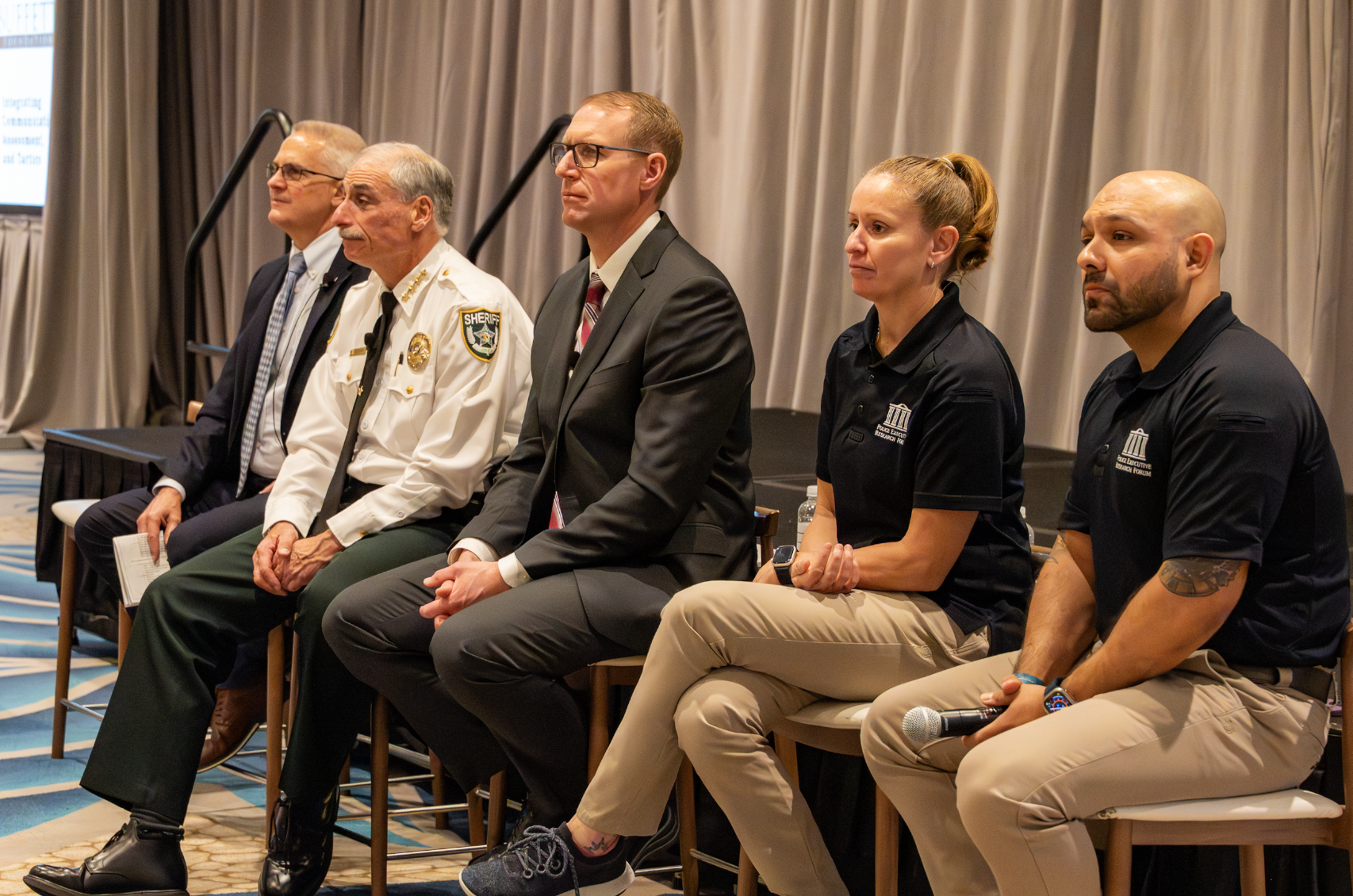
A highlight of this year’s conference was a panel of police leaders whose agencies have implemented ICAT. They described how the training has helped not only to reduce the use of force but also to transform the culture of their departments.
Monterey (CA) Chief David Hober, Volusia County (FL) Sheriff Mike Chitwood, Eau Claire (WI) Chief Matt Rokus, Burlington (NC) Lt. Shelly Katkowski, and Harris County (TX) Lt. Rico Gomez.
Monterey, California Dave Hober became the chief of the Monterey Police Department in 2015 and implemented ICAT agencywide soon afterward. He stressed that ICAT is not just training; it’s a culture and a philosophy woven throughout all aspects of his agency (a theme repeated throughout the conference). Chief Hober said there have been many incidents that easily could have ended in an officer-involved shooting but are now resolved safely by his officers using their ICAT training. Chief Hober also noted that the agency has begun weaving ICAT principles throughout its policies, helping to bridge philosophy, policy, and practice.
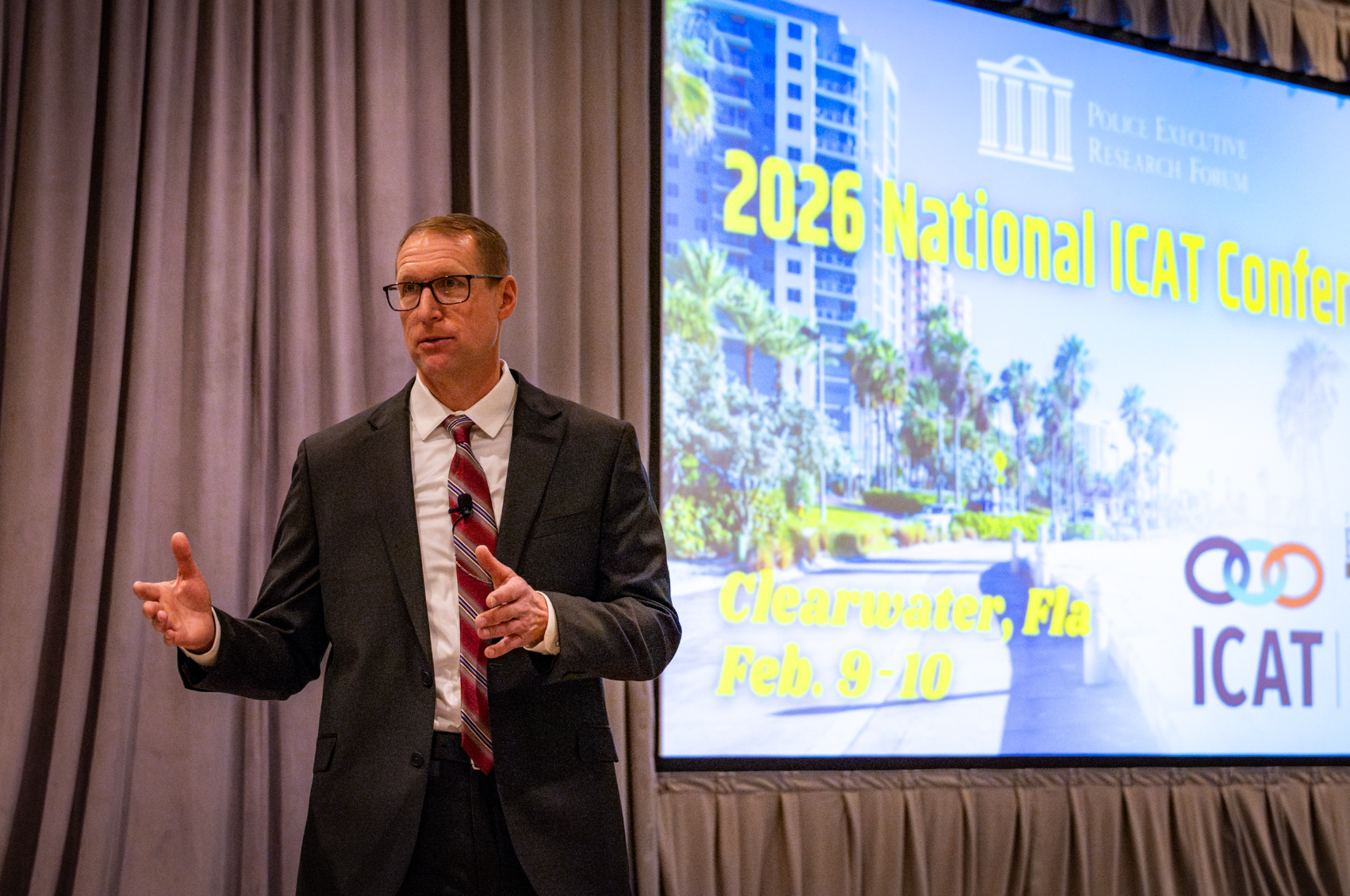
Chief Hober. Eau Claire, Wisconsin Eau Claire had seen a troubling rise in officer-involved shootings and deaths—many tied to mental health calls—when Matt Rokus became police chief in 2020. Determined to change course, he committed 16 of the department’s 24 annual in-service hours to ICAT training for all officers. Within two years, the agency saw a one-third reduction in use-of-force incidents. Chief Rokus shared video of an incident that ended safely, saying that before ICAT was implemented, it might well have resulted in an officer-involved shooting. "So often we tell officers what they can’t do, but ICAT tells officers what they can do,” he said, adding that ICAT is now “part of our DNA.”
Chief Rokus.
Volusia County, Florida
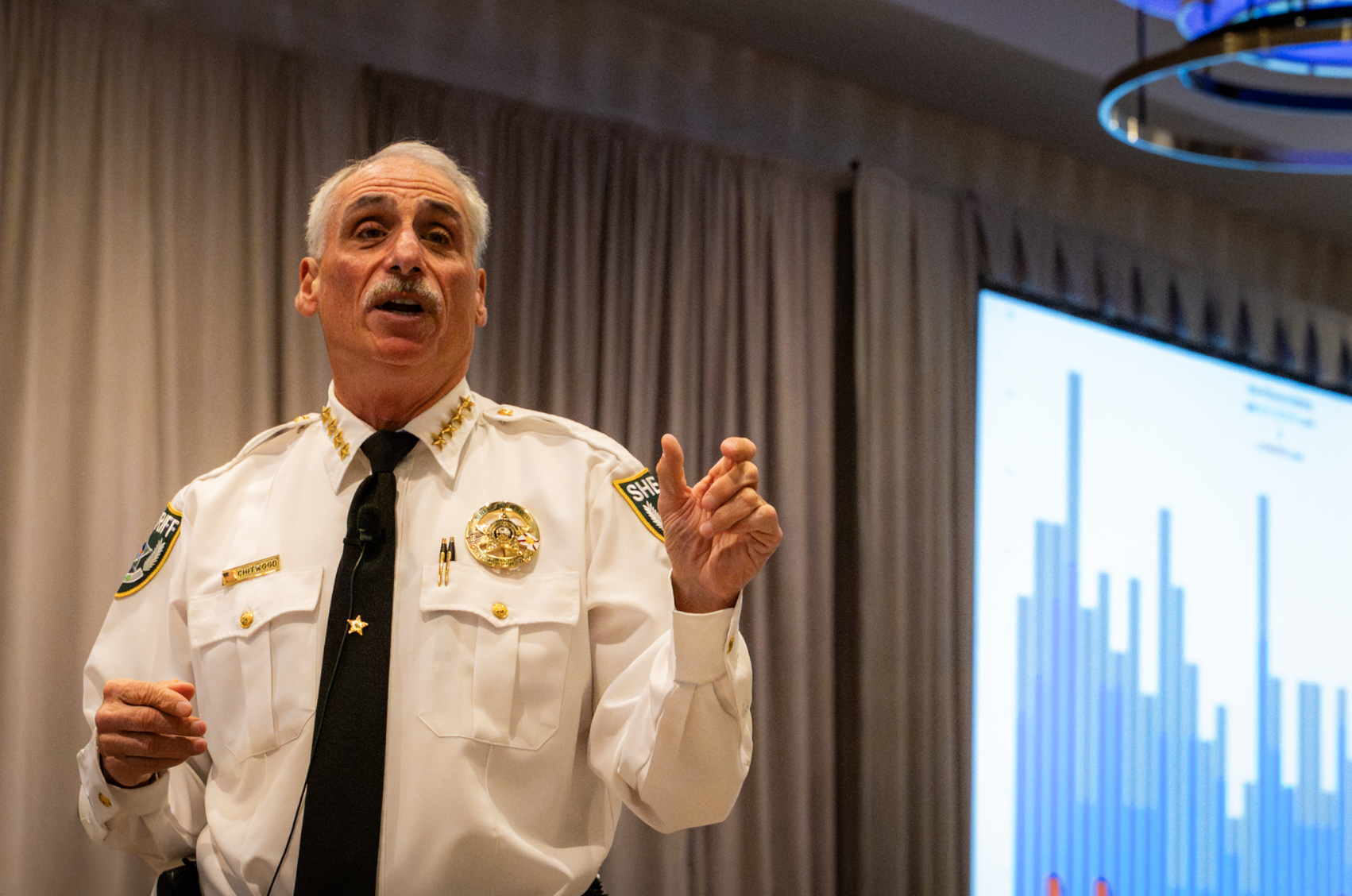
Volusia County Sheriff Mike Chitwood has been an ICAT proponent since its inception—although, after 38 years in law enforcement, he acknowledged that his younger self would have been skeptical. In 2015, he was part of the group of two dozen U.S. police leaders who traveled with PERF to Scotland to see how police there manage potential use-of-force situations; it was a pivotal moment in the development of ICAT.
Sheriff Chitwood. In 2016, he was elected sheriff of Volusia County and implemented the training right away. Since then, the Volusia County Sheriff’s Office (VCSO) has experienced a steady decline in the use of force. According to the VCSO, between 2016 and 2022, total use-of-force incidents involving Volusia County deputies dropped by nearly two-thirds, even as the number of calls for service remained steady. The agency now recognizes de-escalation by giving dozens of awards each year to officers who have avoided using force, even if it might have been legally justified. To keep deputies’ skills sharp, VCSO trainers conduct regular ICAT refresher sessions in the precincts, using recent body-worn camera footage as training tools. Burlington, North Carolina Burlington Police Department (BPD) Lieutenant Shelly Katkowski was introduced to ICAT at its 2016 rollout. She immediately saw its value and helped the agency implement the training in 2017. BPD immediately saw a decrease in force and injuries to officers and subjects. Lieutenant Katkowski emphasized the importance of having the right people teach the program. “They need to believe in its value, or it won’t work,” she said. To keep instructors in touch with patrol, BPD rotates its trainers back to the field at least every five years and focuses on succession plans for trainers who may get promoted and transfer out of the unit. Harris County, Texas Lieutenant Rico Gomez spoke about implementing ICAT in 2017 in the Harris County Sheriff’s Office, one of the largest sheriffs’ departments in the country. Initially, it was taught as an eight-hour training day in response to a Texas state mandate for de-escalation training. In 2020, HCSO re-implemented ICAT as a 16-hour program—eight hours of training and eight hours of scenarios. Sheriff Ed Gonzalez also required the command staff to attend four hours of ICAT training. As the agency’s chief deputy noted, “As police officers, you need a warrior skill set and a guardian mindset.” Training Updates and Evaluation Dan Alioto, Deputy Director of ICAT, discussed how the training benefits from videos of real cops doing real work in real time to drive home key lessons. Increasingly, ICAT is incorporating videos with positive outcomes that illustrate how officers are applying ICAT principles to slow things down, create time and distance, and avoid using force. These videos help provide an important balance when placed alongside the examples with more tragic outcomes. One compelling video recently added to ICAT was narrated by the partner of the former Sangamon County (IL) deputy sheriff convicted of second-degree murder in the shooting death of Sonya Massey. Deputy Dawson Farley, who had less than a year on the job the night of the shooting, walks viewers through the entire encounter and describes how it might have ended differently had he and his partner been trained in ICAT. He said he might have felt more empowered to intervene with his more experienced partner as the interaction escalated, which is taught in ICAT’s Step Up and Step In module. After the tragic incident, the entire sheriff’s office was trained in ICAT. Robin Engel, a senior research scientist at The Ohio State University, described her ongoing evaluation of ICAT. She has observed ICAT implementation across numerous jurisdictions and conducted in-depth studies in Louisville, Kentucky, and Indianapolis, Indiana. In both cities, her peer-reviewed research found that ICAT significantly reduced use-of-force incidents and either lowered injuries to officers and subjects or kept injury rates stable as force decreased. Engel said the research indicates that to sustain these positive outcomes, agencies should focus on two key elements: making sure they present the training as developed (model fidelity) and preventing training decay by offering regular refresher courses. I also want to recognize Sgt. Justin Witt from the Louisville (KY) Metro Police Department and Officer Cam Deane from the Cambridge (MA) Police Department, who both presented case studies for how ICAT was implemented at their agencies. And as we continue to explore best practices to avoid restraint-related deaths, I appreciate Rener Gracie for sharing his technique of gaining control of subjects to minimize injury. I am extremely proud of ICAT and of the countless people—PERF staff, members, and partners—who have worked on this initiative over the past decade. They helped turn an ambitious though, at the time, unchiseled idea into the highly refined and successful training program that ICAT is today. Also, I will always be grateful to my friend, Howard Buffett, who was on the trip to Scotland 10 years ago and understood the breakthrough that ICAT was for police and sheriffs and has been incredibly supportive through all these years. One of the hallmarks of ICAT is that it continues to evolve as the challenges facing police have changed. Ten years ago, ICAT was released with five modules. Since then, we have added three more modules on Suicide by Cop, Step Up and Step In (to prevent dynamic situations from spiraling), and Reducing the Risk of Restraint-Related Deaths. We also developed guidelines for implementing ICAT principles in correctional settings. The annual ICAT conference in Clearwater only reinforced how ICAT remains a living and dynamic entity—one that is helping to save lives, protect careers, and improve policing. I can’t wait to see what the next 10 years will bring! Best, Chuck
|